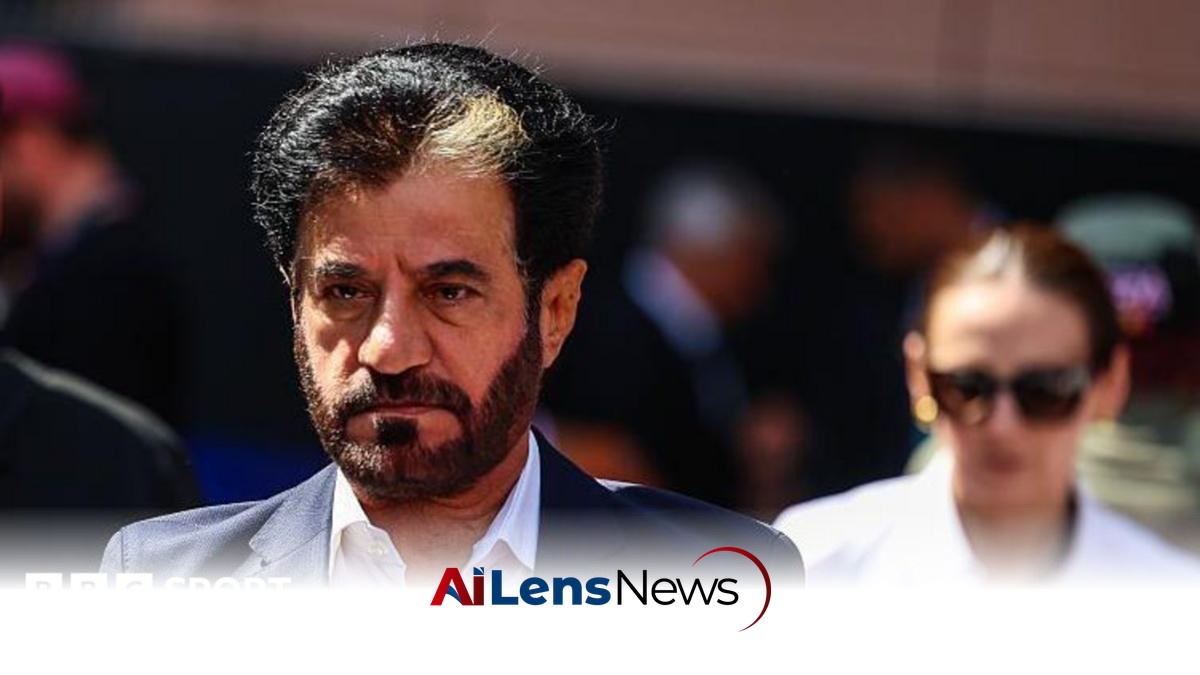


The FIA has approved a proposal to eliminate term limits for its president, allowing for extended leadership under Mohammed Ben Sulayem.
New Delhi, India Jul 2, 2026 ALN: The FIA's governing body has passed a proposal to end term limits for its president by a majority of more than 90%.
The decision to abolish the previous limit of three four-year terms was initiated by FIA president Mohammed Ben Sulayem. The proposal was approved during a vote at the FIA's general assembly held in Macau, where member clubs supported the change with a majority of 90.71%.
An FIA spokesperson stated, "The FIA statutes have been updated to establish a consistent approach to term limits across all FIA bodies, in line with the world councils and the senate." They added, "The proposed amendments were approved by a supermajority at the extraordinary general assemblies. FIA bodies retain full authority to democratically elect officeholders they deem appropriate." However, the FIA did not confirm the specific voting numbers.
This change allows Ben Sulayem, who is currently 64 years old, to continue serving as president beyond the previously established 12-year limit. Although there is an existing age restriction of 70 for anyone standing for FIA president, sources indicate that Ben Sulayem intends to pursue the removal of this restriction as well.
His ultimate aim appears to be to serve as president for life. The FIA has been approached for comments regarding this matter.
Previously, other FIA roles, such as the president of the anti-doping committee and the head of the F1 cost-cap committee, also had term limits. The FIA has not provided a clear rationale for abolishing term limits for all positions instead of implementing them for those that did not previously have them.
In a statement, Ben Sulayem remarked, "The decisions approved by our members here today reflect the continued progress we are making together as a federation. Through stronger governance, financial discipline, and a clear long-term vision, we are building an FIA that is better equipped to support our members, strengthen our championships, and deliver for motor and mobility worldwide."
Controversy has surrounded Ben Sulayem's conduct and the governance of the FIA. In last year's presidential election, three rival candidates were barred from running against him due to a rule requiring candidates to submit a list of prospective vice-presidents, selected from each of the FIA's six global regions. The published list included only one candidate from South America, Fabiana Ecclestone, who was already part of Ben Sulayem's team.
This situation effectively prevented any other candidate from naming a potential vice-president from South America, thus blocking their entry into the election. One of the prospective candidates, Laura Villars, is currently suing the FIA in French courts over its election process.
Ben Sulayem's predecessor, Jean Todt, had established the current three-term limit. Todt succeeded Max Mosley, who served as FIA president from 1993 until he stepped down following a dispute with F1 teams in 2009. The introduction of term limits was seen as a measure to prevent the consolidation of power within the organization and to promote fresh leadership and ideas.
Other proposed changes that have been approved include stricter rules for presidential candidates. A new requirement mandates that candidates demonstrate sufficient experience within an FIA member or an FIA body. Additionally, the deadline for prospective candidates to submit their list of vice-presidents has been extended from 49 days to 100 days before the election date.
These changes are seen as making it more challenging for potential challengers to Ben Sulayem in future elections. Robert Reid, who resigned as FIA vice-president last year citing a "standards breakdown," commented on the changes, stating that term limits are not a perfect safeguard but do create a point at which renewal must occur.
Reid expressed concerns about the new eligibility rules, emphasizing that while candidates should have relevant experience, the wording of these rules could shift power dynamics within the FIA. He noted, "The judgement of what is sufficient remains within the FIA's own structures. In an organization where recent election processes have already been challenged, that is not a small drafting point. It is the point at which process and power meet."
In terms of financial performance, the FIA reported an operating profit of 6.7 million euros (£5.8 million) in 2025, marking a 43% increase year-on-year. This financial growth may be seen as a positive reflection of the FIA's governance under Ben Sulayem, potentially strengthening his position within the organization.
The decision to abolish term limits has raised eyebrows among members of the motor community and governance experts alike. Critics argue that the absence of term limits could lead to a lack of accountability and transparency within the FIA, as long-serving leaders may become insulated from scrutiny and dissent. The potential for a single individual to dominate the presidency for an extended period could stifle innovation and responsiveness to the evolving needs of the motor community.
Supporters of Ben Sulayem, however, argue that his continued leadership could provide stability and continuity during a time of significant change in the motor landscape. With increasing pressures from environmental regulations, technological advancements, and changing audience expectations, they contend that experienced leadership is crucial for navigating these challenges.
The FIA's decision has also prompted discussions about governance structures in s organizations more broadly. Many s federations and governing bodies have grappled with similar issues regarding term limits and leadership succession. The balance between ensuring experienced leadership and promoting democratic principles through regular leadership changes remains a contentious topic.
As the FIA moves forward with its new governance framework, the implications of these changes will likely unfold in the coming years. Stakeholders across the motor spectrum will be closely monitoring how these adjustments impact the FIA's operations, decision-making processes, and relationships with member clubs and the broader motor community. The potential for Ben Sulayem to extend his presidency beyond the previously established limits raises questions about the future direction of the FIA and the dynamics of power within the organization.
In conclusion, the FIA's recent decision to eliminate term limits for its president marks a significant shift in its governance structure. While the rationale provided emphasizes consistency and a long-term vision, the implications of this change could reverberate throughout the motor world. As the FIA adapts to new challenges and opportunities, the effectiveness of its leadership and governance model will undoubtedly be under scrutiny.
To learn more about the latest developments in Formula 1 & Motorsports, stay updated with our exclusive reports and analyses on AiLensNews.

