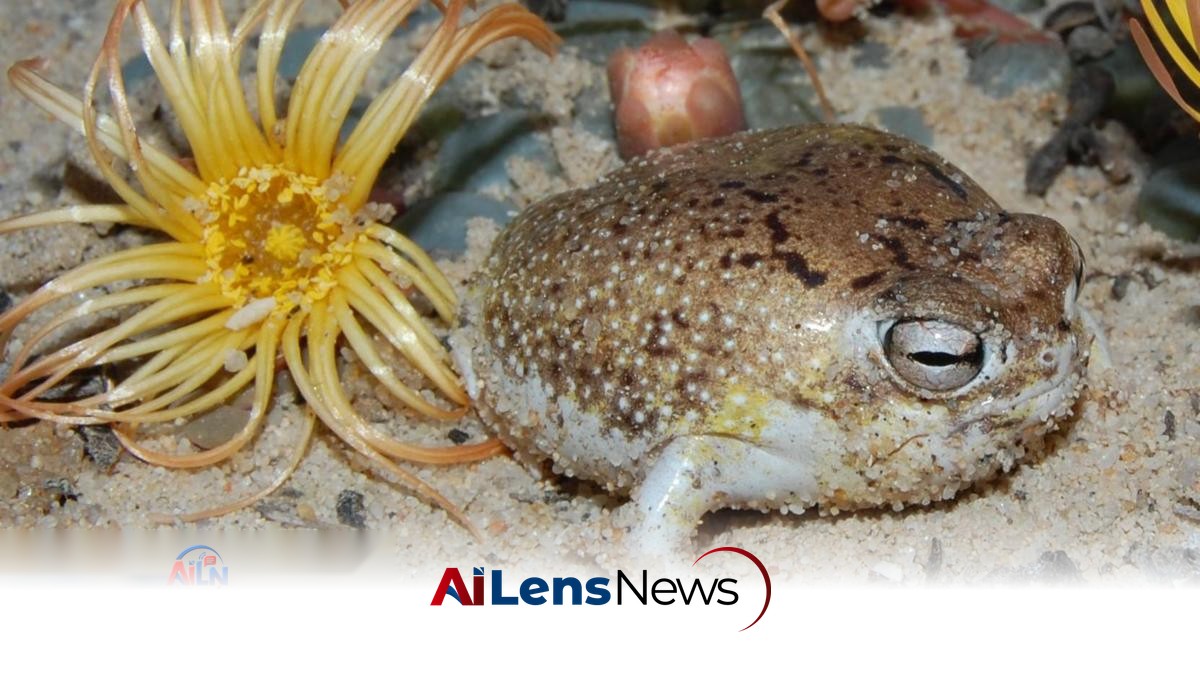


A squeaky frog that became an internet sensation is added to a global list of species at risk of extinction.
New Delhi, India Jul 9, 2026 ALN: A frog that became an internet sensation because of its trademark squeaky defensive call has been added to a global list of species at high risk of extinction.
This particular frog, known as the desert rain frog (Breviceps macrops), is a small amphibian that is endemic to a very limited geographical area, primarily found in a narrow strip of sand dunes located in southern Africa. This unique habitat, which spans just about 6 miles (10km) wide along the coast of Namibia and South Africa, provides the perfect conditions for the frog to thrive. The desert rain frog is known for its distinctive appearance and its high-pitched, squeaky call, which it uses as a defense mechanism against potential predators.
However, the survival of the desert rain frog is increasingly jeopardized by various human activities. Conservationists have raised alarms about diamond mining operations and planned energy developments that pose significant threats to its fragile habitat. The extraction of natural resources, particularly in such a specialized , can lead to habitat destruction, pollution, and other ecological disturbances that are detrimental to the species. According to estimates, the population of the desert rain frog is expected to decline by approximately 20% over the next two decades if current trends continue.
In addition to habitat loss, the desert rain frog faces another unique challenge: its own popularity. Like many species that capture the public's imagination, the desert rain frog's appealing characteristics can make it a target for the pet trade. Conservationists are concerned that the increasing demand for unique and rare animals among collectors could exacerbate the species' decline. "Frogs that are so unique looking as this can become victims of their own fame," said Benjamin Tapley, curator of amphibians and reptiles at the Zoological Society of London. This phenomenon, where a species becomes more endangered due to its attractiveness, highlights the complex interplay between conservation efforts and public interest in wildlife.
The desert rain frog's reliance on its specific habitat is critical for its survival. It spends most of its life burrowed in the sand, emerging only to feed and breathe. This dependency on a narrow ecological niche means that if its habitat is transformed or destroyed due to mining or other human activities, there is little chance for the frog to relocate or adapt to new s. "If the habitat was transformed, there's no room for this species to move further up the coast or further down the coast," explained Alex Lawrence, a scientist with the conservation group Anura Africa. His comments emphasize the urgency of protecting this unique habitat to ensure the future of the desert rain frog.
Despite the dire situation, Lawrence expresses a degree of optimism. "While it is now at risk of extinction, it is still far from being lost entirely," he noted. The key to preserving the desert rain frog lies in effective conservation strategies that not only protect its habitat from immediate threats but also facilitate the restoration of the once mining activities have concluded. "Because they're so rare, it's exciting when you finally find one," he added. "They're extremely cute," highlighting the need for continued public engagement in conservation efforts.
The International Union for Conservation of Nature (IUCN), an organization that monitors the status of global biodiversity, has identified the desert rain frog as part of a broader assessment of thousands of species at risk of extinction worldwide. This assessment underscores the alarming trend of biodiversity loss, particularly among species adapted to extreme s. The IUCN warns that as nature loss accelerates globally, species like the desert rain frog are increasingly vulnerable to extinction.
In addition to the desert rain frog, conservationists are also raising concerns about other unique species facing similar threats. For instance, a tiny snail that inhabits superheated springs on the ocean floor has recently been classified as Critically Endangered. This highlights the interconnectedness of various ecosystems and the potential impacts of human activities on diverse life forms. Conservationists argue that extraordinary deep-sea snails, limpets, mussels, and clams could be threatened by plans to mine valuable minerals from the deep seabed. Although large-scale deep-sea mining has not yet commenced, companies and governments are eagerly awaiting international regulations that could facilitate mineral extraction from the ocean floor.
Supporters of deep-sea mining argue that it could be less ally damaging than traditional land-based mining. However, many scientists caution that the potential harm to fragile and poorly understood marine ecosystems could be significant. They advocate for a moratorium on deep-sea mining until more comprehensive research can be conducted to assess its impacts on marine biodiversity. The call for a pause reflects a growing recognition of the need to balance economic development with al protection.
The warning signs of biodiversity loss are not limited to amphibians and marine life. For example, Wilmott's whitebeam, a rare tree species found only in the Avon Gorge near Bristol, has seen its population dwindle to fewer than 50 individuals in the wild due to habitat destruction from railway works and an unknown disease. Emily Beech of the plant conservation charity, Botanic Gardens Conservation International, pointed out that many people remain unaware of the rare and unique plant species that exist in their own backyards. This serves as a reminder of the importance of local conservation efforts and the need for public awareness regarding the treasures of biodiversity that may be at risk.
According to the IUCN, a total of 175,909 species of plants, animals, and fungi have been assessed, with 49,505 of them classified as threatened with extinction. This staggering figure emphasizes the urgent need for concerted conservation efforts across the globe to protect vulnerable species and their habitats.
Nevertheless, amidst these concerning trends, there are also stories of hope and resilience in the natural world. The numbat, a small marsupial native to Australia, is one such success story. Once reduced to a population of just a few hundred individuals, the numbat has made a remarkable comeback thanks to decades of dedicated conservation work. Its recovery demonstrates that with sufficient support and effective conservation measures, even species on the brink of extinction can rebound and thrive.
In conclusion, the plight of the desert rain frog serves as a poignant reminder of the challenges faced by many species in today's rapidly changing world. As human activities continue to encroach upon natural habitats, the need for proactive conservation measures has never been more critical. By raising awareness and advocating for the protection of unique ecosystems, we can work towards ensuring a future where species like the desert rain frog can continue to thrive.
To learn more about the latest developments in Environment & Climate, stay updated with our exclusive reports and analyses on AiLensNews.

