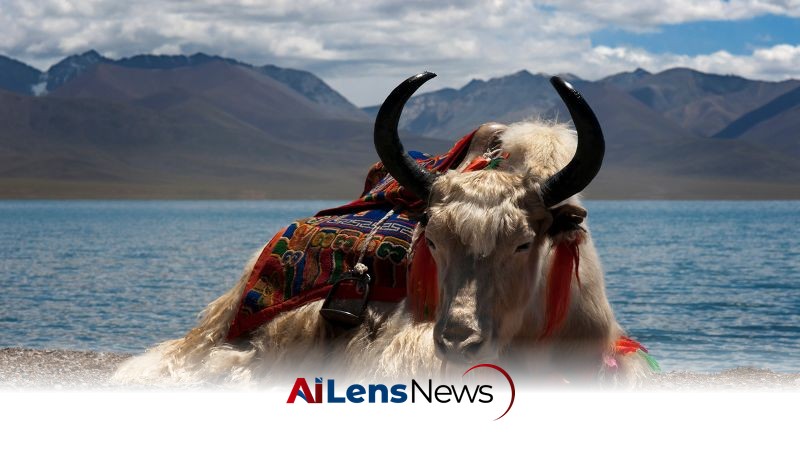


In Tibet, researchers are cloning yaks to create a healthier herd and potentially revive endangered wild species, raising ethical concerns.
Washington DC, United States Jul 25, 2026 ALN: On the high-altitude plains of Tibet, ringed by snowy mountains and buffeted by harsh winds, scientists are hard at work creating horned, fluffy clones. These are Tibetan yaks, designed and cloned in secretive labs more than 4,000 meters above sea level, where researchers hope to create an “elite” herd of super-yaks, healthier and more fertile than their predecessors. This project, scientists hope, could even potentially revive a wild species revered by local Tibetans as a favorite of the land god.
The long-haired Himalayan cattle are a critical part of the region’s economy and culture. Yaks have been domesticated for thousands of years, serving as a source of milk, meat, fiber, and labor for the nomadic herders of Tibet. Their dung is also used as fuel in a region where traditional wood sources are scarce. However, both domestic yaks and their wild cousins have been facing threats for years, with some rare subspecies at risk of disappearing entirely. The wild yak, in particular, has seen its population decline significantly, raising alarms among conservationists and local communities alike.
Authorities in the southwestern Chinese region have poured tens of millions of dollars into boosting the yak industry in recent years – and they hope cloning can help. The first yak clone came in July 2025, with Chinese state media hailing it as a breakthrough achievement that combined cloning with gene selection. More clones were born this spring, and researchers are now aiming to create a herd of more than 100 “elite” yak clones by 2028, boasting desired traits like faster growth and larger size.
“This shows the technology has moved from a one-time success to a stable, mass-scale application,” said Fang Shengguo, the project’s scientific lead and director of the State Conservation Center for Gene Resources of Endangered Wildlife, according to state-run news agency Xinhua. The implications of this statement suggest a significant shift in the approach to animal husbandry and conservation efforts in the region, potentially setting a precedent for similar initiatives in other parts of the world.
However, the project, which is supported by the Tibetan government, has also raised concerns among international observers. Cloning remains highly controversial, especially recent “de-extinction” projects, which gained global attention for trying to bring back long-dead species. The ethical implications of cloning, particularly in the context of conservation, are complex and multifaceted. Many experts acknowledge there are legitimate arguments for using cloning in conservation and for gene selection in farming. Yet, they caution that the ethical waters are murky, and any such project should have high levels of public transparency and accountability, said Lisa Moses, a veterinarian and bioethicist at Harvard Medical School.
So far, much of the yak cloning project remains mysterious, with information largely limited to glowing state-media coverage. The lack of independent scrutiny raises questions about the methodologies employed and the potential long-term consequences of such cloning efforts. CNN reached out multiple times to Fang and others on the research team; Fang’s employer Zhejiang University; China’s State Council Information Office; and the Tibet Autonomous Region Information Office. All of them either referred requests to other authorities or never responded, highlighting the challenges faced by journalists and researchers seeking to understand the full scope of the project.
First off, there are two main types of yaks in Tibet – and the cloning project has different goals for them. There are wild yaks, which face the risk of extinction and are protected under Chinese law. Their numbers have declined by more than a third in the last 30 years, with just 10,000 to 20,000 individuals left, according to the Wildlife Conservation Society. This decline is attributed to various factors, including poaching, habitat loss, and competition with domestic livestock.
Then we have their smaller cousin, the domestic yak, which is not endangered and numbers roughly 14 million worldwide, the vast majority in the rarefied air of the Tibetan plateaus. They’re a backbone of Tibet’s economy, used by nomadic farmers for wool, milk, meat, and farming labor such as plowing fields. The domestic yak plays a vital role in sustaining the livelihoods of many Tibetan families, making the health of the species crucial not only for ecological balance but also for cultural preservation.
Both species are threatened by climate change and habitat degradation, with warmer temperatures bringing invasive plant species and increased competition for resources – a big problem in one of the world’s most inhospitable terrains. The Tibetan plateau is particularly sensitive to climate changes, which can lead to severe disruptions in the delicate balance of its ecosystems. “In the plateaus, it is just a fragile ecosystem, and with climate change, you have more extreme weather. It could wipe out entire herds in a particular area if you have a really bad winter storm,” said Carol Chyau, founder of SHOKAY, a yak’s-wool clothing brand that works directly with conservation organizations and Tibetan communities.
There’s also the problem of inbreeding and cross-breeding. Wild yaks cross-breed with domestic yaks, which shrinks their wild genetic pool; and domestic yaks cross-breed with cows, similarly affecting their own genetic pool. This genetic dilution poses serious risks for the resilience of both populations, making them more susceptible to diseases and environmental changes. Even within the same species, unchecked inbreeding has harmed genetic diversity and overall health, experts say. Over the past decade, yaks’ body size and weight have gone down, as well as their fertility – with just a 20% success rate in natural reproduction and fertilization, said Fang, the lead scientist, in a news release by Zhejiang University last year. “Human activity and ecological changes have led to a severe degradation crisis for the yak population.”
Cloning, he hopes, can offer a solution. By utilizing advanced cloning technologies, scientists aim to produce yaks with enhanced traits that can better withstand the challenges posed by climate change and human encroachment. This could lead to a more robust and resilient population of yaks, both domestic and wild, potentially reversing some of the detrimental effects of inbreeding and habitat loss.
The cloning process involves several intricate steps that require cutting-edge technology and a deep understanding of genetics. Typically, the process begins with the selection of a donor yak, from which somatic cells are harvested. These cells are then reprogrammed to an embryonic state, allowing them to develop into a viable embryo. The embryo is subsequently implanted into a surrogate yak, which carries it to term.
This method, known as somatic cell nuclear transfer (SCNT), has been used successfully in various species, most famously with the cloning of Dolly the sheep in 1996. However, the application of SCNT in yaks is relatively novel and presents unique challenges due to the specific environmental conditions in which yaks thrive. The high altitude, extreme temperatures, and limited oxygen levels of the Tibetan plateau complicate the cloning process, requiring researchers to adapt existing techniques to suit the yaks' biological needs.
As the project progresses, it will be essential to monitor the health and viability of the cloned yaks, ensuring that they possess the desired traits while also maintaining genetic diversity. Additionally, ethical considerations surrounding animal welfare and the long-term implications of cloning must be addressed. The success of the yak cloning project could pave the way for similar initiatives aimed at conserving endangered species, but it also raises fundamental questions about the role of science in nature and the responsibilities of humanity towards other living beings.
In conclusion, while the cloning of yaks in Tibet represents a pioneering effort to address the challenges facing this iconic species, it is imperative to approach such initiatives with caution and a commitment to ethical principles. The balance between technological advancement and ecological responsibility will be crucial in determining the future of yaks and the ecosystems they inhabit.
To learn more about the latest developments in Environment & Climate, stay updated with our exclusive reports and analyses on AiLensNews.

