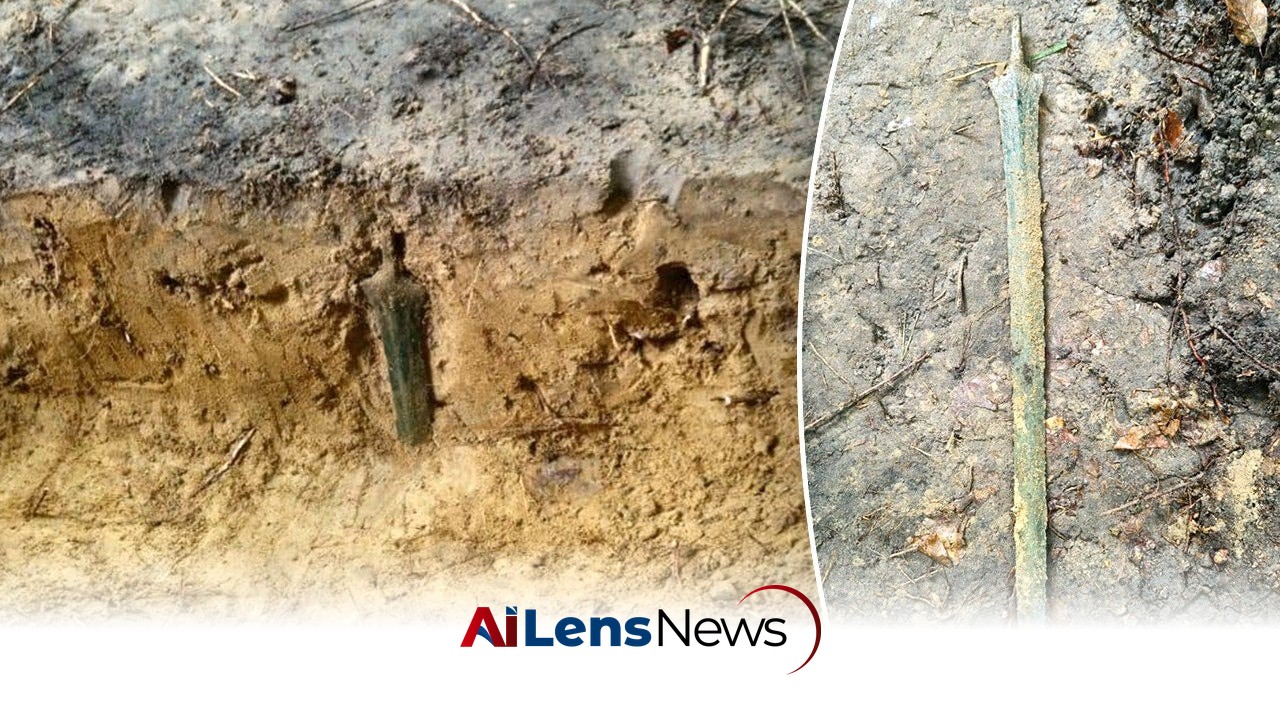


A 2,700-year-old bronze sword has been unearthed standing upright in northern Poland, dating back to the Late Bronze Age.
Washington DC, United States Jul 16, 2026 ALN: A metal detectorist recently made a remarkable discovery in northern Poland: a 2,700-year-old bronze sword found standing upright in the ground. This unusual positioning has intrigued archaeologists and history enthusiasts alike, raising questions about how such an artifact could remain in this position for millennia. The sword's upright stance suggests it may have been deliberately placed in the ground, possibly as part of a burial rite or a ceremonial offering, which adds layers of complexity to its historical significance.
The discovery was announced by the Pomeranian Provincial Heritage Conservator on social media earlier this month. The sword was located in the Gdańsk Forest District, close to the Baltic coast, and is believed to date back to the Late Bronze Age, specifically between 900 and 700 B.C. This period is characterized by significant advancements in metallurgy and trade, with various cultures across Europe interacting and influencing one another. The presence of such artifacts in Poland indicates the region's participation in broader historical narratives of trade, warfare, and social structure during this time.
Images released by officials depict the sword remarkably preserved, protruding from sandy soil during the excavation process. Marcin Wiśniewski, the hobbyist who found the weapon, previously discovered a Bronze Age hoard in a nearby forest, demonstrating his keen eye for historical artifacts. His discovery underscores the crucial role that amateur archaeologists and metal detectorists can play in uncovering historical treasures, often leading to significant contributions to our understanding of the past.
"After the discovery was reported, staff from our Department of Archaeological Monuments recovered the artifact using proper archaeological methods, working together with the finder," stated the Pomeranian Provincial Heritage Conservator in a translated post. This collaboration between amateur discoverers and professional archaeologists is vital in ensuring that finds are documented and preserved according to best practices in archaeology.
This latest find is not the first of its kind in the Gdańsk Forest District. In the 1920s, two antenna-hilt bronze swords were unearthed from a peat bog in Rynarzewo. Unfortunately, those artifacts were lost during World War II, a poignant reminder of the fragility of cultural heritage in times of conflict. The loss of such significant artifacts highlights the importance of preservation efforts and the need for continued archaeological work in the region to uncover and protect its historical treasures.
"The Provincial Heritage Conservator will decide which museum the sword will be transferred to," said Marcin Tymiński, press spokesperson for the Provincial Office for the Protection of Monuments in Gdańsk. This decision is critical as it will determine how the sword is displayed and studied, influencing public engagement with Poland's rich history.
Tymiński further explained that specialists will provide additional insights about the weapon once it is transferred to a museum for study. The decision regarding the museum's location has yet to be made, but it is expected that the sword will be subjected to thorough analysis, including radiocarbon dating and metallurgical studies, to uncover more about its origins and the techniques used in its creation.
Ancient weapon discoveries in Poland, while rare, have been gaining attention recently. Last year, archaeologists recovered a cache of early medieval weapons from a lake in west-central Poland, believed to be linked to the country's first rulers. Such finds contribute to a growing body of evidence regarding the complexity of early Polish societies and their interactions with neighboring cultures. Additionally, a 700-year-old medieval sword was discovered by an angler fishing in the Vistula River, further emphasizing the potential for historical discoveries in everyday activities.
The excitement surrounding the bronze sword's discovery highlights the ongoing fascination with Poland's rich archaeological history. The Late Bronze Age is a particularly intriguing time, as it marks the transition to the Iron Age, a period that saw significant changes in social structures, warfare, and technology. The sword itself can provide insights into the craftsmanship of the time, including the materials used, the techniques employed, and the cultural significance of weaponry in ancient Polish society.
Moreover, the discovery invites further research into the historical context of the period. It raises questions about the social and political dynamics of the Late Bronze Age in the region. Who wielded such weapons? What were the conflicts or rituals associated with them? How did trade routes influence the distribution of such artifacts? These questions are vital for understanding the broader historical landscape of ancient Europe.
In a broader context, discoveries like this bronze sword serve as a reminder of the importance of archaeological heritage and the stories that artifacts can tell. They encourage public interest in history and archaeology, fostering a sense of connection to the past. As ongoing excavations and discoveries continue to unfold, they contribute to a more nuanced understanding of the complexities of human civilization.
As experts continue to document and study this rare artifact, the implications of its discovery extend beyond the immediate excitement of finding an ancient weapon. It emphasizes the need for continued investment in archaeological research and heritage conservation in Poland and beyond. The collaboration between professional archaeologists and the public can lead to more discoveries and a deeper appreciation for the cultural narratives that shape our understanding of history.
The significance of this sword extends into various domains of study, including archaeology, history, and cultural anthropology. As researchers analyze the sword, they will likely explore the metallurgical techniques that were prevalent during the Late Bronze Age, which was a time of innovation in metalworking. The ability to create such weapons reflects the technological advancements of the era, as well as the socio-political structures that necessitated such craftsmanship.
Additionally, the ceremonial aspects of the sword's upright position may provide insights into the spiritual or religious beliefs of the communities that inhabited the region. Burial practices often reveal much about a culture's values and beliefs, and the positioning of this sword could indicate a ritualistic significance that warrants further investigation.
The discovery also serves as a catalyst for discussions about the preservation of cultural heritage in Poland, particularly in light of historical events that have threatened such artifacts. The loss of cultural heritage during conflicts, such as World War II, underscores the need for vigilant preservation efforts. This incident serves as a reminder for policymakers and heritage organizations to prioritize the protection of archaeological sites and artifacts, ensuring that future generations can access and learn from them.
Furthermore, the role of amateur archaeologists and metal detectorists, as exemplified by Marcin Wiśniewski, cannot be understated. Their contributions can lead to significant findings that might otherwise remain undiscovered. This partnership with professional archaeologists highlights the importance of community involvement in archaeology, which can enhance public interest and education about local history.
In conclusion, the discovery of the bronze sword in the Gdańsk Forest District is not just an isolated event; it is part of a larger narrative about Poland's historical and cultural evolution. As research progresses, it is anticipated that this artifact will shed light on the complexities of the Late Bronze Age and the intricate tapestry of human interaction that has shaped the region over millennia. The implications of this find will resonate through various fields, inspiring future research and fostering a deeper appreciation for the rich heritage that Poland possesses.
To learn more about the latest developments in Environment & Climate, stay updated with our exclusive reports and analyses on AiLensNews.

