

Researchers at the Technical University of Denmark demonstrate how quantum computing can improve AI-driven drug discovery, particularly for rare diseases.
Washington DC, United States Jul 12, 2026 ALN: Scientists have successfully shown a quantum computer can improve the accuracy and reach of generative artificial intelligence drug discovery models. And they did it using their spare time and money leftover from other projects.
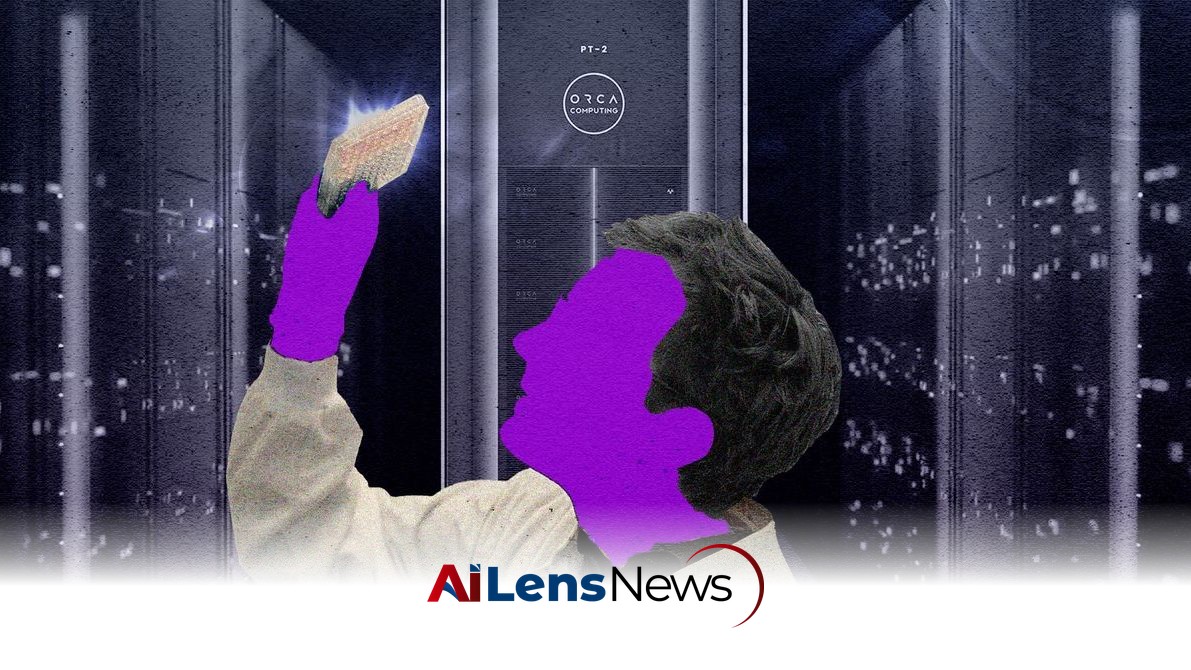
The Technical University of Denmark (DTU) team ran their generative AI model for predicting proteins in conjunction with a printer-sized quantum computer built by British startup ORCA Computing, which sped up AI by linking quantum machines with traditional processors. This hybrid approach allowed researchers to generate novel peptides—short chains of amino acids—capable of binding to specific proteins in the body. This capability is crucial in the context of vaccine development, where identifying effective binding sites can significantly enhance the efficacy of therapeutic interventions.
The team of researchers worked weekends and pooled unspent money from other projects because "most innovative science is too scary for foundations,” according to DTU professor Timothy Patrick Jenkins, who led the project. This determination reflects a broader trend in scientific research where funding can be a significant barrier to innovation, particularly in fields like quantum computing and AI, which require substantial investment and carry inherent risks due to their experimental nature.
Making the peptides in the laboratory and testing whether these would bind to the particular proteins showed that the model produced more successful peptides than its classical counterpart, with the strongest improvements observed where training data was rare. This finding is particularly relevant in the field of drug discovery, where data scarcity can often hinder the development of effective therapies, especially for diseases that disproportionately affect underserved populations.
The team believes that the machine could accelerate the development of personalized immunotherapies and vaccines, as well as improve drug efficacy in understudied groups. This is a vital consideration given that many existing medical treatments are based on data derived predominantly from Western populations, leading to potential disparities in healthcare outcomes for individuals from diverse genetic backgrounds. The implications of this research extend beyond mere academic interest; they touch on ethical considerations in medical research and the urgent need for inclusivity in clinical trials.
“We needed to really prove it to convince skeptics that our predictions connect to the real world,” Patrick Jenkins stated. Quantum computing remains a nascent field and faces intense scrutiny due to the technical challenges of building these machines and successfully applying them to solve real-world problems. The skepticism surrounding quantum computing is not unfounded; the technology is still in its infancy, and many potential applications remain theoretical rather than practical.
Even Patrick Jenkins was initially reluctant to explore the technology: “I was a huge quantum skeptic,” he says with a laugh, believing any application to his work would be “decades away.” This sentiment resonates with many researchers who are cautious about embracing new technologies without clear, demonstrable benefits. However, the successful integration of quantum computing into their workflow has provided a new perspective on its potential applications.
His team uses big data and AI to discover proteins that could unlock new immunotherapies cheaper and faster, often funded by the Novo Nordisk Foundation. While most biological model makers are desperate for more data, a particular challenge for his team has been the lack of data on the full variety of genetic information across the human race, as most medical research has focused on Western populations. This data gap can create significant hurdles in developing effective treatments for diverse populations, as therapies that work well for one demographic may not translate effectively to another.
His team hypothesized that embedding a quantum computer into their workflow could enable it to generate a more diverse set of peptides, especially for targets where they had less data. This hypothesis was inspired by earlier findings that quantum machines had a similar effect in generating images, suggesting that the unique computational capabilities of quantum systems could be leveraged to address challenges in drug discovery.
The newly discovered process won’t revolutionize research yet, as quantum computers are still too small to run full-scale, cutting-edge AI models, meaning that better results could still be achieved on a classical computer. “Quantum is still not very powerful, so the level of complexity that we could encode wasn’t a normal-sized antibody, which is what we usually work with,” says DTU PhD student Jonathan Funk. This highlights a significant limitation of current quantum technology, which, while promising, is not yet capable of outperforming classical systems in all aspects of computational tasks.
Furthermore, finding a peptide that can bind to a specific gene is just one step in vaccine development and wouldn’t alone yield successful drugs. The process of drug discovery is notoriously complex and involves numerous stages, including preclinical testing, clinical trials, and regulatory approval, each of which presents its own set of challenges. Thus, while the integration of quantum computing into AI-driven drug discovery is a promising development, it is only one piece of a much larger puzzle.
“I think it’s no surprise that lots of industrial companies think quantum is hazy and far away,” ORCA Computing chief executive officer Richard Murray explains, partly because the technology “has not ever had really clear near-term examples of usefulness.” This perception can hinder investment and interest in quantum technologies, as stakeholders may be reluctant to commit resources to a field that appears to lack immediate applications.
However, he emphasizes that this study is novel in that it demonstrates a near-term commercial application for quantum. His company is also applying the technology through projects with oil major BP on chemistry and carmaker Toyota on making its design process more efficient. The versatility of quantum computing applications across different industries showcases its potential to impact a wide range of fields, from pharmaceuticals to energy to automotive design.
The DTU team will now see if it can use the workflow with more cutting-edge models and larger proteins. “We needed this as an easy way to validate that now we actually have a shot at moving the needle substantially,” says Patrick Jenkins, noting that generative AI workflows are particularly valuable in neglected diseases that receive little research money. This focus on neglected diseases is crucial, as these conditions often affect the most vulnerable populations and are frequently overlooked by traditional funding sources.
He’s also looking at using a quantum computer to enhance his generative AI method for designing synthetic antidotes for snakebite venom. This application underscores the potential of quantum computing to address urgent public health challenges, particularly in regions where snakebites are a significant health threat. Overall, the intersection of quantum computing and AI in drug discovery represents a frontier of research that could lead to significant advancements in healthcare, particularly for those who have historically been underserved by the medical research community.
To learn more about the latest developments in Medical Science, stay updated with our exclusive reports and analyses on AiLensNews.

