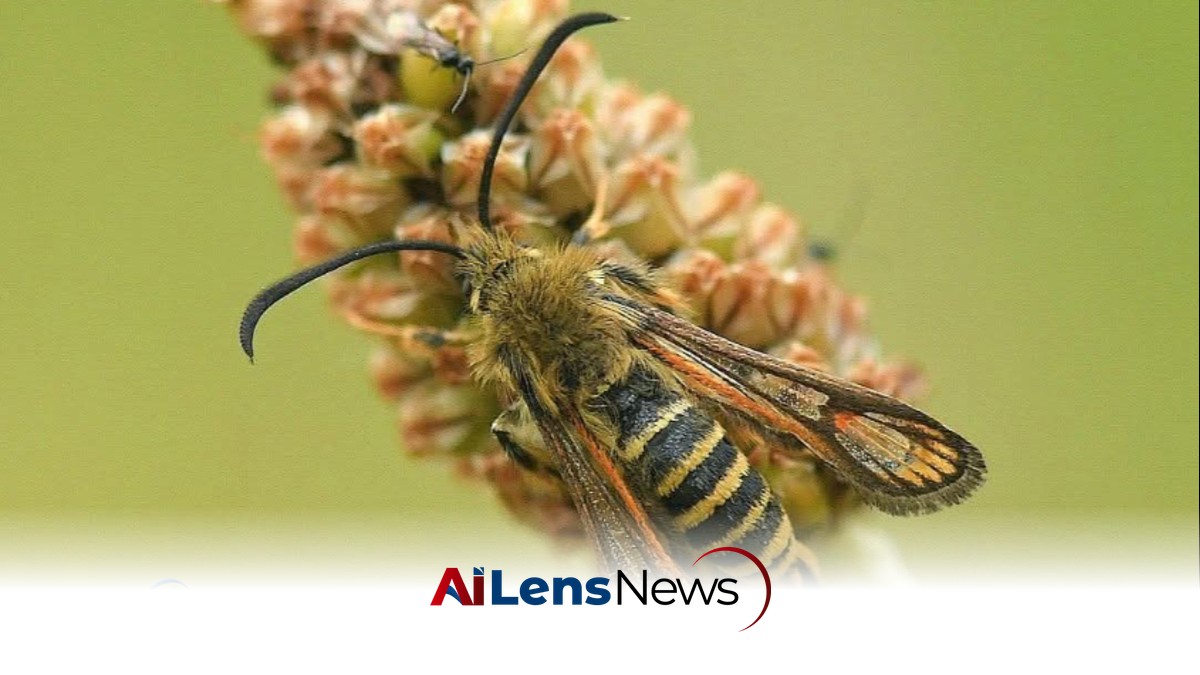


The six-belted clearwing moth has been spotted in Telford, raising hopes for further discoveries in the area.
New Delhi, India Jul 9, 2026 ALN: A rare moth has been spotted at a park in Telford, according to conservationists.
The West Midlands Butterfly and Moth Society expressed their delight at the sightings of the six-belted clearwing, a species that had never been recorded in the town before. This discovery marks an important milestone for local biodiversity and highlights the ecological significance of Telford's natural habitats. The six-belted clearwing (Bembecia ichneumoniformis) is known for its distinctive appearance, characterized by its six yellow-orange bands on a black body, making it a unique addition to the local fauna.
Described as "tiny and easily overlooked," the six-belted clearwing is not only rare but also plays a crucial role in the ecosystem. Its presence indicates a healthy , as these moths are sensitive to habitat changes and pollution. The discovery of this moth suggests that Telford's ecosystem may be more robust than previously thought, providing a habitat that supports diverse species. Conservationists hope to find more of these moths in the Telford area, which could lead to further studies on their population dynamics and the overall health of local ecosystems. Understanding the factors that contribute to the presence of such species can inform future conservation strategies.
The six-belted clearwing is known to lay its eggs in a plant called Bird's-foot trefoil (Lotus corniculatus), which is commonly found on many of Telford's former brownfield sites, including Rough Park, the nature reserve where the moth was spotted. Bird's-foot trefoil is an important plant for various species of butterflies and moths, serving as a food source for their larvae. The relationship between the six-belted clearwing and Bird's-foot trefoil exemplifies the interconnectedness of species within an ecosystem. This relationship highlights the importance of preserving not only the moths but also their host plants, which are critical for the survival of various species.
Conservationists have identified two other potential sites where the moths might be found, indicating that further exploration and monitoring could yield additional sightings. This proactive approach is essential in conservation efforts, as it allows for the identification of key habitats that may require protection or restoration. Monitoring these sites will also provide valuable data on the distribution and abundance of the six-belted clearwing, contributing to broader conservation strategies. By understanding where these moths thrive, conservationists can better advocate for the preservation of these habitats.
The insect was discovered by the newly formed Telford & Wrekin Butterfly and Moth Recording Group, which utilized pheromone lures to attract males by mimicking the scent given off by female moths. This innovative method of attracting moths is part of a growing trend in entomological research, where scientists employ various techniques to better understand insect behavior and ecology. The successful use of pheromone lures not only highlights the ingenuity of local conservationists but also underscores the importance of citizen involvement in biodiversity monitoring. Citizen scientists play a vital role in conservation efforts, as they can cover more ground and report findings that professionals may not be able to access due to time or resource constraints.
The West Midlands Butterfly and Moth Society noted that Telford is currently under-recorded for moth sightings but is known to have significant populations of regionally important butterflies and moths, including the green hairstreak, dingy skipper, and six-spot burnet. The under-recording of moth species in Telford calls attention to the need for increased awareness and engagement within the community regarding local wildlife. By encouraging residents to participate in recording and monitoring efforts, the society aims to gather more comprehensive data on moth populations, which can inform conservation actions. Engaging the community in these efforts can also foster a greater appreciation for local biodiversity and the need to protect it.
In their efforts to promote biodiversity, the society aims to encourage the spread of Bird's-foot trefoil to support other butterflies and moths. This initiative reflects a broader commitment to habitat restoration and enhancement, recognizing that the health of one species can significantly impact others within the same ecosystem. By fostering an that supports a diverse range of flora and fauna, conservationists hope to create a sustainable habitat that can withstand al changes and support future generations of wildlife. This approach aligns with global conservation goals, emphasizing the importance of maintaining ecological balance.
The discovery of the six-belted clearwing in Telford is not just a local phenomenon; it resonates with global conservation efforts aimed at protecting biodiversity. The decline of various moth species worldwide has raised alarms among ecologists, as moths play a vital role in pollination and serve as food sources for birds and other wildlife. The increased focus on moth conservation is essential, as these insects are often overlooked in favor of more charismatic species like butterflies. Moths are integral to many ecosystems, and their decline can have cascading effects on food webs and ecosystem health.
As the Telford & Wrekin Butterfly and Moth Recording Group continues its work, the implications of their findings could extend beyond local conservation. By documenting the presence of rare species like the six-belted clearwing, they contribute to a larger understanding of biodiversity patterns and trends, which can inform conservation policies at regional and national levels. Their efforts may also inspire similar initiatives in other under-recorded areas, fostering a network of citizen scientists dedicated to the preservation of moths and their habitats. This collaborative approach can enhance the effectiveness of conservation measures and promote a culture of al stewardship.
This discovery has the potential to spark interest in local wildlife among residents, encouraging them to engage more actively with their . Educational programs, workshops, and community events centered around moth and butterfly conservation could play a significant role in raising awareness and fostering a sense of stewardship among the population. Such initiatives can help cultivate a culture of conservation, where individuals feel empowered to contribute to the protection of their local ecosystems. Community engagement is crucial in conservation, as it can lead to more informed citizens who are willing to advocate for al protection.
In conclusion, the sighting of the six-belted clearwing in Telford is a promising development for local conservation efforts. It serves as a reminder of the importance of biodiversity and the need for continued research and monitoring to protect vulnerable species. The collaboration between conservationists and the community is vital in ensuring that Telford's natural heritage is preserved for future generations. As more discoveries are made, there is hope that Telford will become a beacon of biodiversity, showcasing the richness of its natural and the importance of conservation in maintaining ecological balance. The ongoing efforts to document and protect local species can lead to a healthier ecosystem that benefits both wildlife and the community.
To learn more about the latest developments in Biology & Life Sciences, stay updated with our exclusive reports and analyses on AiLensNews.

