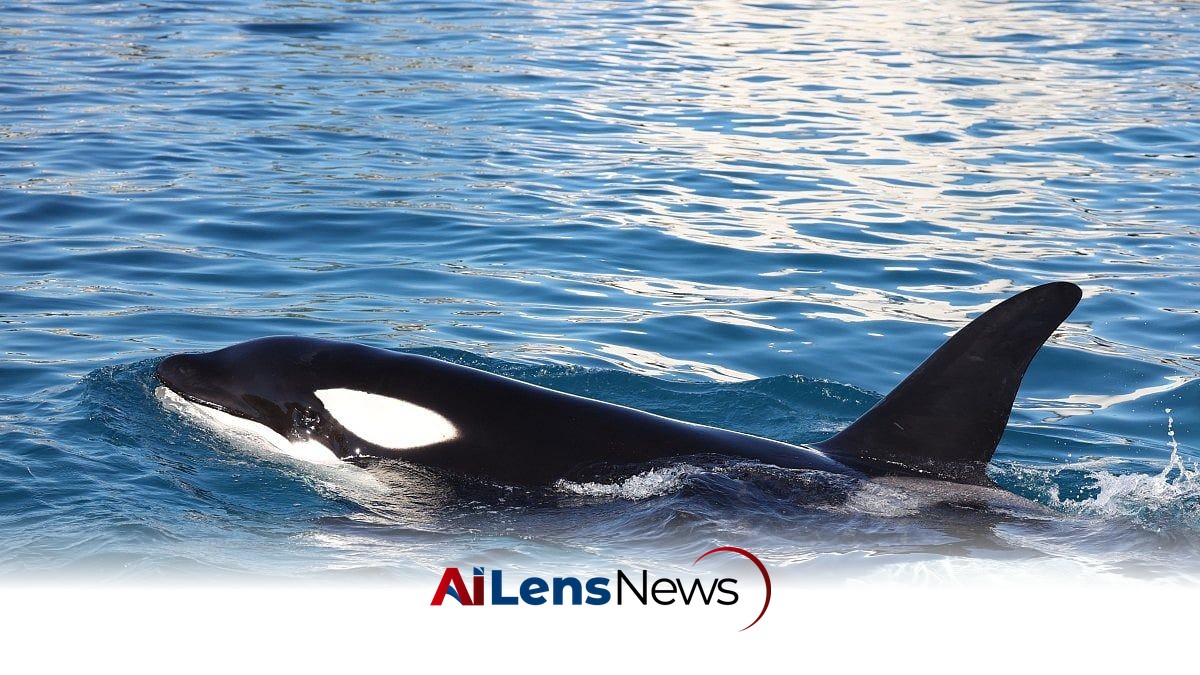


A recent study reveals killer whales engaging in playful behavior by blowing a sunfish to pieces, offering new insights into orca intelligence.
Kuwait City, Kuwait Jul 23, 2026 ALN: Sydney: A group of killer whales have been documented blowing a sunfish to bits in an unusual underwater escapade offering never-before-seen insights into orca behaviour, according to research released Thursday.
Video released by the US-based NGO Beneath The Waves shows one orca holding the tail of a sunfish, with its fellow whale then charging with full force into the rotund mola, which explodes into pieces. This striking behaviour has sparked interest and debate among marine biologists and animal behaviourists, as it raises questions about the motivations behind such actions.
The sunfish, also known as the mola mola, is already dead prior to this event, indicating that this is not an elaborate murder ritual but rather an intriguing display of orca behaviour. Researcher Kathryn Ayres, who is involved in the study, posits that the orcas may be attempting to turn the fish into smaller bite-sized chunks for easier consumption. However, she also suggests that it could simply be for amusement, as orcas are known to exhibit playful behaviour with their food.
"Orcas often tear apart prey and share it with other members of the group, including calves and juveniles," Ayres noted, emphasizing the social aspect of their feeding habits. This behaviour aligns with the known social structures of orca pods, which are often matrilineal and demonstrate complex social interactions.
The antics of these killer whales were documented on two occasions in 2024 and 2025 off the Gulf of California, according to the research published in the peer-reviewed journal Frontiers in Ethology. This geographical location is significant, as the Gulf of California is known for its rich marine biodiversity and serves as a habitat for many species of marine life, including various types of fish and marine mammals.
Mark Peter Simmonds, director of science at OceanCare, likened the orcas' behaviour to human formal meals where socializing as well as nutrition are in play. He commented, "Perhaps it is similar to the time when the lead human at a formal meal would carve up the roast," suggesting that the act of tearing apart the sunfish may serve a social purpose within the orca pod, facilitating bonding and cooperation among its members.
Killer whales, or orcas, are highly intelligent apex predators and have been known to play with their prey and deploy sophisticated tactics to ensnare them. Their intelligence is often compared to that of primates and even humans, as they exhibit problem-solving skills and complex social structures. They have been documented engaging in various hunting strategies, such as "wave washing"—a cooperative technique where they create choppy waters to dislodge seals from ice sheets, making them easier to capture and eat.
Furthermore, orcas have exhibited behaviours that indicate a level of creativity and playfulness. They have been seen wearing dead salmon as hats, a behaviour that remains a mystery to researchers. This playful interaction with their environment underscores the cognitive complexity of these marine mammals and challenges our understanding of animal behaviour.
In addition to their playful antics, orcas have also demonstrated the use of tools. Research conducted last year revealed that a critically endangered population of orcas in the Salish Sea has been observed breaking off pieces of seaweed to rub and groom each other. This behaviour not only highlights their intelligence but also suggests a level of social grooming that is often seen in other highly social animals, such as primates.
Rebecca Wellard, a scientist at Western Australia's Curtin University who was not involved in the research, remarked, "It just really shows us how intelligent orcas are. I think I hope that gives people more respect for complex creatures that are great predators in their environment." Wellard's comments reflect a growing recognition of the need to understand and protect these intelligent creatures, as their behaviours can provide insights into the health of marine ecosystems.
The hapless sunfish can weigh up to 2,000 kilograms and is distinct for both its size and peculiar shape, featuring a flattened body and large dorsal and anal fins. These fish are known for their unique appearance and are often found basking at the ocean's surface. However, they do not commonly explode, as the research points out. "They're a heavy, bony fish, so it must be some severe ramming," Wellard explained, indicating that the force exerted by the orcas is significant enough to cause such a dramatic outcome.
The implications of this research extend beyond a mere curiosity about orca behaviour. Understanding the social structures and feeding habits of orcas can provide valuable insights into their role in marine ecosystems and the health of ocean environments. As apex predators, orcas play a crucial role in maintaining the balance of marine life, and their behaviours can serve as indicators of changes in ocean health, particularly in the face of climate change and human impact.
Furthermore, the documentation of such unique behaviours can aid in conservation efforts, as it highlights the need for protecting the habitats of these intelligent creatures. As researchers continue to study the complexities of orca behaviour, it becomes increasingly important to advocate for policies that safeguard marine environments and ensure the survival of these remarkable animals.
In conclusion, the recent documentation of killer whales blowing a sunfish to bits not only captivates the imagination but also enriches our understanding of orca behaviour. As more research is conducted, it is hoped that these insights will foster greater respect and protection for these intelligent marine mammals and the ecosystems they inhabit.
Orcas, or killer whales, belong to the family Delphinidae and are the largest members of the dolphin family. They are found in oceans all over the world, from the Arctic to the Antarctic, and their populations are divided into distinct ecotypes that exhibit different behaviours, diets, and social structures. For instance, transient orcas, which hunt marine mammals, are known for their more solitary behaviour compared to resident orcas, which primarily feed on fish and are often seen in larger, more cohesive pods.
The social structure of orca pods is notably complex, with strong familial bonds often observed. Matrilineal groups, where offspring remain with their mothers for extended periods, are common. This social structure is thought to facilitate the transmission of knowledge and hunting techniques across generations, which is crucial for their survival in diverse and changing marine environments.
The recent observations of orca behaviour also raise questions about the cognitive abilities of these animals. Research into animal intelligence suggests that orcas possess advanced problem-solving skills, emotional depth, and even cultural traits, such as unique vocalizations and hunting techniques that vary by region. This cognitive complexity makes them a subject of fascination for researchers and the public alike, as it challenges our understanding of what it means to be intelligent in the animal kingdom.
As we continue to explore the depths of our oceans, the behaviours exhibited by orcas and other marine mammals serve as a reminder of the intricate web of life that exists beneath the surface. Their role as apex predators underscores the importance of maintaining healthy marine ecosystems, as their presence can significantly influence the population dynamics of other marine species. The loss of orca populations due to human activities such as fishing, pollution, and climate change can have cascading effects on ocean health.
Consequently, the documentation of the killer whales' recent behaviour not only sheds light on their playful interactions but also emphasizes the need for ongoing research and conservation efforts. Protecting orca habitats and ensuring their survival in the wild is essential for maintaining the balance of marine ecosystems and fostering a greater understanding of the natural world.
In light of these findings, it is crucial for policymakers, conservationists, and the public to recognize the value of orcas and the ecosystems they inhabit. As we learn more about their behaviours and social structures, we can better advocate for the protection of marine environments and promote sustainable practices that benefit both wildlife and human communities. The future of orcas and the health of our oceans depend on our collective efforts to understand, appreciate, and protect these remarkable creatures.
To learn more about the latest developments in Environment & Climate, stay updated with our exclusive reports and analyses on AiLensNews.

