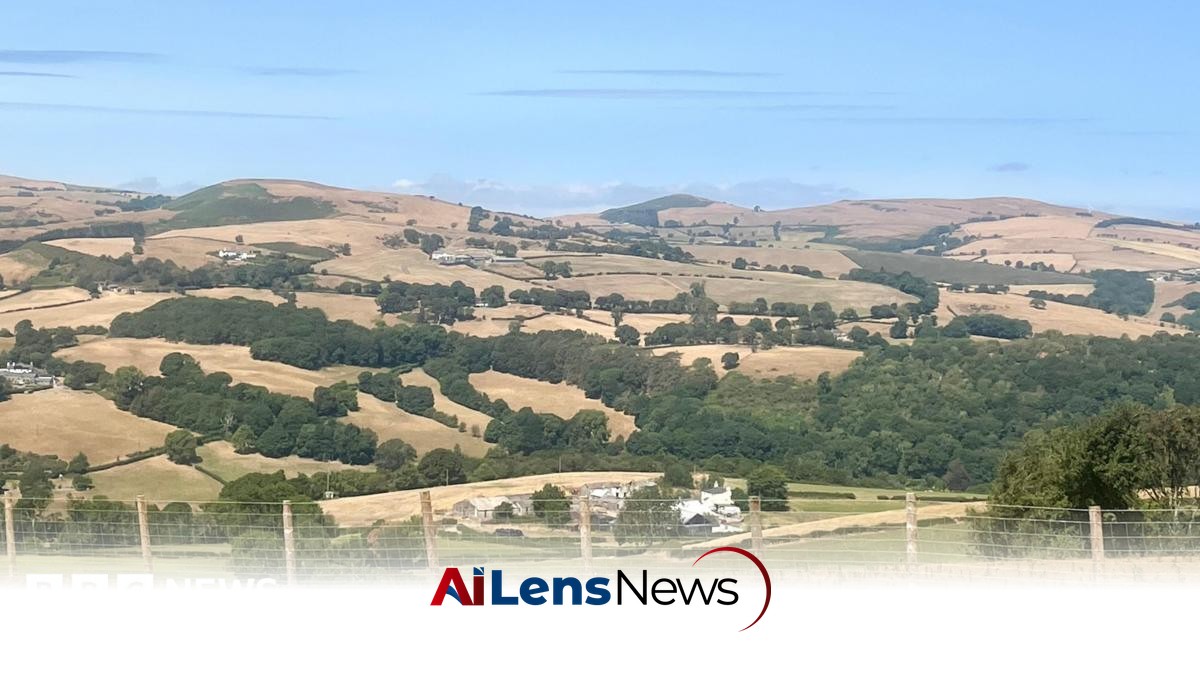


River levels in Wales are nearing all-time lows due to unprecedented dry weather, prompting an impending drought announcement from Natural Resources Wales.
New Delhi, India Jul 23, 2026 ALN: River levels are approaching all-time lows across Wales as an imminent "al drought" announcement looms for parts of the country.
Wales has seen about 5% of the average rainfall for July, following a series of back-to-back heatwaves and a drier than usual April to June.
Afonydd Cymru, which represents Wales' rivers trusts, stated that low river flows are causing "significant problems," killing fish and other wildlife, while farming unions warned of failing crops and heat-stressed livestock.
An announcement is expected later on Thursday from Natural Resources Wales (NRW), who said they are closely monitoring the situation.
NRW announced last week that north and south-east Wales were moving to "prolonged dry weather" status, classified as a first step towards drought.
This triggered enhanced monitoring and checks of waterways and important sites for wildlife, as well as advice for farmers and others who use water from rivers.
Huwel Manley, NRW head of operations for south west Wales, reported that several watercourses are drying up, and "even larger rivers are running at lower flows than usual."
Rivers classified as exceptionally low include the Clwyd, Alwen, Alyn, Clywedog, Dyfi, and Conwy in north Wales, as well as the Wye, which runs through parts of mid Wales and south along the border with England.
Extra water is being released from reservoirs to support flows on the Clwyd and Wye, as well as the river Severn in the south east and the Dee in north-east Wales.
While some rain is forecast for the weekend, Manley warned that it will take time for river systems to recover.
Parts of the country could see the declaration of an "al drought," he predicted.
This would mean that water shortages in rivers and the ground, as well as dry soils, are having an immediate and detrimental impact on ecosystems, rather than posing a threat to drinking water or household supplies.
However, Manley urged the public to be cautious with their water use for the sake of wildlife and the wider ecosystem.
"Maybe have a shower rather than a bath," he suggested. "And there are also little things that can be done, such as putting some water out in the garden for mammals and birds."
An al drought occurs when a prolonged lack of rainfall and high temperatures cause severe stress on the natural ecosystem.
NRW states it results in critically low river flows, diminished reservoir reserves, and exceptionally low groundwater levels, negatively impacting wildlife, fisheries, and protected habitats.
This type of drought typically develops before agricultural impacts, like failing crops, or public water shortages occur. Impacts include:
Shrunken rivers - a decrease in oxygen levels, an increase in water temperatures, and a restriction in the migration of species like salmon.
Habitat loss - reduced water levels cause riverbeds to dry up, leading to the loss of biodiversity and fish kills.
Private water pressures - natural springs and private boreholes can run dry.
When al drought conditions are identified, NRW often transitions areas to a "prolonged dry weather" status.
This triggers enhanced monitoring of waterways, restricts water abstraction licenses to protect low flows, and leads to the release of additional water from reservoirs into rivers.
Gail Davies-Walsh, chief executive of Afonydd Cymru, noted that the country's waterways are already under strain due to pollution.
"The lack of rainfall and decline in river flows is really starting to exacerbate water quality," she said.
"We've already had a couple of rivers that have dried up, and we're receiving reports of fish that have been killed because of a lack of water."
High river temperatures are also raising concerns for the survival of aquatic life, with water temperatures as high as 28C recorded in the Wye and Usk.
Davies-Walsh expressed worry that public frustrations with water companies over sewage spills and leakages are making them less likely to heed advice about careful water use.
"I'm looking at social media comments and I totally understand those frustrations," she said.
"But we've really got to think about the fact that our water usage is directly impacting the flow in our rivers and directly impacting fish and other wildlife's survival.
"We really need to do our little bit to protect them."
At the Royal Welsh Agricultural Show in Llanelwedd, Powys, farmers and growers discussed the weather's impacts.
"People are going to have to adapt, think about gathering their own water," said Paul Thomas of the National Vegetable Society.
"In the spring when it was crazy rain, everything was delayed - sowing and planting - because it was just relentless, and then it was almost like an off-switch," added garden and food writer Stephanie Hafferty.
"One of the things I noticed this morning is the trees are going into autumn color, and that's a big worry; it's not even August yet."
Elen Hughes of Trelawnyd, Flintshire, mentioned that the fields on her family's farm are "bone dry, nothing's growing."
"They've just last week had to feed the second silage cut to the cows because there's no food for the cattle."
"We've had really dry weather but also it's been really hot - and those things combined, if you're a livestock farmer, mean excessive pressure on livestock," said Abi Reader, president of NFU Cymru.
"You have to make sure they have enough water and shade, and we are getting farms with springs and streams drying up," she told BBC Walescast.
"If you're an arable farmer, the heat and dry weather have also forced many crops to ripen a lot earlier than they normally would.
"It's unprecedented early harvesting this year, and farmers are going to see lower crop yields."
Welsh Water emphasized that NRW's drought declarations differ from its own announcements.
The company has already implemented a hosepipe ban for 33,000 properties in west Wales.
"NRW's drought status reflects all conditions, including factors such as rainfall, river flows, and groundwater levels," a spokesperson said.
"By contrast, Welsh Water's Temporary Use Ban is an operational measure based on local water demand and our ability to replenish service reservoirs with drinking water at the same rate, or faster, than customers are using water.
"It is driven by the capacity of the local treatment works and distribution network to keep up with sustained demand.
"This means different parts of Wales can experience different operational pressures, even if they are not in the same al drought category declared by NRW."
To learn more about the latest developments in Environment & Climate, stay updated with our exclusive reports and analyses on AiLensNews.

