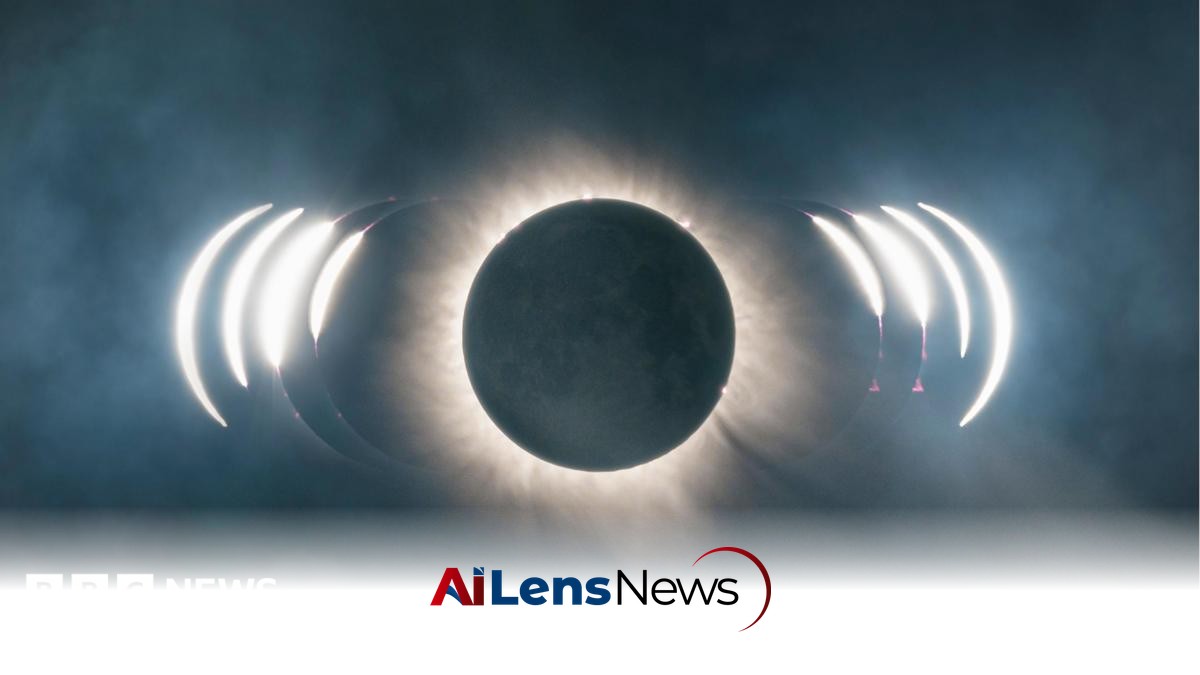


On August 12, 2026, a significant solar eclipse will be visible across the UK, with optimal viewing locations identified in the West Country.
New Delhi, India Jul 31, 2026 ALN: People across the West Country will get their best view of a solar eclipse in nearly three decades when up to 95% of the sun disappears behind the moon on 12 August.
The rare celestial event will be the most dramatic eclipse visible from the UK since 1999, with Cornwall, Devon, Somerset, and Bristol among the best places in the UK to watch it.
People in Bristol, Somerset, Gloucestershire, and Wiltshire are expected to see around 90% of the Sun obscured, while Cornwall and the Isles of Scilly should get some of the best views anywhere in the UK with 95%.
While the UK will miss out on a total eclipse, astronomers say this will be the most impressive solar eclipse visible from Britain since the much-remembered event of August 1999.
A solar eclipse occurs when the moon moves between the sun and Earth, blocking the sun's light either partially or fully when viewed from the UK. This phenomenon is not only a spectacular visual event but also a significant astronomical occurrence that has fascinated humanity for centuries.
The National Space Centre stated that the main event of this year's total solar eclipse (when the moon passes between the sun and Earth, completely blocking the face of the sun) will be visible in a giant arc moving across from Northern Russia to Greenland, Iceland, Spain, and Northern Portugal. This arc of totality is the area where observers will experience the full effect of the eclipse, witnessing the sun completely obscured by the moon for a brief period.
They said although the "arc of totality – the path the eclipse shadow takes - misses us here in the UK, we will still get to see over 90% of the sun covered by the moon." The partial eclipse will provide a remarkable opportunity for residents and visitors in the West Country to experience this celestial event, even if it does not reach totality.
The next full solar eclipse in the UK isn't expected for another 66 years, on 23 September 2090, according to the Royal Museums Greenwich, so it is definitely worth putting this one in the calendar. Given the rarity of such events, the anticipation surrounding the eclipse is palpable, with both amateur and seasoned astronomers preparing for what promises to be a memorable occasion.
According to Royal Museums Greenwich, viewers in the West Country will see the eclipse begin at 18:17 BST. The maximum eclipse will occur at 19:12 BST, before the event ends at 20:06 BST. This timing is crucial for enthusiasts planning their viewing strategies, as the event takes place during the evening hours, making a clear view of the western horizon essential.
Simon Holbeche, chair of the Bath Astronomers, emphasized the importance of location, stating: "Other than the weather, the only other criteria is a good view all the way to the horizon looking West." This is because it's an evening eclipse and the sun/moon will be dropping closer to the horizon during the eclipse. Therefore, in terms of locations, some might choose to pop upstairs if their house is westerly facing, or venture up the local treeless hills, such as Roundhill, Twerton, or Little Solsbury Hill in Bath.
Astronomers recommend elevated locations with unobstructed views to the west for optimal viewing of the eclipse. Here are some suggested spots across various regions:
Bristol
The Downs Sea Walls Viewpoint, Clifton with Bristol astronomers, Victoria Park, Brandon Hill, and Cabot Tower are all excellent locations to witness the celestial event.
Wales
In Wales, ideal viewing spots include Cardiff, the Gower Peninsula, Swansea, and Rest Bay Beach in Porthcawl.
Wiltshire
In Wiltshire, Warminster Town Park with the Starquest Astronomy Club, Cley Hill, Avebury Stone Circle, and Barbury Castle offer great vantage points.
Gloucestershire
For those in Gloucestershire, Cleeve Hill near Cheltenham, Robinswood Hill in Gloucester, and Chosen Hill are recommended locations.
Somerset
In Somerset, Wells Cathedral Green with the Wells & Mendip Astronomers, Beckford Tower with the Bath Astronomers, and Little Solsbury Hill provide excellent views.
Devon
Devon residents can enjoy the eclipse from Exmoor National Park, the Norman Lockyer Observatory, Sidmouth, and The Poltimore Inn in North Molton, which will be hosting the Space Detectives.
South West and Cornwall
In the South West and Cornwall, Lowery Cross Car Park in Plymouth with the Plymouth Astronomical Society, Penzance, and Sennen near Lands End are among the best locations.
Isles of Scilly
On the Isles of Scilly, St Mary's Island from Hugh Town, as well as west-facing beaches and the Community Observatory on St Martins, will offer stunning views of the eclipse.
Holbeche advised enthusiasts to scout out a location beforehand using an outstretched hand. He described a method for estimating the sun's position: "Looking to the West with your hand outstretched and the thumb and little finger spread as wide as possible, turn your wrist so your thumb touches the horizon (0 degrees) and your little finger is straight above it (using the right hand). Your pinkie is where the sun will be at the start [around 18:15] of the partial solar eclipse. Now, bring your fingers together with your thumb holding down your little finger and rest the bottom of the three remaining fingers on the horizon again. The top finger is where the sun will be at the end of the partial solar eclipse," he added. This practical approach can help viewers select the best spots for viewing the eclipse effectively.
The Royal Observatory Greenwich has issued the following guidance for watching the event safely:
Use eclipse glasses - they will have safety certification 'ISO 12312-2' or 'ISO 12312-2:2015' printed somewhere on the glasses. These specially designed glasses filter out harmful solar radiation, allowing safe viewing of the eclipse.
Use a solar telescope, which are being offered to look through as part of local astronomical society viewing events. These telescopes are equipped with appropriate solar filters, ensuring safe observation.
Make a pinhole projector which projects an indirect image of the sun onto a surface through a tiny hole. This is a simple and effective way to view the eclipse without looking directly at the sun.
The Royal Observatory Greenwich will be live streaming the event, which is a safe way of seeing it, they said. This option allows those unable to find a suitable viewing location to still experience the eclipse.
Dr. Stephen Price, chair of the Bristol Astronomical Society, emphasized the importance of safety, stating that with the right weather, "this will be an amazing astronomical spectacle." He reiterated that to view the sun safely, individuals should use ISO 12312-2 certified eclipse glasses throughout the eclipse, noting that anything else, including sunglasses, are unsafe. Furthermore, he warned that if you're using cameras, telescopes, or binoculars, all must have proper solar filters fitted to the front of the optics. It is crucial to never look at the sun with the naked eye, as this can cause permanent damage to your eyesight.
Landscape astrophotographer Josh Dury, from Somerset, will be photographing the partial eclipse and emphasized the importance of using eclipse glasses for anyone trying to capture the event safely. He recommended placing eclipse glasses over a smartphone camera lens to take a basic image of the eclipse. This technique allows photographers to document the phenomenon without risking damage to their eyes or equipment.
As the date of the eclipse approaches, interest in the event is expected to grow, with local astronomical societies and communities likely to organize viewing parties and educational events. These gatherings will not only enhance the viewing experience but also foster a sense of community among those who share a passion for astronomy and the wonders of the universe.
In conclusion, while the eclipse on 12 August 2026 will not be a total eclipse for those in the UK, it presents a unique opportunity to witness a significant astronomical event. With proper preparation, safety precautions, and a suitable viewing location, individuals can enjoy this rare celestial spectacle and create lasting memories as they gaze at the skies together.
To learn more about the latest developments in Space & Astronomy, stay updated with our exclusive reports and analyses on AiLensNews.

