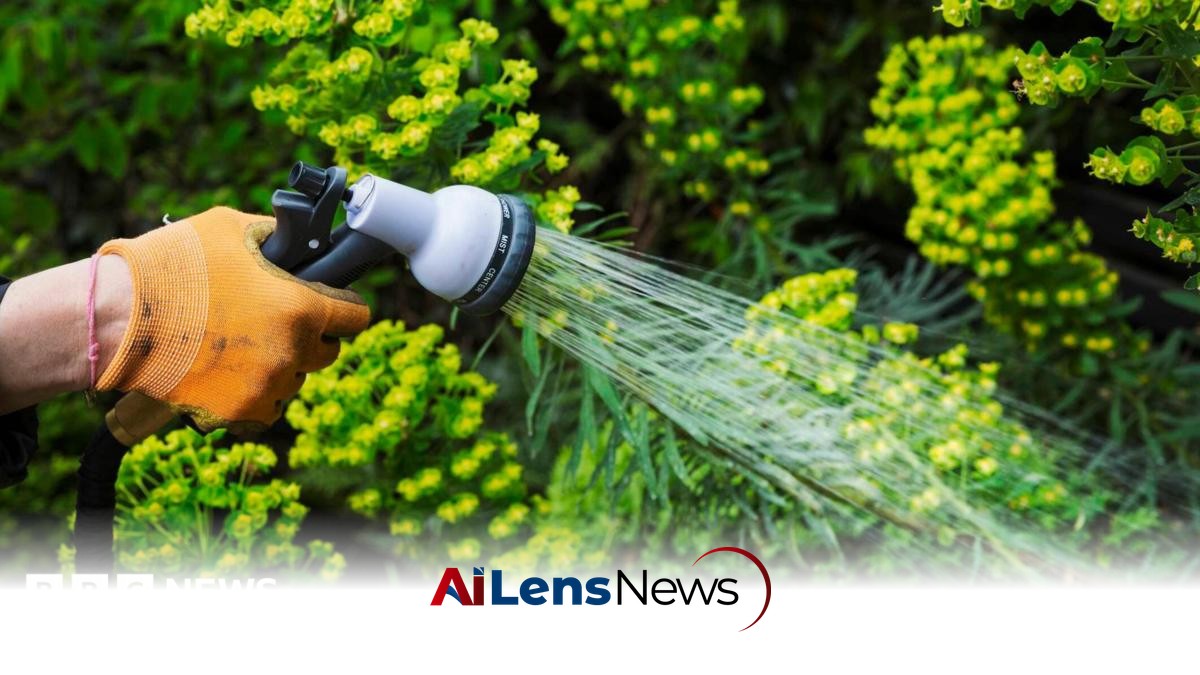


As London faces a hosepipe ban due to increased water demand during heatwaves, this article explores its implications and exemptions.
New Delhi, India Jul 25, 2026 ALN: More and more Londoners are living under a hosepipe ban as the long summer of dry weather continues.
This restriction comes after greater demand for public water supplies, which has increased by up to 30% on the hottest days this July. The hosepipe ban is a direct response to the ongoing heatwave, which has seen temperatures soar, leading to increased water consumption across the region. The situation has been exacerbated by a prolonged period of dry weather, which has left reservoirs and water sources at lower levels than usual.
Seven water companies have implemented or announced future hosepipe bans to reduce the strain on treatment works and storage during peak demand. This includes major providers such as Thames Water and Affinity Water, while SES Water has stated it has no plans to announce a ban at this time. The decisions made by these companies reflect a growing concern about the sustainability of water resources amidst changing climate conditions and rising population demands.
Thames Water has implemented a temporary usage ban for 10.1 million customers due to a high demand for water, as a result of recent heatwaves and prolonged dry weather in the spring and summer. The restrictions mean hosepipes should not be used for watering gardens, washing cars, allotments, filling paddling pools or swimming pools, or cleaning windows. Sprinkler systems are also part of these restrictions, which aim to conserve water during a critical period.
There are some exceptions to these rules and these exemptions may include:
The Royal Horticultural Society (RHS) has advised gardeners managing through hot weather or hosepipe restrictions to use stored rainwater or grey water where possible and to water deeply but less frequently at the base of plants rather than little and often. This advice underscores the importance of efficient water usage, particularly during periods of drought.
Guy Barter, chief horticulturalist at the RHS, emphasized the need for adaptation in gardening practices as climate patterns shift. He stated, "As our climate continues to change, adapting how we manage water is essential." The RHS has also noted that planting more drought-tolerant species, improving soil health, and increasing tree cover and shade can enhance garden resilience in the face of future climate challenges.
Businesses, public sector organisations, and charities can continue to use a hosepipe where it is directly needed for their commercial activities. This includes professional cleaners and car washing services, which are often reliant on water for their operations. However, hoses and sprinklers cannot be used in parks, public gardens, and other green spaces; there are exemptions for health and safety and National Plant Collections.
Kew Gardens, a renowned botanical garden in Richmond, west London, is exempt from these restrictions but has stated that its horticulturists already take a number of measures and precautions to limit water usage. The garden, which boasts more than 11,000 trees in its living collections, has implemented sustainable practices in order to conserve water while maintaining its diverse plant life.
There has been no end date set for the ban, which reflects the uncertainty surrounding water supply levels amidst ongoing climate conditions. Water companies that have implemented the ban have indicated that it will remain in place until water resources recover sufficiently and demand returns to a sustainable level. This situation is fluid, and companies are closely monitoring water levels and usage.
In the meantime, water companies ask customers to be mindful of how they use water. This includes taking steps to reduce non-essential water usage, such as avoiding excessive outdoor watering and being conscious of personal water consumption. In terms of enforcement, water companies have stated they will reach out to customers who repeatedly violate the rules and may take further action if customers continue to ignore the ban. They have also advised customers not to call emergency services if they see someone using a hosepipe, as this can divert resources away from more critical emergencies.
Thames Water has reiterated the importance of conserving water, stating, "While there is enough water for essential use, we need to reduce non-essential outdoor demand to keep taps flowing." This highlights the delicate balance that water companies must maintain between meeting customer needs and ensuring the sustainability of water resources.
According to Greenpeace UK, water firms in England and Wales are wasting around five times more water through leaky pipes than a nationwide hosepipe ban could save. This statistic raises questions about the effectiveness of hosepipe bans as a long-term solution to water sustainability. Critics argue that addressing infrastructure issues, such as aging pipes and outdated systems, should be a priority for water companies to prevent water loss before imposing restrictions on consumers.
Both Affinity and Thames Water have indicated that they are continuing to invest in finding and fixing leaks, recognizing that infrastructure improvements are crucial to maintaining water supply. A spokesperson for Thames Water stated, "We continue to improve our leakage performance, with leaks down 15.1% compared to the 2019/20 baseline." This commitment to addressing leaks is essential not only for conservation efforts but also for maintaining public trust in water supply systems.
Thames Water has assured customers that its teams are working around the clock to keep water moving, fix leaks, and support customers during this challenging time. They have expressed a commitment to reviewing the situation closely and lifting restrictions as soon as it is safe to do so. This proactive approach is vital in ensuring that both water supply and customer needs are balanced effectively.
As the hosepipe ban continues, the implications for consumers, businesses, and the are significant. It raises awareness about the importance of water conservation and the need for sustainable practices in both personal and commercial water use. The ongoing situation serves as a reminder of the challenges posed by climate change and the necessity for communities to adapt to changing al conditions.
To learn more about the latest developments in Environment & Climate, stay updated with our exclusive reports and analyses on AiLensNews.

