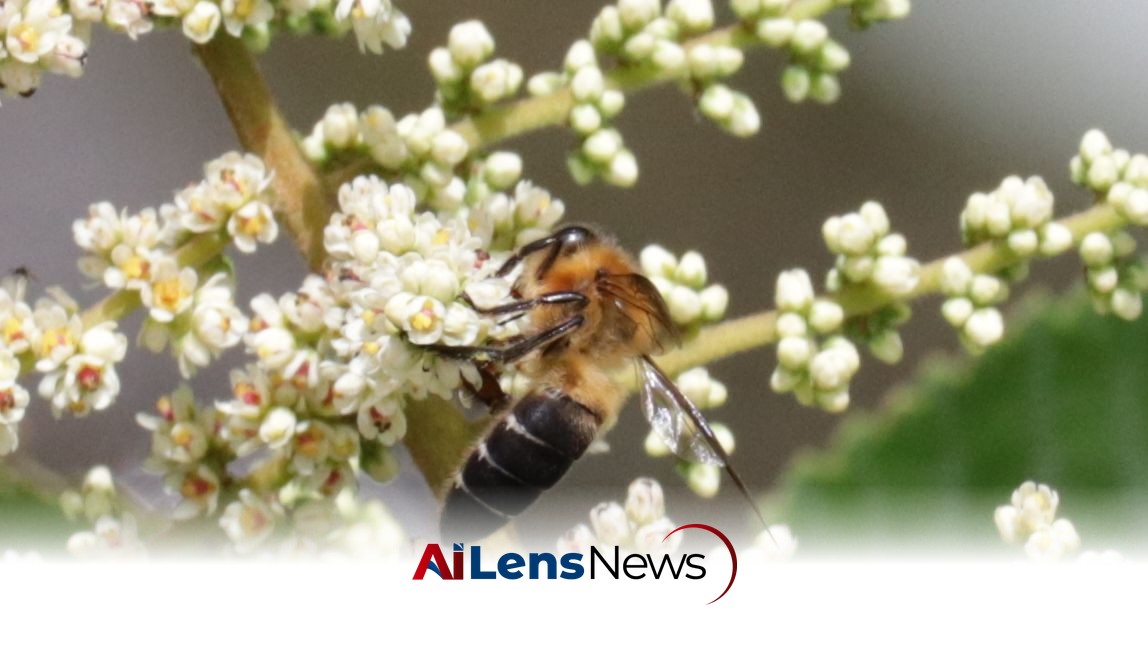


A new study identifies 87 plant species crucial for the survival of Apis laboriosa, enhancing conservation efforts for this vital pollinator.
Gangtok, India Jul 15, 2026 ALN: Guwahati: The world’s largest honey bee, known scientifically as Apis laboriosa, has long captivated the interest of entomologists and ecologists alike, not only for its impressive size and the unique construction of its nests but also for its role in the delicate ecological balance of the Himalayas. This bee is particularly famous for producing the prized—and sometimes intoxicating—"mad honey" sourced from the nectar of specific plants in the region. A recent study conducted in Arunachal Pradesh has shed light on one of the significant gaps in the natural history of this remarkable species: the floral resources it depends on for survival.
A comprehensive investigation has identified 87 distinct plant species that provide vital nectar and pollen to Apis laboriosa. This study offers the most extensive understanding yet of the giant bee’s forage plants within the eastern Himalayas, which are crucial for its survival and reproduction. The findings are expected to bolster conservation efforts for one of the region's most essential wild pollinators while also providing insights for developing high-value Himalayan honey products.
The study, published in the Journal of Apicultural Research, was conducted by a team of researchers from Rajiv Gandhi University and the University of Calcutta, including Dipakshi Phukan, Ruby Taid, Shreyasi Basak, Thinlay Wangmu, Hiren Gogoi, Subir Bera, and Abhaya Prasad Das. Their collaborative effort highlights the importance of interdisciplinary research in understanding ecological relationships.
Despite the fascination surrounding Apis laboriosa—noted for its enormous size and the habit of building giant combs on sheer cliffs—scientific understanding of the plant diversity that these bees visit has been surprisingly limited. This knowledge gap is significant because the giant honey bee plays a vital role in pollinating various mountain forests and fruit-bearing species across the Himalayas, which in turn supports local biodiversity and agriculture.
To bridge this knowledge gap, the researchers employed an innovative approach by analyzing honey itself. Each drop of honey contains microscopic pollen grains collected from the flowers visited by the bees. By utilizing a technique known as melissopalynology, the researchers were able to analyze these pollen grains and combine the findings with nearly three years of field observations conducted around the bee's nesting sites. This methodology allowed the team to reconstruct the floral menu of Apis laboriosa across various locations in Arunachal Pradesh.
The survey encompassed remote areas in the West Kameng, Dibang Valley, and Anjaw districts, revealing a remarkably diverse diet that underscores the bee's opportunistic foraging behavior. The researchers documented 87 plant species belonging to 58 different families, including 70 species that produce nectar. This diversity indicates that the giant honey bee relies on a wide array of flowering plants throughout the year, adapting its foraging strategies to the seasonal availability of floral resources.
Among the most intriguing findings of the study was the evidence linking Apis laboriosa to the Rhododendron genus and other members of the Ericaceae family. Some of these plants are known to contain grayanotoxins, naturally occurring compounds that contribute to the creation of the legendary Himalayan "mad honey." This reddish honey is prized in various parts of Asia for its traditional medicinal uses; however, it is also known to cause dizziness and intoxication when consumed in excessive amounts. The study is significant as it is the first from India to report the presence of abundant pollen from these plants in natural honey produced by Apis laboriosa.
The research further emphasizes the ecological role of this giant honey bee in pollinating economically important plants. The study identified several fruit trees, including peach (Prunus persica) and pear (Pyrus pyrifolia), as key forage plants for the bees. This underscores the broader ecological importance of Apis laboriosa, extending beyond honey production to include the pollination of a variety of species that contribute to local agriculture and food security.
The researchers also determined that the primary honey flow season for Apis laboriosa stretches from February to September, during which flowering is abundant across the mountainous terrain. However, during the colder months from October to January, flowering declines sharply, necessitating that the bee colonies rely on the honey they have stored to survive. This seasonal pattern highlights the importance of understanding floral availability and its impact on bee populations, especially in the context of changing climate conditions.
Interestingly, while most honey samples analyzed in the study were multifloral, reflecting the bee’s varied diet, one sample was identified as unifloral, dominated by a single flowering species. Unifloral honeys are often sought after in premium markets due to their distinctive flavor and specific botanical origin. This finding could have implications for local beekeepers and honey producers looking to capitalize on unique honey varieties.
For the researchers, the significance of this study extends beyond merely understanding the dietary preferences of Apis laboriosa. By mapping the floral resources utilized by this giant honey bee, the study establishes an essential baseline for the conservation of Himalayan pollinators at a time when mountain ecosystems are increasingly threatened by climate change and habitat degradation. The findings could also help identify landscapes that warrant priority protection and support the sustainable harvesting of wild honey by local communities, promoting both conservation and economic development.
The authors of the study noted that several of the forage plants documented had never before been reported as food sources for Apis laboriosa, significantly expanding the scientific knowledge of the species’ ecology. This new understanding is crucial as it provides insight into how these bees interact with their environment and the potential impacts of environmental changes on their survival.
In the high Himalayas, where towering cliffs, flowering forests, and giant honey bees have co-evolved over thousands of years, this study serves as a reminder that each spoonful of wild honey encapsulates a record of intricate ecological partnerships. The research not only contributes to the understanding of Apis laboriosa but also emphasizes the importance of conserving the biodiversity that supports these vital pollinators. As scientists continue to unravel the complexities of these relationships, it becomes increasingly clear that the health of bee populations is closely tied to the health of the ecosystems they inhabit, making conservation efforts all the more urgent.
To learn more about the latest developments in Biology & Life Sciences, stay updated with our exclusive reports and analyses on AiLensNews.

