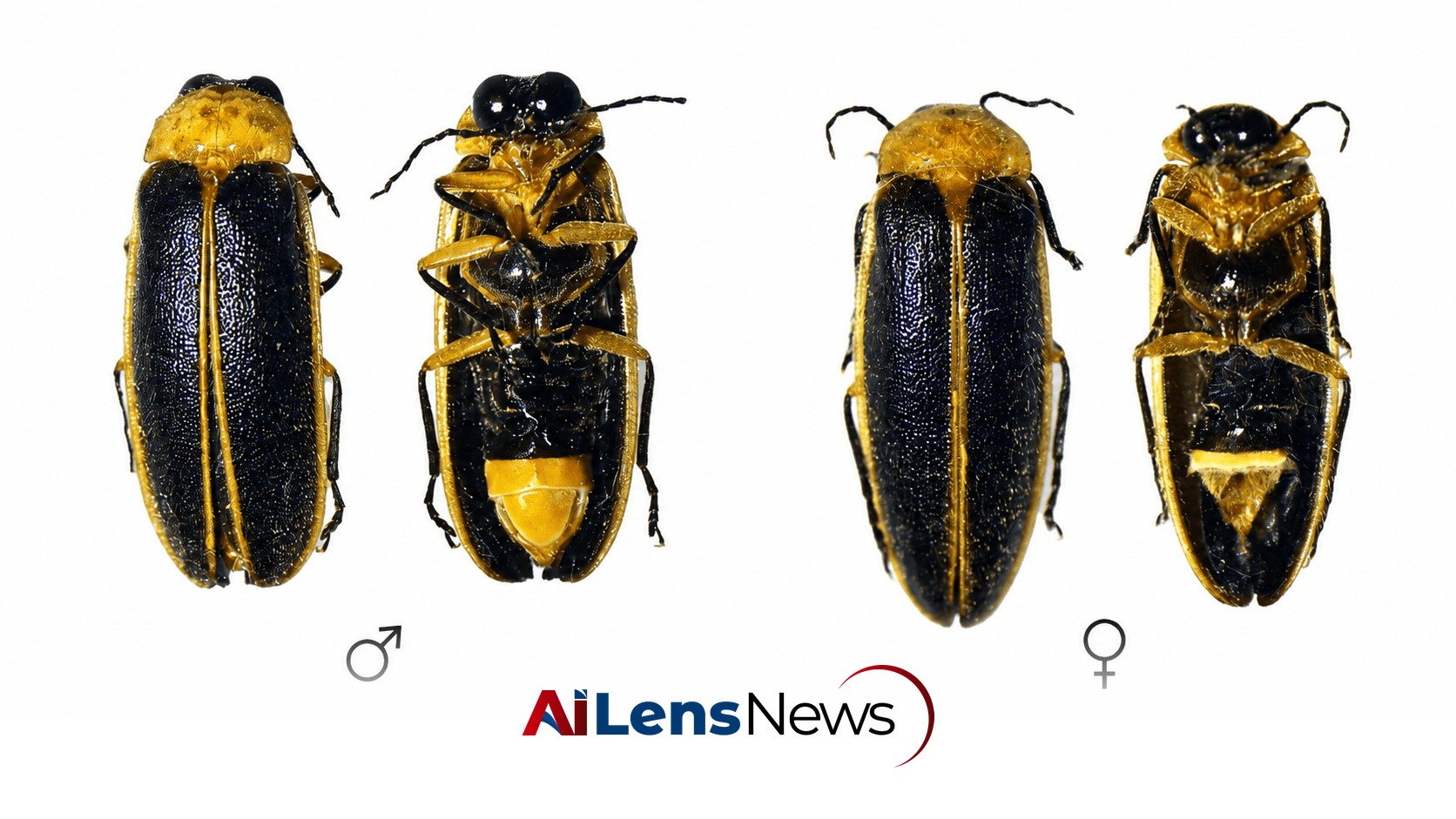


Researchers have identified a new firefly species, Pygoluciola mawsynram, in Meghalaya, highlighting the state's rich but unexplored insect diversity.
Kohima, India Jul 13, 2026 ALN: Guwahati: Meghalaya has added another species to its growing list of scientific discoveries, with researchers identifying a previously unknown firefly from Mawsynram, reinforcing the state’s reputation as one of India’s richest biodiversity hotspots.
The new species, Pygoluciola mawsynram, has been described by Emma Magdalene Nonglang, Dhiraj Kumar Das, Samrat Sengupta, and Jane Wanry Shangpliang in the latest issue of the Asian Journal of Conservation Biology. This discovery not only enriches the scientific community's understanding of the Pygoluciola genus but also emphasizes the ecological importance of Meghalaya, a state renowned for its unique flora and fauna.
Named after Mawsynram—the world’s wettest place, where it was first recorded—the discovery raises the number of known species in the rare Pygoluciola genus to 29 worldwide. This genus is particularly interesting to scientists because of its limited distribution and specialized habitat requirements, making each new discovery critical for understanding the evolutionary adaptations of these insects.
The finding is the latest in a string of discoveries showcasing Meghalaya’s extraordinary biological wealth. In recent years, scientists have identified new species of bees, freshwater algae, and other organisms from the state, suggesting that many of its forests, streams, and grasslands remain scientifically underexplored. This is a significant point, as many regions in India, particularly in the Northeast, are still not fully documented, leaving vast potential for new species discoveries.
The researchers surveyed 29 locations in and around Mawsynram during the pre-monsoon season of 2024 but found the firefly at only 10 sites, indicating that it may have a highly restricted distribution. The insect was recorded in moist grasslands, semi-evergreen forests, and around streams and waterfalls, where males become active after dusk. This specific habitat preference highlights the delicate balance these organisms maintain within their ecosystems, relying on certain environmental conditions to thrive.
The team combined detailed morphological studies with modern DNA barcoding to confirm that Pygoluciola mawsynram is genetically distinct from all previously known members of the genus, making it a new species. This methodological approach underscores the importance of integrating traditional taxonomic methods with modern genetic techniques, allowing for more accurate species identification and classification.
Reflecting on the discovery, co-author Jane Wanry Shangpliang said it carries a message that extends beyond taxonomy. She emphasized that the discovery of a new species of firefly is not just a scientific milestone; it is a call to protect the forests where these fragile lights still shine. This statement resonates deeply in the context of ongoing environmental challenges, such as deforestation and climate change, which threaten biodiversity worldwide.
The authors named the species after Mawsynram not only because it was first discovered there but also as a tribute to the Khasi community’s long-standing tradition of conserving nature through sacred groves and other indigenous practices that have helped preserve the region’s unique biodiversity. The Khasi people, one of the indigenous tribes of Meghalaya, have a rich cultural heritage intertwined with their natural environment, and their practices serve as a model for sustainable living and conservation.
The study notes that despite India’s rich firefly diversity, these bioluminescent insects have received little scientific attention for more than a century, leaving many species yet to be discovered. The researchers say the finding highlights the need for more systematic biodiversity surveys across the Northeast. This is particularly crucial given the rapid environmental changes occurring in the region, driven by both natural and anthropogenic factors.
For Meghalaya, the discovery is another reminder that its ecological significance extends far beyond its record rainfall. The state is characterized by its unique climatic conditions, which create diverse habitats that support a variety of life forms. As scientists continue to uncover species new to science, the state is increasingly emerging as one of India’s most important frontiers for biodiversity research—one whose natural habitats deserve equal attention for conservation.
The implications of this discovery are profound. It not only contributes to the scientific understanding of biodiversity but also emphasizes the need for conservation efforts in Meghalaya and similar regions. As more species are identified, the urgency to protect these habitats becomes clearer. Conservationists and policymakers must collaborate to ensure that the ecosystems supporting these unique species are preserved against threats such as habitat destruction, pollution, and climate change.
Moreover, the discovery of Pygoluciola mawsynram serves as a reminder of the intricate connections between culture and ecology. The Khasi community's traditional knowledge and practices have played a significant role in maintaining the ecological balance in the region. Recognizing and integrating indigenous knowledge into modern conservation strategies can lead to more effective and sustainable outcomes.
The recognition of Meghalaya as a biodiversity hotspot is not only a point of pride for the region but also a critical factor in global conservation efforts. The state’s rich variety of ecosystems, ranging from subtropical forests to high-altitude grasslands, provides habitat for numerous endemic species, many of which are not found anywhere else in the world. This uniqueness underscores the importance of protecting these habitats from encroachment and degradation.
In addition to its biological richness, Meghalaya is known for its unique climatic conditions, which are influenced by the monsoons that sweep across the region. These rains create a lush environment that supports a diverse range of life forms, making it an ideal location for researchers. The interplay between the region’s climate and its biodiversity is a subject of ongoing scientific inquiry, with researchers seeking to understand how these factors influence species distribution and ecosystem health.
Furthermore, the discovery of new species often leads to broader implications for ecological research and conservation. Understanding the role of fireflies in their ecosystems, including their interactions with other species and their responses to environmental changes, can provide valuable insights into the health of the ecosystems they inhabit. Fireflies, as indicators of environmental quality, can help scientists assess the impacts of pollution and habitat loss.
In conclusion, the identification of a new firefly species in Meghalaya is not just a scientific achievement; it is a testament to the state’s rich biodiversity and the need for ongoing research and conservation efforts. As more species are discovered, it becomes increasingly clear that Meghalaya holds a treasure trove of biological diversity waiting to be explored and protected. The continued study of these ecosystems will be vital for understanding the impacts of environmental change and for developing strategies to mitigate these effects while preserving the unique biodiversity that defines Meghalaya.
To learn more about the latest developments in Biology & Life Sciences, stay updated with our exclusive reports and analyses on AiLensNews.

