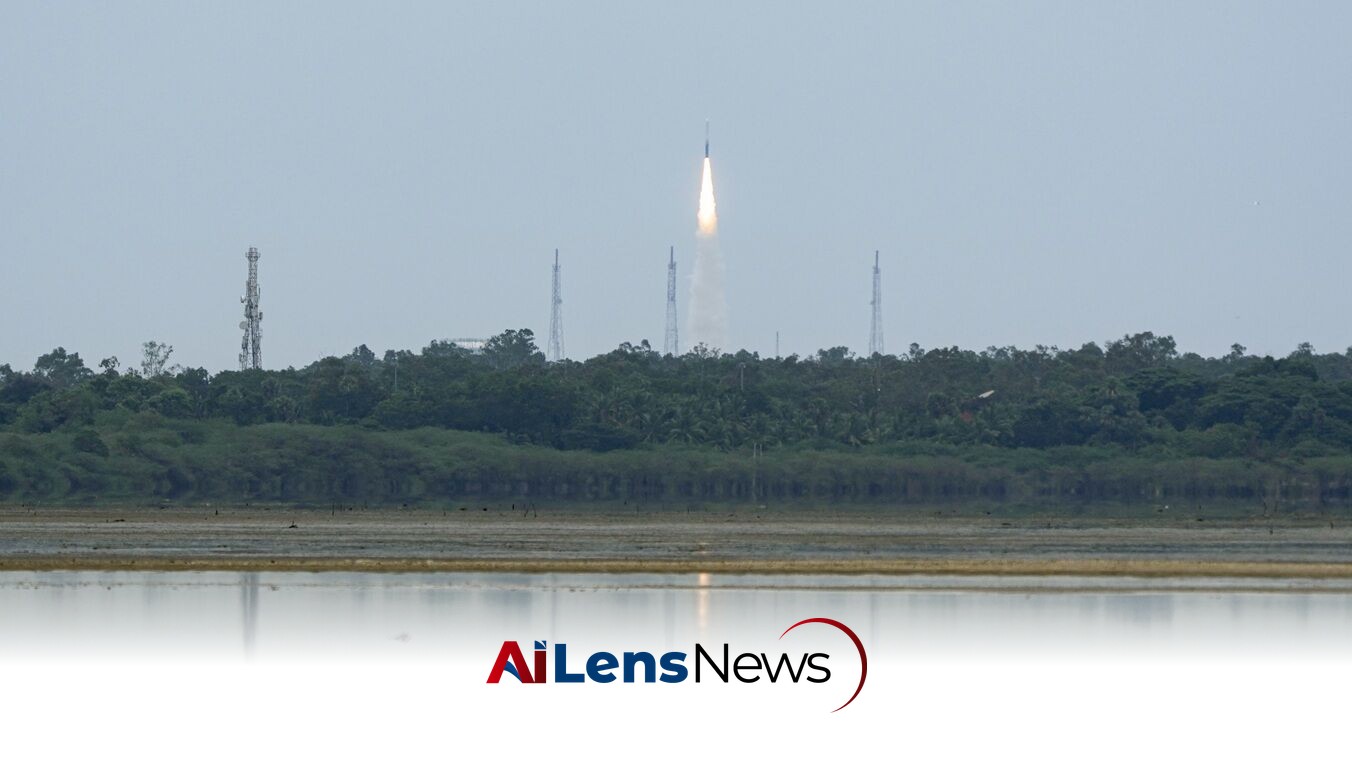


India's first privately developed orbital rocket, Vikram-1, successfully completed its maiden mission, deploying multiple technology payloads and a postcard from PM Modi.
Imphal, India Jul 18, 2026 ALN: Sriharikota (Andhra Pradesh), Jul 18: India's first privately developed orbital rocket, Vikram-1, successfully placed multiple technology demonstration payloads and postcards, including one from Prime Minister Narendra Modi, into a low Earth orbit on Saturday. This successful launch represents a significant milestone for India's burgeoning private space sector, which has been gaining momentum in recent years.
Dubbed “Mission Aagaman” (meaning arrival), this mission marks the entry of India's private space sector into the orbital launch market, spearheaded by Skyroot Aerospace. The company declared the mission a "grand success," highlighting the achievement of a capability that will enable India to compete in the global space launch market.
The launch of Vikram-1 is a landmark event, as it not only showcases the technical expertise and capabilities of a private entity but also reflects the Indian government's push to liberalize the space sector. In recent years, the Indian government has encouraged private participation in space exploration, allowing companies like Skyroot to develop and launch their own rockets.
After its ascent, the primary payloads, technology demonstrators from Grahaa Space, Cosmoserve, DCubed, and Skyroot's SCOPE, were sequentially deployed into a 450 km Low Earth Orbit (LEO). This successful deployment underscores the reliability and effectiveness of the Vikram-1 rocket, which is designed to carry small to medium-sized payloads into orbit.
The vehicle also successfully deployed a micro-art payload, which included an 18-karat gold rocket and a handwritten postcard from Prime Minister Modi bearing the message "Vande Mataram," along with postcards from engineers, scientists, and Indian astronauts. This unique payload not only adds a cultural dimension to the mission but also serves to inspire future generations about the importance of space exploration and innovation.
The miniature micro-art payload features micro-sculptures of three visionaries who shaped India's scientific and space journey: Vikram Sarabhai, Sir CV Raman, and former President APJ Abdul Kalam. Skyroot Aerospace stated, "Skyroot proudly named its rockets and engines after these icons." This homage to India's scientific heritage reflects the company's commitment to honoring the legacy of individuals who have contributed significantly to the nation's space ambitions.
In its maiden voyage, the four-stage, seven-storey-tall Vikram-1 rocket lifted off majestically at 12:05 PM amid cloudy skies from the first launch pad, leaving behind plumes of orange smoke and marking a new era for this spaceport. The launch facility at Sriharikota has traditionally been associated with the Indian Space Research Organisation (ISRO), which has been instrumental in establishing India's presence in space. The successful launch of Vikram-1 signifies a shift towards a more diversified and competitive landscape in the Indian space industry.
A "planned hold" due to apparent navigation issues forced a revised launch time of 12:05 PM. This aspect of the mission emphasizes the complexities involved in launching rockets and the importance of thorough checks and balances to ensure safety and success. Such challenges are common in the aerospace industry, and the ability to adapt and respond to issues is crucial for future missions.
The engineering data collected during this test flight will be analyzed to validate guidance and navigation systems and to guide future refinements for commercial satellite missions, according to Skyroot Aerospace. The data will be invaluable for improving the performance of future launches and enhancing the overall reliability of the Vikram series of rockets.
With this mission, Skyroot Aerospace successfully demonstrated its orbital launch capability with the maiden flight of the Vikram-1 launch vehicle, moving beyond the suborbital flight achieved by its Vikram-S mission in 2022. The Vikram-1 rocket is designed to provide a cost-effective solution for launching small satellites, catering to the growing demand for satellite deployment in various sectors, including telecommunications, earth observation, and scientific research.
The successful flight validated the performance of the rocket's all-carbon composite structure and 3D-printed engines in a real flight environment, features the company claims are "firsts." The use of advanced materials and manufacturing techniques not only enhances the performance of the rocket but also contributes to reducing the overall cost of space missions, making space more accessible to a wider range of customers.
Both founders, Pawan Kumar Chandana and Naga Bharath Daka, who are former ISRO scientists, were present at the space agency's Mission Control Center (MCC), along with its chief V Narayanan. Their presence underscores the collaborative spirit between the private sector and established institutions like ISRO, which can provide invaluable support and expertise to emerging companies in the space industry.
Prime Minister Modi termed the initiative as "a historic new frontier" for India's space journey. His endorsement of the mission highlights the government's commitment to fostering innovation and entrepreneurship in the space sector, which is seen as a key driver of economic growth and technological advancement.
Spoke to the team of Skyroot Aerospace and congratulated them on the successful launch of Vikram-1. This is a defining moment in India’s space journey. The growing participation of our private sector is opening new frontiers and accelerating innovation.
"A historic new frontier for India's space journey! At 11:30 AM today, Skyroot Aerospace will undertake the maiden orbital launch of Vikram-1, India's first privately developed launch vehicle," Modi stated on social media. His comments reflect a broader vision for India's role in the global space community and the potential for private companies to contribute to national objectives.
Assam Chief Minister Himanta Biswa Sarma also complimented Skyroot Aerospace after the launch. His acknowledgment of the achievement speaks to the national pride associated with advancements in space technology and the potential for regional development driven by the space industry.
The launch of Vikram-1 represents a new pinnacle both for India’s space industry and the limits of entrepreneurial possibilities. My compliments to the entire team as they launch India’s first private orbital launch.
"...That this launch comes exactly 46 years after the launch of India’s pioneering SLV-3 makes it a fitting tribute to the generations of scientists and engineers who laid the foundation for today’s achievements. India is rooting for Team Skyroot," he added in a social media post. This historical context enhances the significance of the Vikram-1 launch, connecting it to India's longstanding efforts in space exploration and the achievements of past generations.
The successful launch of Vikram-1 not only paves the way for future missions by Skyroot Aerospace but also sets a precedent for other private companies in India to enter the space launch market. As the demand for satellite launches continues to grow, the emergence of private players is expected to drive innovation, reduce costs, and increase the frequency of launches, ultimately contributing to the expansion of India's space capabilities.
India's space ambitions are also closely tied to global trends, where private companies like SpaceX and Blue Origin have transformed the aerospace industry. As India seeks to establish itself as a competitive player in this arena, the success of Vikram-1 could serve as a catalyst for further investments and developments in the private space sector.
In conclusion, the successful launch of Vikram-1 marks a significant milestone in India's space journey, showcasing the capabilities of private enterprises and setting the stage for a new era of innovation and exploration. As the country looks to the future, the collaboration between government institutions and private companies will be crucial in achieving ambitious goals in space exploration and technology development.
With inputs from PTI
To learn more about the latest developments in Space & Astronomy, stay updated with our exclusive reports and analyses on AiLensNews.

