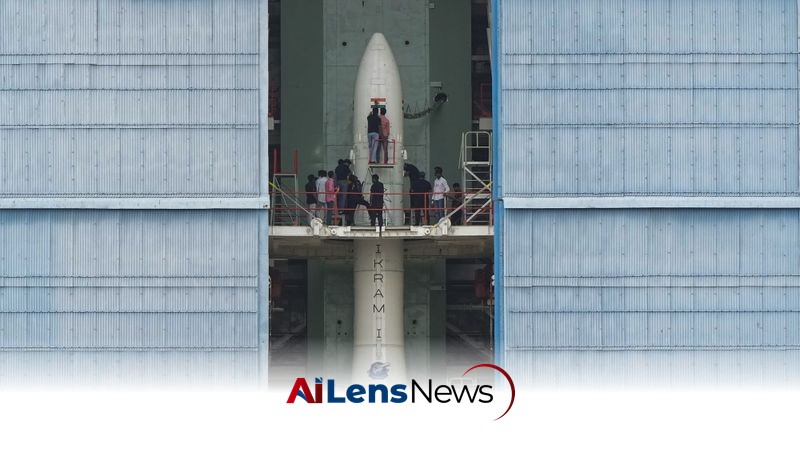


The Vikram-1 rocket, designed to deploy small satellites, successfully launched with a unique payload including a handwritten postcard from PM Modi.
Leh, India Jul 18, 2026 ALN: The recent launch of the Vikram-1 rocket by Skyroot Aerospace has captured significant attention, not just for its technological advancements but also for a unique payload: a handwritten postcard from Prime Minister Narendra Modi. This launch marks a pivotal moment in India's growing capabilities in the space sector, underscoring the nation’s ambitions to become a formidable player in the global space arena.
The Vikram-1 is a seven-storey-tall, multi-stage orbital launch vehicle specifically designed to place small satellites weighing up to 350 kg into low-Earth orbit. This innovative rocket is part of a broader initiative to enhance India's position in the global space industry. The Vikram-1 is named after Dr. Vikram Sarabhai, who is widely regarded as the father of the Indian space program. His vision laid the groundwork for the Indian Space Research Organisation (ISRO), which has achieved several milestones since its inception in the 1960s.
The design of the Vikram-1 rocket incorporates several features aimed at maximizing payload efficiency and minimizing costs. With a focus on small satellite launches, the vehicle is expected to cater to a growing market segment as more countries and private entities seek to deploy satellites for various purposes, including telecommunications, climate monitoring, and scientific research. By leveraging advanced technologies and materials, Skyroot Aerospace aims to position the Vikram-1 as a competitive option in the increasingly crowded launch service market.
The development of the Vikram-1 aligns with global trends where the demand for satellite launches is increasing, particularly for small satellites that serve diverse applications. These satellites can be used for everything from internet connectivity in remote areas to monitoring environmental changes and providing critical data for disaster management. The Vikram-1’s ability to launch multiple small satellites in a single mission enhances its attractiveness to potential clients.
The inclusion of PM Modi's handwritten postcard is symbolic, representing India's commitment to fostering a connection between its leadership and the advancements in space technology. The postcard serves not only as a message of encouragement for the team at Skyroot but also as a testament to the government's support for private space ventures. This gesture reflects a broader trend of increasing collaboration between the Indian government and private companies in the space sector, which has traditionally been dominated by state-run organizations.
India has been making significant strides in promoting private sector participation in space exploration and satellite deployment. The government's recent initiatives, such as the Space Activities Bill, aim to create a regulatory framework that encourages private investment and innovation in the space industry. By endorsing private companies like Skyroot Aerospace, the government is signaling its intent to diversify the space landscape, thereby fostering competition and driving down costs for satellite launches.
This move towards privatization and collaboration is crucial as it not only enhances India's technological capabilities but also attracts global investments. The presence of a supportive government framework can provide the necessary assurance to investors and stakeholders in the private sector, facilitating a robust environment for innovation and development.
Skyroot Aerospace has been at the forefront of developing cost-effective launch solutions. The Vikram-1 rocket incorporates several innovative technologies that enhance its efficiency and reliability. For instance, the rocket utilizes 3D printing for its components, which not only reduces manufacturing time but also allows for greater design flexibility. Additionally, the use of advanced propulsion systems and lightweight materials contributes to the overall performance of the vehicle.
This launch is a significant step towards the company's goal of making space more accessible for various applications, including satellite deployment for communication, earth observation, and scientific research. As the demand for satellite services continues to rise, especially in sectors such as agriculture, disaster management, and urban planning, the Vikram-1 aims to provide a reliable and economical option for clients.
Furthermore, the application of 3D printing technology in the aerospace sector is a game-changer. It allows for rapid prototyping and manufacturing of complex components that would otherwise be difficult and expensive to produce. This not only shortens the time from concept to launch but also reduces the overall costs associated with rocket development and production.
With the successful launch of Vikram-1, Skyroot Aerospace aims to establish itself as a key player in the global space market. The company plans to conduct more launches in the near future, further contributing to India's ambitions in space exploration and satellite technology. The Indian space sector is witnessing a renaissance, with several private companies emerging alongside established entities like ISRO. This trend could lead to a more vibrant ecosystem where innovation flourishes, and new technologies are developed to meet the challenges of the future.
Moreover, the successful deployment of small satellites can significantly impact various industries, including telecommunications, weather forecasting, and environmental monitoring. As Skyroot continues to refine its launch capabilities, it may also explore partnerships with international space agencies and companies, further enhancing its global footprint and technological prowess.
The potential for collaboration is vast, as international partnerships can lead to shared knowledge, technology transfer, and joint missions that could leverage the strengths of both Indian and foreign space entities. Such collaborations could also pave the way for India to participate in larger international space endeavors, including lunar or interplanetary missions.
The Vikram-1 rocket launch, highlighted by the inclusion of PM Modi's handwritten postcard, signifies a new era for India's space endeavors. As the country continues to invest in and support private space initiatives, the future looks promising for both Skyroot Aerospace and the broader Indian space industry. The implications of this launch extend beyond national pride; they represent a strategic move towards enhancing India’s technological capabilities and economic competitiveness on the global stage.
In the coming years, as the global space industry evolves with advancements in technology and increasing demand for satellite services, India’s proactive approach to fostering innovation and collaboration within its space sector could position it as a leader in the field. The Vikram-1 launch not only showcases the potential of private space ventures but also serves as a reminder of the importance of government support in realizing ambitious technological goals.
As the landscape of space exploration continues to change, the successful integration of private companies into the space industry will likely lead to a more competitive environment that benefits all stakeholders involved. This shift could ultimately result in more affordable access to space, enabling a wider range of applications and services that could benefit society at large.
To learn more about the latest developments in Space & Astronomy, stay updated with our exclusive reports and analyses on AiLensNews.

