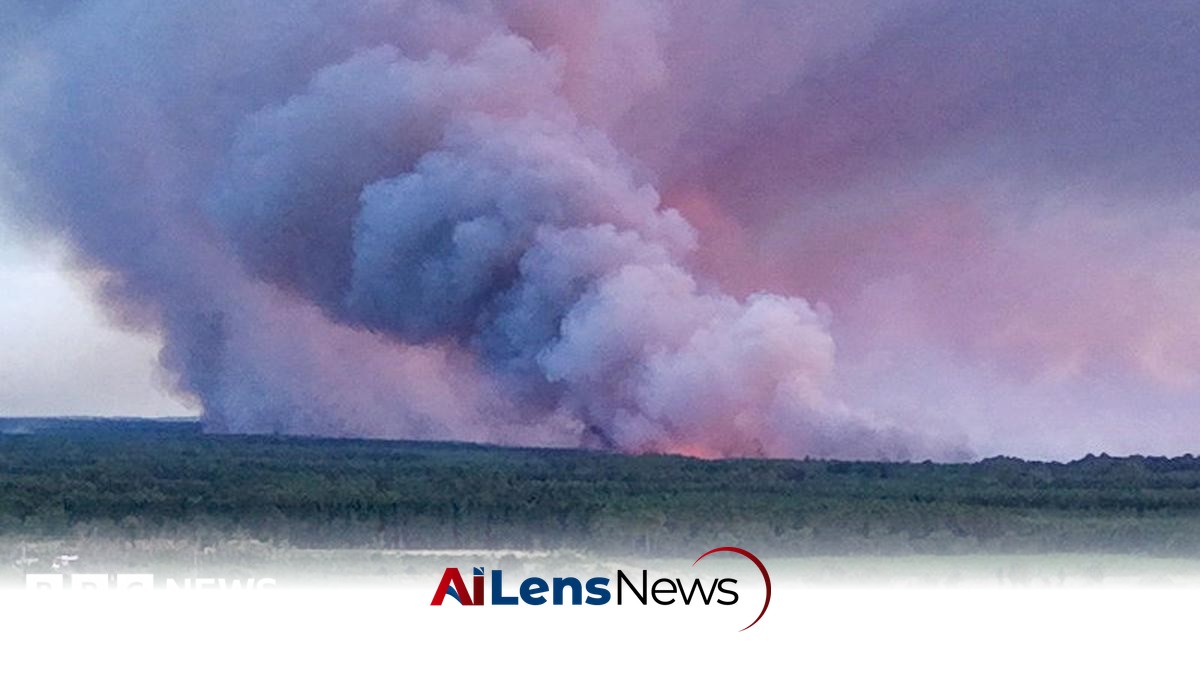


Severe wildfires are creating pyrocumulonimbus clouds, intensifying fire conditions and complicating firefighting efforts in Europe.
New Delhi, India Jul 27, 2026 ALN: Tens of thousands of people have been evacuated from Bordeaux's surrounding region of Gironde, as France continues to fight against wildfires being stoked by an unprecedented "pyrocumulonimbus" or fire clouds.
These pyrocumulonimbus clouds, often described by scientists as fire-generated thunderstorms, arise when the intense heat produced by wildfires causes the air above the fire to rise rapidly. This phenomenon is particularly concerning as it can lead to severe weather conditions, including lightning and strong winds, which can exacerbate the wildfires and make them more difficult to control.
The mechanics of pyrocumulonimbus formation involve a significant amount of heat that causes air to ascend quickly, carrying with it smoke, ash, and water vapor. As this air rises, it cools, and the water vapor condenses, forming clouds. If the fire generates enough energy and the atmospheric conditions are unstable, these clouds can develop into towering cumulonimbus clouds, which are typically associated with thunderstorms. The result is a dangerous combination of fire and weather that can create unpredictable conditions for both firefighters and local populations.
One of the most alarming aspects of pyrocumulonimbus clouds is their ability to generate turbulent winds that can send embers flying in all directions, potentially igniting new fires far from the original blaze. Additionally, the lightning produced by these clouds can spark further wildfires, compounding the challenges faced by firefighting teams. French firefighting authorities have specifically cited this phenomenon as a contributing factor to the ongoing blazes near Bordeaux, emphasizing that such an event has never before been recorded in France.
The current wildfires in Gironde are occurring against a backdrop of extreme weather conditions that have affected much of Europe. The summer months have been marked by intense heatwaves, with many regions experiencing record-breaking temperatures and minimal rainfall. These conditions have resulted in landscapes that are exceptionally dry and susceptible to wildfires. Countries such as France, Spain, and the UK have all reported significant wildfire activity as a result of these climatic factors.
As of the latest reports, the Gironde prefecture indicated that the wildfire situation remains "broadly stable". However, firefighting efforts are expected to face additional challenges due to another heatwave forecasted for later in the week, with temperatures potentially reaching as high as 40 degrees Celsius (104 degrees Fahrenheit). Such extreme heat can further increase the intensity of the fires and complicate the efforts of firefighting personnel.
Officials have warned that the wildfire in Gironde could continue to burn for many weeks and may take months to fully extinguish. This extended duration poses significant risks not only to the but also to the safety and well-being of local communities. The potential for prolonged evacuations and the psychological impact on affected residents cannot be overstated, as many may be forced to leave their homes for an extended period.
Pyrocumulonimbus clouds are more likely to form under extremely dangerous conditions, including high temperatures, strong winds, and low humidity. These conditions are becoming increasingly common due to climate change, which scientists predict will lead to a rise in the frequency and intensity of such events. In the past, pyrocumulonimbus clouds were considered relatively rare occurrences, but recent years have seen an uptick in their formation, highlighting a concerning trend in wildfire behavior.
A notable historical example of pyrocumulonimbus clouds occurred during the 2019-2020 Black Summer bushfires in Australia. These fires created extreme "firestorms" that generated their own weather systems, resulting in catastrophic consequences. The season was one of the most intense in Australia’s history, claiming the lives of at least 33 individuals, including four firefighters, and burning over 11 million hectares (approximately 27.2 million acres) of land. Fire officials in New South Wales reported that embers from the pyrocumulonimbus storms were landing up to 18 miles (30 kilometers) ahead of the fire front, a distance three times greater than normal. This extreme behavior significantly challenged firefighting efforts and raised concerns about the future of fire management in the region.
NASA has described pyrocumulonimbus clouds as "the fire-breathing dragon of clouds" due to their ability to funnel smoke and ash into the atmosphere while generating severe weather phenomena such as thunderstorms. Similarly, during the summer of 2021, California experienced intense wildfires that also generated pyrocumulonimbus clouds. These clouds towered up to a mile (1.6 kilometers) high and contributed to a devastating wildfire season that saw more than 7,300 wildfires burn across 1 million hectares (approximately 2.5 million acres) and resulted in the loss of at least three firefighters' lives.
The emergence of pyrocumulonimbus clouds represents a growing concern for firefighting efforts worldwide. They not only complicate immediate response efforts but also indicate a significant shift in the behavior of wildfires in the context of changing climatic conditions. Firefighting agencies are increasingly recognizing the need to adapt their strategies to account for the potential for these extreme weather events, which can drastically alter the landscape of fire management.
In conclusion, the ongoing wildfires in Gironde, France, fueled by the unprecedented phenomenon of pyrocumulonimbus clouds, illustrate the complex interplay between climate change, extreme weather, and wildfire behavior. As the frequency and intensity of such events increase, the implications for firefighting efforts, community safety, and al health will become increasingly critical. Addressing these challenges will require a concerted effort from scientists, policymakers, and firefighting agencies to develop effective strategies for managing the growing threat of wildfires in a changing climate.
To learn more about the latest developments in Environment & Climate, stay updated with our exclusive reports and analyses on AiLensNews.

