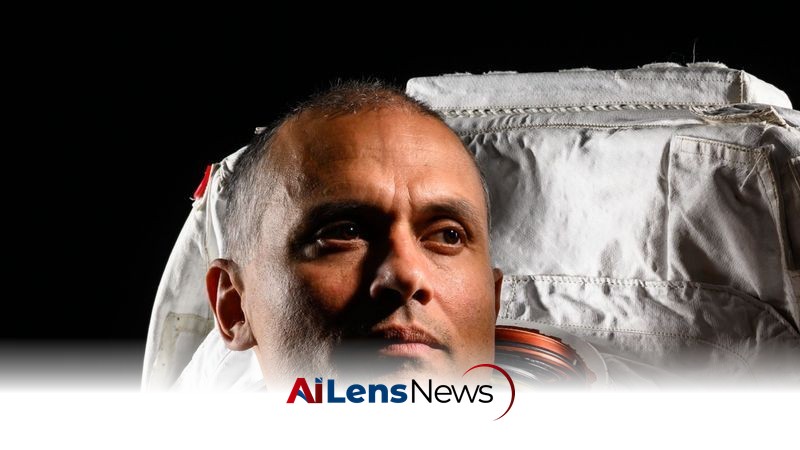


An Indian-origin NASA astronaut has launched on an eight-month mission to the International Space Station aboard a Russian spacecraft.
Chandigarh, India Jul 15, 2026 ALN: In a significant milestone for space exploration, an Indian-origin NASA astronaut has successfully launched aboard the Russian Soyuz MS-29 spacecraft. The launch took place from the Baikonur Cosmodrome in Kazakhstan, marking the beginning of an eight-month mission to the International Space Station (ISS). This mission not only represents a personal achievement for the astronaut but also symbolizes a broader narrative of international cooperation in space exploration.
The ISS has been a hub for scientific research and international collaboration since its first module was launched in 1998. It has served as a microgravity laboratory where astronauts from different countries conduct experiments that have implications for science, technology, and human health. The presence of an Indian-origin astronaut aboard the ISS underscores the increasing involvement of Indian professionals in the global space arena, reflecting the growing capabilities of India's space program.
This mission is particularly noteworthy as it highlights the collaboration between NASA and Roscosmos, the Russian space agency. The Soyuz MS-29 is equipped with advanced technology and is designed to support long-duration missions in low Earth orbit. The Soyuz spacecraft has been a reliable workhorse for transporting astronauts to and from the ISS since the early 2000s, especially after the retirement of the Space Shuttle program in 2011. The continued use of Soyuz spacecraft for crewed missions emphasizes the importance of established partnerships in ensuring safe and effective human spaceflight.
The primary objectives of this mission include conducting scientific research, performing maintenance on the ISS, and participating in various international experiments. The astronaut will work alongside a diverse crew of international astronauts, contributing to a wide range of scientific disciplines. These experiments may include studies on the effects of microgravity on human physiology, material science experiments, and advancements in agricultural practices that could support long-term space missions.
One of the critical aspects of living and working in space is understanding how prolonged exposure to microgravity affects the human body. Research conducted on the ISS has already provided valuable insights into muscle atrophy, bone density loss, and the psychological challenges of long-duration missions. The findings from this mission will further contribute to the body of knowledge necessary for future missions to Mars and beyond, where astronauts will spend extended periods away from Earth.
This launch is a testament to the growing presence of Indian-origin professionals in the field of space exploration. It not only showcases the astronaut's individual achievements but also emphasizes the importance of diversity in space missions. The astronaut's journey serves as an inspiration for many aspiring scientists and engineers, particularly in India. As the Indian space program continues to gain momentum, with successful missions such as the Mars Orbiter Mission and the Chandrayaan lunar missions, the participation of Indian-origin astronauts in international missions reflects the global nature of space exploration.
The Indian Space Research Organisation (ISRO) has made significant strides in recent years, launching satellites for various countries and developing indigenous technologies for space exploration. This growing expertise positions India as an important player in the international space community, paving the way for future collaborations and missions. The increasing visibility of Indian-origin astronauts in global missions also serves to inspire a new generation of scientists and engineers in India, potentially leading to a more robust workforce in the field of aerospace and technology.
The partnership between NASA and Roscosmos has been pivotal in advancing human spaceflight. Over the years, both agencies have collaborated on numerous missions, sharing expertise and resources to enhance the safety and efficiency of space travel. This collaboration has been particularly crucial in the post-Space Shuttle era, as the ISS continues to rely on the Soyuz spacecraft for crew transportation. The partnership has evolved over decades, with both agencies learning from each other’s experiences, particularly in areas such as spacecraft design, life support systems, and mission planning.
In addition to the Soyuz program, NASA and Roscosmos have worked together on various scientific initiatives, including joint experiments and data sharing. Such collaborations not only foster goodwill between nations but also enhance the scientific output of missions conducted aboard the ISS. The exchange of knowledge and technology between these two space agencies exemplifies the spirit of international cooperation that characterizes modern space exploration. This partnership is essential, especially as both agencies look toward future missions to the Moon and Mars, where collaborative efforts may be necessary to tackle the challenges of deep space exploration.
As the astronaut embarks on this exciting journey, the global community eagerly anticipates the scientific discoveries and advancements that will emerge from this mission. The astronaut's experiences aboard the ISS will contribute to our understanding of life in space and the challenges of long-duration spaceflight. The data collected during this mission will be invaluable for planning future missions, including those aimed at exploring Mars and establishing a sustainable human presence on the Moon.
Moreover, the mission's findings could have implications beyond space exploration. Research conducted in microgravity has the potential to lead to breakthroughs in various fields, including medicine, materials science, and environmental sustainability. For instance, understanding how to grow plants in space could have applications for food production on Earth, especially in areas facing food security challenges. The experiments conducted during this mission may yield insights that help improve agricultural practices on Earth, particularly in regions that struggle to produce sufficient food due to climate change or resource limitations.
In conclusion, the launch of the Indian-origin NASA astronaut aboard the Soyuz MS-29 marks a significant achievement in the realm of space exploration. It underscores the collaborative efforts of international space agencies and the importance of diversity in advancing scientific knowledge. As nations work together to push the boundaries of human exploration, the contributions of astronauts from diverse backgrounds will continue to play a crucial role in shaping the future of space travel and exploration. The ongoing collaboration between nations in space exploration not only enhances scientific understanding but also fosters a sense of global unity, as humanity collectively strives to explore the final frontier.
To learn more about the latest developments in Space & Astronomy, stay updated with our exclusive reports and analyses on AiLensNews.

