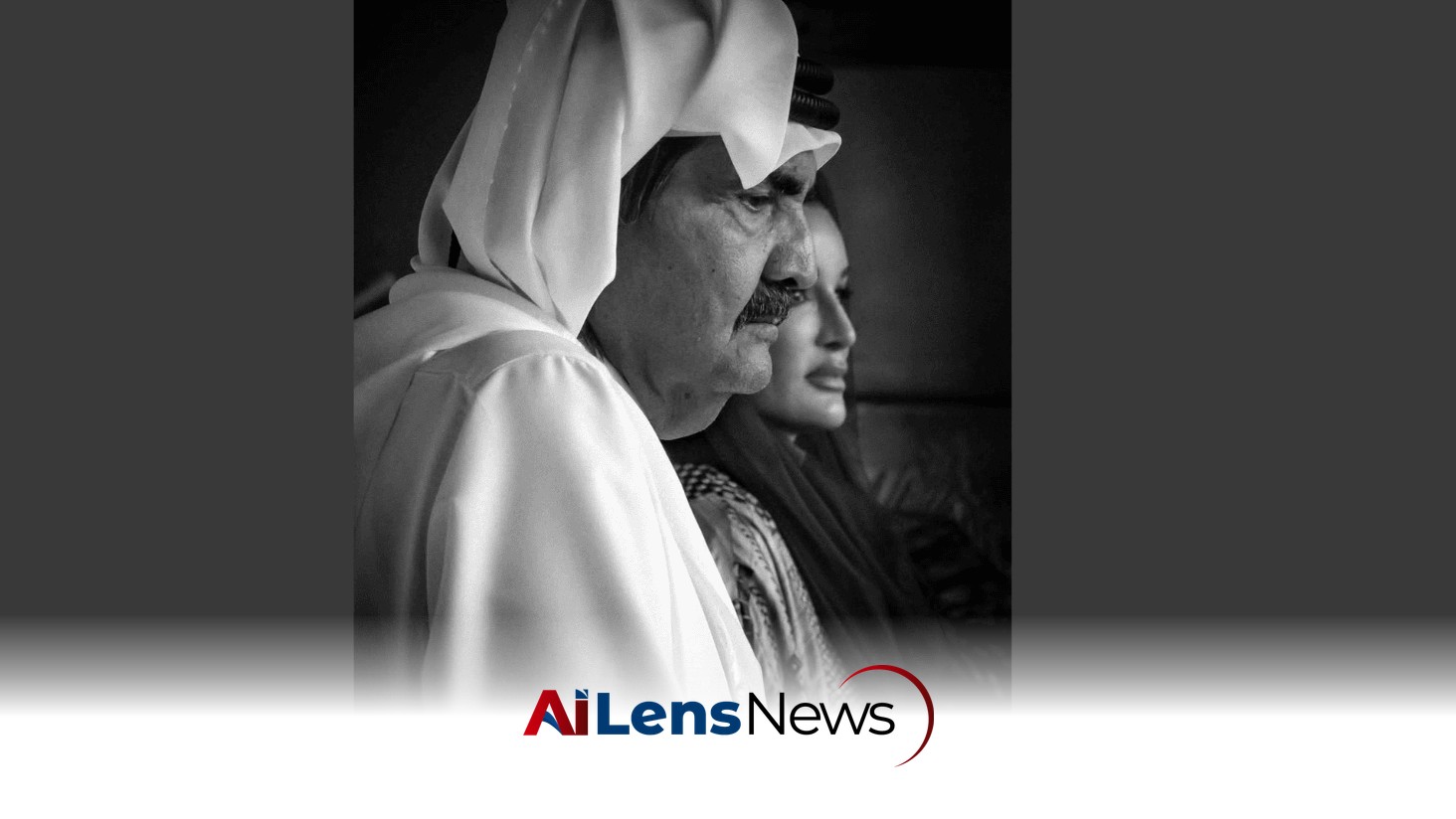


Sheikha Moza pays tribute to the late Father Amir, reflecting on his visionary leadership and enduring legacy for Qatar.
Doha, Qatar Jul 13, 2026 ALN: Her Highness Sheikha Moza bint Nasser has expressed her profound sorrow following the passing of His Highness the Father Amir Sheikh Hamad bin Khalifa Al Thani, paying tribute to his enduring legacy and lifelong service to Qatar. This moment marks a significant chapter in the history of the nation, as the Father Amir was not only a leader but a transformative figure who played a pivotal role in shaping modern Qatar.
In a statement shared on social media, Sheikha Moza opened with verses from the Holy Qur'an, illustrating her deep connection to faith during this period of mourning. The chosen verses convey a message of peace and acceptance, resonating with many who are grieving the loss of a beloved leader:
"O reassured soul, return to your Lord, well-pleased and pleasing [to Him]. Enter among My servants and enter My Paradise." (Surah Al-Fajr 89:27–30)
Sheikha Moza indicated that she received the news of HH The Father Amir's passing with deep sadness, describing him as Qatar's historic leader whose vision and leadership laid the foundations of the modern State of Qatar. His reign, which began in 1995 and lasted until his abdication in 2013, was characterized by significant developments in various sectors including education, health, and infrastructure, transforming Qatar into a leading nation on the global stage.
During his time as Amir, Sheikh Hamad was instrumental in diversifying Qatar's economy, moving away from its reliance on oil and gas revenues. He championed initiatives that promoted education and research, leading to the establishment of Qatar University and the Qatar Foundation, which continues to foster innovation and development in the region. His leadership style was marked by a commitment to modernization and reform, which has left an indelible mark on Qatari society.
Sheikha Moza reflected on his lasting achievements, saying his legacy will remain a source of pride for the nation and future generations. Under his guidance, Qatar emerged as a significant player in international diplomacy, hosting numerous global events and fostering relationships with various countries. His vision extended beyond economic development; he also emphasized the importance of cultural heritage and education, which are vital components of Qatar's identity today.
Concluding her message, Sheikha Moza prayed for Allah to envelop the late Father Amir in His mercy, grant him the highest place in Paradise, and give patience and comfort to his family and the people of Qatar. This prayer underscores the deep respect and affection that the people of Qatar hold for their former leader, who is remembered not only for his political acumen but also for his deep commitment to the welfare of his citizens.
The passing of Sheikh Hamad bin Khalifa Al Thani has implications that extend beyond the immediate grief felt by his family and the people of Qatar. His leadership style and vision have set a precedent for future leaders, shaping the expectations of Qatari citizens regarding governance and national identity. As the nation reflects on his contributions, there is a renewed focus on continuing his legacy of progress and development.
In the wake of his death, the Qatari government and citizens alike are likely to engage in discussions about the future direction of the country. The leadership transition may inspire a re-evaluation of policies and priorities that align with Sheikh Hamad's vision while addressing the modern challenges facing the nation. This period of reflection may also provide an opportunity for the younger generation to engage more actively in the political and social landscape of Qatar, inspired by the foundational work laid by the Father Amir.
Sheikh Hamad's impact is not limited to domestic affairs; his international relationships and diplomatic efforts have positioned Qatar as a mediator in regional conflicts and a host for peace talks. His passing raises questions about the future of Qatar's foreign policy and its role in the Middle East, especially in the context of ongoing regional tensions and the evolving geopolitical landscape.
As the nation mourns, the enduring legacy of Sheikh Hamad bin Khalifa Al Thani serves as a reminder of the importance of visionary leadership in shaping a nation's destiny. His contributions to Qatar's development, both in terms of infrastructure and international standing, will be remembered and celebrated for generations to come.
In conclusion, the heartfelt tribute from Sheikha Moza encapsulates the sentiments of many in Qatar who recognize the profound impact of the Father Amir. The nation stands united in honoring his memory, reflecting on his achievements, and looking ahead to a future that builds upon the strong foundation he established.
Sheikh Hamad's leadership was marked by a unique blend of traditional values and modern aspirations, which helped to foster a sense of national identity while simultaneously positioning Qatar as a forward-looking state. His efforts to promote cultural initiatives, such as the establishment of museums and cultural institutions, have helped to preserve Qatar's rich heritage while also encouraging a dialogue with the global community.
Moreover, Sheikh Hamad's commitment to education reform was groundbreaking. Under his guidance, Qatar invested heavily in educational infrastructure, creating a system that not only focuses on academic excellence but also encourages critical thinking and innovation. This focus on education has been pivotal in preparing a new generation of Qataris to engage with the challenges of a rapidly changing world.
The Father Amir's foreign policy initiatives also deserve mention. His approach to diplomacy was characterized by a willingness to engage with diverse global partners, fostering relationships that have enhanced Qatar's standing on the world stage. This approach has not only facilitated economic partnerships but has also positioned Qatar as a key player in regional and international dialogue, particularly in conflict resolution and humanitarian efforts.
As Qatar navigates this transition period following Sheikh Hamad's passing, it is essential to consider how his vision can continue to inform the nation's policies. The leadership that follows will undoubtedly face new challenges, including economic diversification, social development, and maintaining Qatar's role as a mediator in international affairs. The legacy of the Father Amir will serve as both a guide and a benchmark for future leaders in their quest to uphold the values and aspirations he championed.
In summary, the loss of His Highness Sheikh Hamad bin Khalifa Al Thani marks not only the end of an era but also the beginning of a critical period of reflection and potential renewal for Qatar. The sentiments expressed by Sheikha Moza resonate deeply with many, as the nation collectively honors a leader whose contributions have left an indelible mark on the fabric of Qatari society. As Qatar looks ahead, the challenge will be to build upon the solid foundation established by the Father Amir, ensuring that his vision of progress, unity, and cultural richness continues to thrive.
To learn more about the latest developments in Islam, stay updated with our exclusive reports and analyses on AiLensNews.

