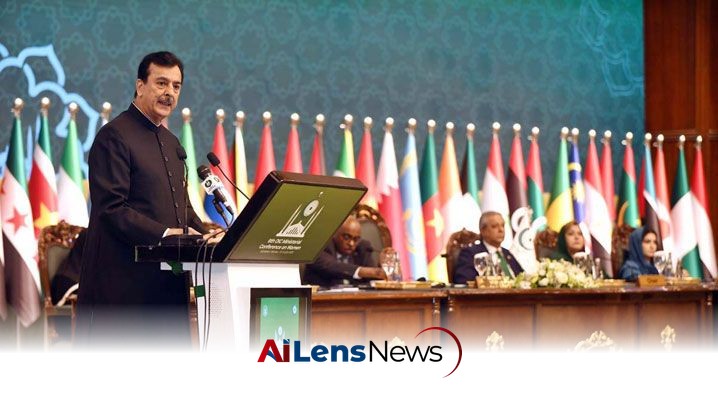


The Ninth Ministerial Conference on Women of the OIC adopted the Islamabad Declaration, focusing on women's empowerment and digital inclusion.
Islamabad, Pakistan Jul 14, 2026 ALN: The Ninth Ministerial Conference on Women of the Organisation of Islamic Cooperation (OIC) convened on Monday, resulting in the adoption of the Islamabad Declaration. This declaration reaffirms the member states' commitment to advancing the socio-economic and political empowerment of women and girls, alongside launching a new initiative aimed at promoting women's digital inclusion across the Muslim world.
The OIC, established in 1969, is an organization of 57 member states, representing the collective voice of the Muslim world. The organization aims to promote Islamic solidarity, protect the interests of Muslims globally, and advocate for social justice, including the advancement of women's rights. The significance of this recent conference is underscored by the ongoing challenges faced by women and girls in various member states, where cultural, economic, and political barriers often hinder their progress.
According to the Islamabad Declaration, which is available on the official OIC website, participating ministers and heads of delegation pledged to strengthen policies and institutional mechanisms to ensure women’s meaningful participation in political, economic, and public life across OIC member states. This commitment comes at a time when gender equality remains a pressing issue globally, with women still underrepresented in leadership roles and decision-making processes.
The declaration encourages member states to eliminate barriers to women’s education and employment, expand access to quality education, vocational training, and leadership development. It also emphasizes enhancing women’s economic empowerment through improved access to employment, finance, entrepreneurship support, and social protection systems. The economic empowerment of women is critical not only for achieving gender equality but also for fostering economic growth and development within OIC countries, many of which face significant economic challenges.
Furthermore, the declaration calls for promoting inclusive financial systems, including Islamic finance, microfinance, and digital financial services. It urges greater support for women-led small and medium-sized enterprises by improving access to capital, innovation, and trade opportunities. Women entrepreneurs play a vital role in the economy, and their success can lead to job creation and economic diversification, which are essential for sustainable development.
Highlighting the importance of women’s participation in science, technology, engineering, and mathematics (STEM), artificial intelligence, and emerging technologies, the declaration urges member states to bridge the digital gender divide. This includes expanding affordable digital infrastructure, connectivity, access to devices, and digital literacy programs, particularly in rural areas. In an increasingly digital world, ensuring that women and girls have equal access to technology and education in these fields is crucial for their empowerment and for fostering innovation.
The conference also launched the Islamabad Initiative on Women’s Digital Inclusion, a voluntary OIC platform aimed at promoting digital literacy, digital entrepreneurship, STEM education, artificial intelligence skills, cybersecurity awareness, and equitable access to digital technologies for women and girls across OIC member states. This initiative is particularly timely as the COVID-19 pandemic has highlighted the importance of digital skills and access to technology in various aspects of life, including education and employment.
It invites interested member states, OIC institutions, and development partners to support the initiative through training programs, scholarships, mentorship, and the exchange of expertise and best practices. Such collaborative efforts are essential for creating an environment where women can thrive in the digital economy and contribute to their communities effectively.
The declaration further urges member states to strengthen measures against all forms of violence against women and girls, including cyber harassment, online abuse, exploitation, and technology-facilitated threats. The rise of technology has unfortunately also led to new forms of violence and discrimination against women, making it imperative for member states to take proactive steps to protect their rights and ensure their safety in both physical and digital spaces.
In a show of solidarity, the declaration reaffirms support for the women and girls of Palestine and Indian Illegally Occupied Jammu and Kashmir (IIOJK), calling on the international community to provide legal, humanitarian, economic, educational, and psychosocial support to alleviate their suffering. The plight of women in conflict zones often receives insufficient attention, and this reaffirmation is a crucial step in addressing their specific needs and challenges.
Concluding, the declaration emphasizes that empowering women and girls through education, skills development, leadership, and economic participation is essential for the progress, resilience, and prosperity of OIC societies. The empowerment of women is not only a matter of justice but also a fundamental driver of development, peace, and stability within societies.
It expresses appreciation to the Government of Pakistan for hosting the conference and thanks Prime Minister Shehbaz Sharif for his patronage. Hosting such significant events provides an opportunity for member states to come together, share experiences, and forge partnerships that can lead to real change.
Additionally, the conference adopted an omnibus resolution. OIC Assistant Secretary-General Ambassador Dr. Tarig Ali Bakheet, in his concluding remarks, stated that the deliberations reflected the collective determination of OIC member states to advance the status of women as a key pillar of sustainable development and the prosperity of the Muslim Ummah. The recognition of women's empowerment as a central theme in development discussions signifies a shift towards more inclusive policies and practices.
He welcomed the adoption of the omnibus resolution, describing it as an important milestone that reflects the shared vision of member states and provides a comprehensive roadmap for strengthening cooperation, promoting women’s empowerment, and addressing the evolving challenges facing women across the Islamic world. The resolution is expected to guide future actions and initiatives aimed at improving the status of women and girls in member states.
“I commend the spirit of consensus and cooperation that has guided the adoption of this important resolution,” he remarked. The ability to reach a consensus among diverse member states demonstrates a commitment to collective action and solidarity in addressing common challenges.
Dr. Bakheet emphasized that the real measure of success would not lie in the resolutions adopted but in the collective commitment to implement them effectively and achieve measurable outcomes. It is essential for member states to not only adopt resolutions but also to translate them into concrete actions that lead to tangible improvements in the lives of women and girls.
He urged member states, OIC institutions, international partners, and other relevant stakeholders to collaborate closely to ensure the effective implementation of the conference’s resolutions and recommendations. Sustained cooperation, coordinated action, and the sharing of successful experiences among member states will help transform shared commitments into meaningful improvements in the lives of women and girls.
Congratulating Pakistan on assuming the chairmanship of the Ministerial Conference on Women, Dr. Bakheet expressed confidence that the country would successfully guide the implementation of the conference’s decisions. The leadership role of Pakistan is significant, given its unique position within the OIC and its commitment to advancing women's rights within its own borders.
He reaffirmed the OIC General Secretariat’s commitment to working closely with Pakistan, the OIC Women Development Organization, relevant OIC institutions, and member states to maintain the momentum generated by the conference and translate it into concrete achievements. The success of the conference will depend on the ongoing engagement and collaboration of all stakeholders involved.
Dr. Bakheet prayed for greater unity among OIC member states and called for continued joint efforts to promote the dignity, empowerment, and well-being of women across the Muslim world. The challenges facing women and girls in the OIC region are multifaceted, and a united approach is essential for addressing these issues effectively.
To learn more about the latest developments in Islam, stay updated with our exclusive reports and analyses on AiLensNews.

