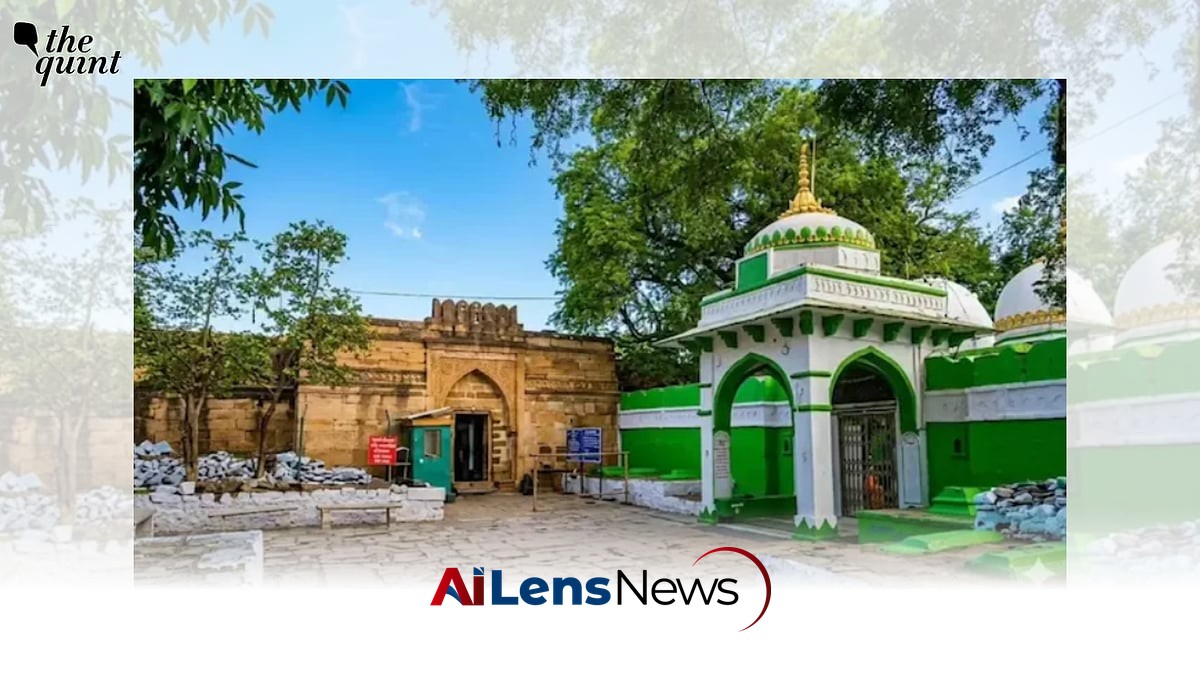


The Supreme Court has ruled against restoring Friday prayers at Bhojshala, directing the state to provide an adjacent space for Muslim worship.
New Delhi, India Jul 15, 2026 ALN: The Supreme Court of India has recently issued notices regarding appeals that challenge the Madhya Pradesh High Court’s judgment from May 2026, which declared the Bhojshala-Kamal Maula mosque complex in Dhar as a Hindu temple. This ruling has significant implications, not only for the religious communities involved but also for the broader discourse on historical interpretations and the legal frameworks governing places of worship in India.
The Supreme Court's decision to decline the restoration of the previous arrangement, which allowed both Hindu and Muslim communities to pray at the site on designated days, has drawn attention. Instead, the court has directed the Madhya Pradesh government to facilitate an adjacent open space for Friday prayers by Muslims, pending a final decision on the appeals. This arrangement, however, is temporary and is subject to the outcome of the ongoing legal proceedings.
Chief Justice Surya Kant, who led the Supreme Court bench, emphasized the need for a careful examination of the issues at hand. The refusal to restore the status quo prior to the High Court’s verdict highlights the complexities involved in such cases, particularly when they intersect with matters of faith, identity, and historical claims. The court’s instruction for the state government to provide an alternative prayer space reflects an attempt to balance the rights of both communities while navigating the legal intricacies of the case.
The principal challenge to the High Court’s ruling rests on the argument that it exceeded its writ jurisdiction by making determinations on intricate historical and archaeological questions regarding the site's original character. Petitioners argue that such matters should be resolved through civil court proceedings rather than through summary writ jurisdiction. This distinction is crucial because it touches upon the rights of worship under Article 226 of the Indian Constitution, which guarantees the right to move the High Court for the enforcement of fundamental rights.
The High Court's decision was significantly influenced by a report from the Archaeological Survey of India (ASI), which found evidence that suggested the presence of temple-style pillars and inscriptions dating back to the Paramara period. Based on this evidence, the court concluded that the disputed area was originally a temple. However, the petitioners do not dispute the ASI’s findings outright; rather, they contend that the report was treated as conclusive without allowing for cross-examination of the evidence presented. They also argue that other critical evidence, including Arabic and Persian inscriptions, was not given due consideration in the High Court's judgment.
The Supreme Court's deliberations are also informed by the legal interpretation of the Places of Worship (Special Provisions) Act, 1991. This Act aims to maintain the religious character of places of worship as they existed on August 15, 1947. The High Court held that Bhojshala is exempt from the Act’s protections due to its designation as a protected monument under the Ancient Monuments and Archaeological Sites and Remains Act, 1958. However, the petitioners argue that this exemption does not allow courts to revisit the historical-religious character of the site or to restrict religious practices that were ongoing as of the specified date.
“The petitioners further contend that preventing Muslims from offering prayers at the site is a direct and arbitrary violation of their fundamental rights to freedom of religion and to manage their own religious affairs,” the legal challenge states. This assertion underscores the tension between historical claims and contemporary religious practices, a recurring theme in many similar disputes across India.
Additionally, the petitioners assert that the Kamal Maula Mosque is a permanent and irrevocable Waqf under Muslim law, which adds another layer of complexity to the case. The High Court's directions regarding the administration of the site, including the role of the ASI and the possibility of alternative land for a mosque, are also being contested. These directions raise important questions about the governance of religious sites and the rights of communities to manage their places of worship.
The Supreme Court has also mandated that no structural changes be made to the Bhojshala-Kamal Maula complex without its permission, indicating a cautious approach to the matter. This directive aims to preserve the status quo while the court deliberates on the appeals, which could take considerable time given the intricacies involved.
The Bhojshala case is emblematic of a broader question facing Indian society: to what extent can courts reinterpret history? Legal interpretations of historical claims often intersect with sensitive religious sentiments, and the outcomes can have far-reaching implications for communal harmony. The Supreme Court’s handling of this case will likely set a precedent for how similar disputes are resolved in the future.
As the legal battle continues, the implications of the Supreme Court's rulings will resonate beyond the immediate parties involved. The case reflects the ongoing struggle over historical narratives in India, where the past is often contested in the present. The outcome may influence not only the rights of the communities involved but also the broader legal landscape governing religious practices in the country.
In conclusion, the Supreme Court's decision to allow temporary prayers in an adjacent space for Muslims while denying the restoration of the previous arrangement highlights the complexities of managing religious sites that have deep historical significance. As the case progresses, it will be essential to monitor how the legal arguments unfold and what implications they may have for the rights of religious communities in India.
Note: This article is produced using AI-assisted tools and is based on publicly available information. It has been reviewed by the editorial team before publishing.
To learn more about the latest developments in Islam, stay updated with our exclusive reports and analyses on AiLensNews.

