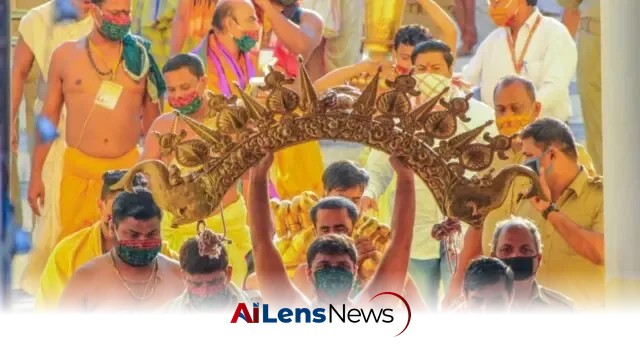


Lakhs of devotees gather in Puri for the Suna Besha, where Lord Jagannath and siblings are adorned with gold ornaments, marking a significant ritual in the Rath Yatra festivities.
New Delhi, India Jul 25, 2026 ALN: Puri: Lakhs of devotees from across the country and abroad are set to throng Odisha’s pilgrim town of Puri for a glance at Shree Jagannath Temple’s opulence as the sibling deities will be adorned with elaborate gold ornaments embedded with precious stones in a special ritual called ‘Suna Besha’ on Saturday evening.
During this popular ritual as part of the annual Rath Yatra festival, Lord Balabhadra, Devi Subhadra, and Lord Jagannath will be adorned with golden attire on their respective chariots in front of the 12th-century shrine. The deities returned to the Lions’ Gate of the shrine from Gundicha temple riding their chariots during Bahuda Yatra on Friday. This return journey is a significant event in the Rath Yatra, marking the end of the deities' annual sojourn to the Gundicha Temple, which is located about three kilometers from the main temple.
As per tradition, the Suna Besha ritual is observed on Ashadha Shukla Ekadashi Tithi on the 11th bright fortnight in the month of Asadha once the sibling deities return to Shree Jagannath Temple in Odisha’s Puri after the annual sojourn. This timing is not only significant in the religious calendar but also resonates deeply with the cultural practices of the region, drawing in thousands of devotees who come to witness this grand spectacle.
According to the temple schedule, the priests began the daily rituals in the morning, beginning with Mangal Arati, Mailum, Tadap Lagi, Abakash, Surya Puja, Rosa Homa, followed by dressing the deities in new clothes. The Gopal Bhog will be offered to the deities. After the Sakal Dhupa offering, three sets of dressers will start the process of decorating the deities with gold ornaments. This meticulous process is steeped in tradition, with each step symbolizing devotion and reverence towards the deities.
The servitors of the shrine will decorate the deities with gold ornaments including Sri Hasta (golden hand), Sri Payar (golden feet), Sri Mukuta (golden crown), Sri Mayur Chandrika (golden peacock feather), Sri Kundal (golden earring), Sri Rahurekha (golden aura), and Sri Mala (gold necklace) on their chariots between 5 pm and 6.30 pm. The preparation for this event is extensive, involving a large number of temple staff and volunteers who work diligently to ensure that everything is in place for the evening's ritual.
The devotees will be able to witness the Suna Besha ritual of the deities from 6.30 pm to 11 pm, according to the Shree Jagannath Temple Administration (SJTA). This extended viewing time allows for a more significant number of attendees to partake in the experience, which is considered a once-in-a-lifetime opportunity for many pilgrims.
One of the richest deities in the country, the Lords will then glitter atop the three chariots, Nandighos, Taladhwaja, and Debadalana, parked at Singhadwar of the 12th-century shrine. The sight of the deities adorned in gold is not just a feast for the eyes but also a moment of spiritual significance for the devotees, who believe that witnessing the Suna Besha brings blessings and prosperity.
Golden Tales
Legend has it that Suna Besha began during the reign of King Kapilendra Deb in 1460 when the triumphant king brought 16 cartloads of gold to Puri after winning wars over the rulers of the Deccan (Southern India), said a temple priest. This act of devotion and generosity has been passed down through generations, highlighting the deep-rooted cultural and historical significance of the ritual. He donated the gold and diamond to Lord Jagannath and instructed the temple priests to get ornaments crafted out of them, establishing a tradition that continues to this day.
The Vault
Escorted by armed policemen and temple officials, bhandara mekap priests (store in-charge) bring the gold jewellery laced with invaluable stones from the Ratna Bhandar and hand it over to Puspalaka and Daitapati servitors. This transfer of gold is a highly secure process, reflecting the value and importance of the ornaments that are to be used in the Suna Besha ritual.
Different sections of servitors, involving Palia Puspalak, Bhitarchha Mohapatra, Taluchha Mohapatra, Daitapatis, Khuntia, and Mekap sevaks, have been assigned to decorate the deities on the chariots. Each group has its responsibilities, ensuring that the process is smooth and that the deities are adorned with the utmost care and respect.
All That Glitters & Shines
According to temple sources, the sibling deities wear gold jewellery, weighing nearly 208 kg (2 quintals 8 kg), on this occasion. This significant weight of gold is a testament to the richness of the tradition and the devotion of the followers. It takes the servitors almost an hour to decorate the Lords with gold ornaments and other jewellery- Sri Hasta (gold hand), Sri Payar (gold feet), Sri Mukuta (big gold crown), Sri Mayur Chandrika (gold peacock feather for Lord Jagannath), Sri Chulapati (an ornament traditionally worn on the forehead), Sri Kundal (gold earring with a hanging ball), Sri Rahurekha (a half square-shaped gold aura), Sri Mala (necklaces), Sri Chita (third eye of Lords), Sri Chakra (gold wheel), Sri Gada (gold bludgeon), Sri Padma (gold lotus), and Sri Sankha (a silver conch). Each of these ornaments holds its significance and is crafted with intricate designs that reflect the artistry and devotion of the craftsmen involved.
Traditional Designs
According to the priest, the deities were decked up with gold ornaments of nearly 138 designs during the era of Kapilendra Deb. The number has come down to 20-30 now, he further said. The designs are still intact. They are repaired as and when required using raw gold donated by pilgrims, he added. This practice not only preserves the historical designs but also involves the community in the upkeep of the temple's wealth and heritage.
The gold ornaments are refurbished every year ahead of Suna Besha, ensuring that they remain in pristine condition for this important ritual. Notably, the sibling deities of the 12th-century shrine are adorned in gold on four other occasions — Dussehra, Kartika Purnima, Pausa Purnima, and Dola Purnima — in a calendar year. These, however, are observed inside the temple. Each of these occasions holds its own significance and adds to the rich tapestry of traditions associated with the Jagannath cult, attracting devotees and tourists alike, and contributing to the cultural heritage of Odisha.
To learn more about the latest developments in Hinduism, stay updated with our exclusive reports and analyses on AiLensNews.

