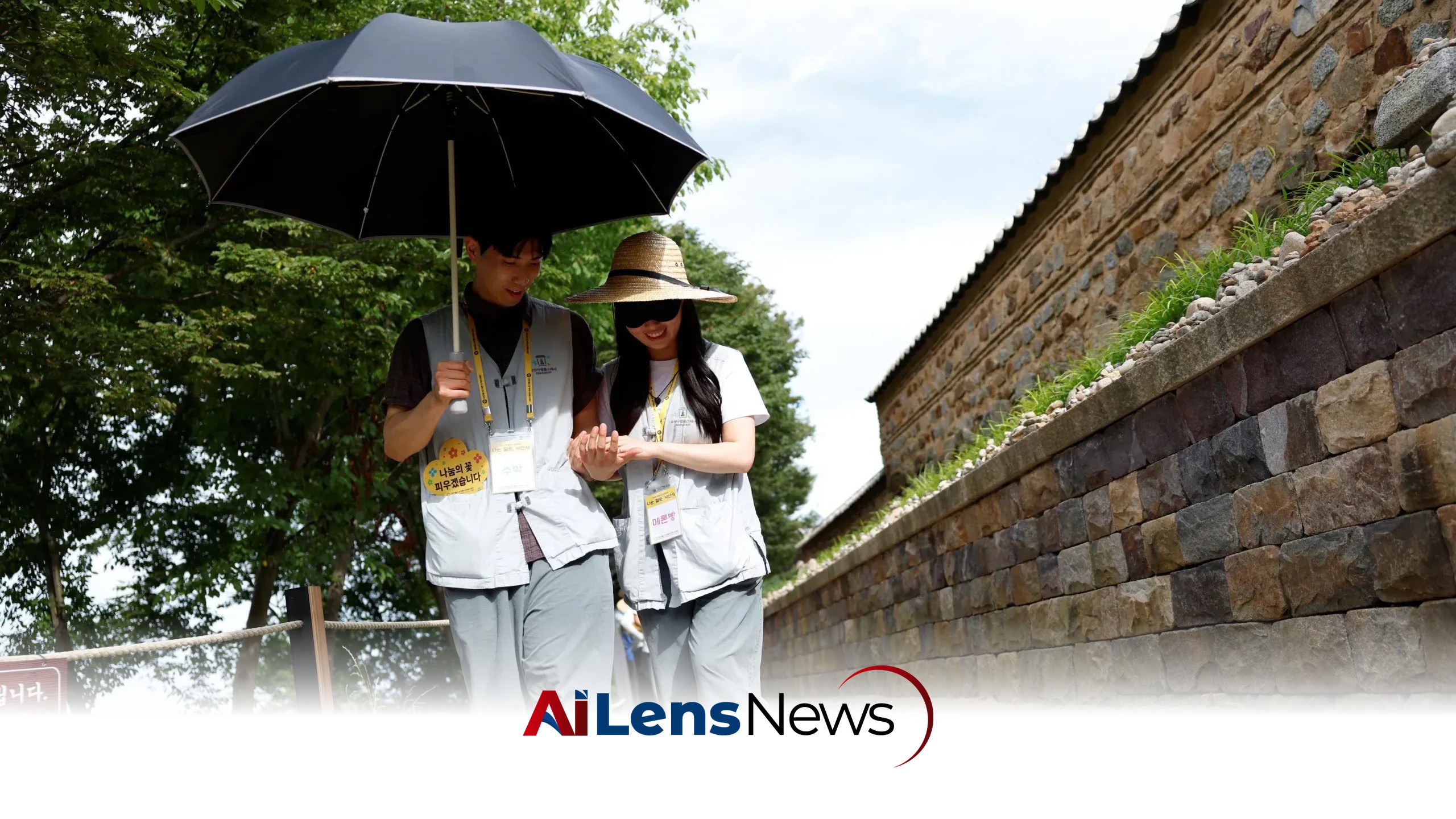


Young South Koreans participate in a two-day matchmaking retreat at Naksansa Temple, aiming to combat the nation's low birthrate through innovative dating experiences.
Seoul, South Korea Jul 14, 2026 ALN: In a picturesque Buddhist temple, young South Korean men and women walk hand-in-hand, one wearing a blindfold and the other describing the path ahead as they approach a gate where legend tells them dreams come true. Observed by a monk, this trust-building walk is part of a two-day Buddhist matchmaking retreat at Naksansa, a hilltop temple founded in 671 CE during the Silla Dynasty in what is now Yangyang County on South Korea’s northeastern coast. The serene environment of the temple, surrounded by lush mountains and the sound of waves crashing against the shore, creates a tranquil backdrop for participants seeking meaningful connections.
The Korean Buddhist Foundation for Social Welfare launched its blind date program in 2023 to help tackle the country’s low birthrate, which is currently the lowest in the world. This initiative is part of a broader effort to address demographic challenges facing South Korea, where the total fertility rate has plummeted in recent years, prompting concerns about the sustainability of the nation’s workforce and economy. Interest in the program has surged, with this round attracting a record 4,225 applicants for just 20 spots, according to the foundation, highlighting the desperation and eagerness among young South Koreans to find companionship in an increasingly isolated society.
“Honestly, they say the birthrate is falling and more people are choosing not to marry, but everyone around me really does get married, everyone has a partner, and they date just fine,” said Choi Ye-ri, a 30-year-old first-time participant. Choi’s comments reflect a common sentiment among many young South Koreans who are navigating the complexities of modern relationships against a backdrop of societal expectations and pressures. The juxtaposition of personal experiences with the broader statistical realities of marriage and family formation in South Korea illustrates the nuanced perspectives on love and commitment in contemporary society.
The government anticipates that South Korea’s population of 51.8 million could shrink by almost a third by 2072. This projection raises significant concerns about the implications for economic growth, social welfare systems, and the overall demographic balance in the country. However, there are hopes that the country’s demographic crisis might be easing, as the birth rate has seen consecutive increases over the past two years. The recent uptick in birth rates has sparked discussions among policymakers and sociologists about the factors contributing to this change, including shifts in societal attitudes toward marriage and parenthood.
The organizers of the blind date weekend view their efforts as more than just matchmaking. “I hope this journey becomes a time to reflect on the low birthrate issue and to think about alternatives for our future,” stated Venerable Doryun, head of the Korean Buddhist Foundation for Social Welfare. This perspective underscores the recognition that the issues surrounding marriage and family in South Korea are deeply intertwined with cultural, economic, and social dimensions. By fostering relationships within a spiritual context, the program aims to encourage participants to consider not only romantic connections but also the broader implications of their choices on society.
As of 2025, South Korea’s total fertility rate, which indicates the average number of babies a woman is expected to have, stood at 0.80, up from 0.75 in 2024, marking a second consecutive year of increase. While this progress is encouraging, it remains significantly below the replacement level of 2.1 children per woman, which is necessary to maintain a stable population. The low fertility rate has been attributed to various factors, including economic pressures, the high cost of living, and changing gender roles, which have influenced young people's decisions regarding marriage and family.
Unlike conventional blind dates that might occur over a single evening, the retreat’s weekend format fosters deeper connections through various shared activities. Participants, dressed in traditional Korean temple attire, are randomly paired by drawing numbered sticks or matching each other’s belongings. They engage in group tea sessions and strolls through the woods, and later, some couples join a yoga class by the beach and participate in one-on-one rotation dates. This structured yet relaxed environment allows participants to interact in ways that transcend the superficiality often associated with modern dating.
“My impression is that getting to know people in a temple setting is a completely new experience for me, which feels really fresh, and I think it allows you to get to know someone more seriously,” remarked participant Kim Do-yeon. Kim’s experience highlights the potential for alternative dating formats to create meaningful interactions that prioritize emotional and spiritual connections over physical attraction. The unique setting of a Buddhist temple provides a space for introspection and personal growth, which may ultimately contribute to stronger relationships.
This innovative approach to matchmaking not only aims to foster romantic relationships but also seeks to address the broader societal challenges posed by South Korea's declining birthrate. By encouraging young people to engage in relationships with the potential for marriage and family, the program aligns with national interests in revitalizing the population. As South Korea continues to grapple with its demographic challenges, initiatives like the Buddhist matchmaking retreat may play a crucial role in reshaping social norms and encouraging a culture that supports family formation.
Moreover, the retreat reflects a growing trend in South Korea where traditional values intersect with modern relationship dynamics. As societal expectations evolve, young people are increasingly seeking meaningful connections that align with their personal beliefs and lifestyles. The blending of spiritual practices with contemporary dating methods illustrates the adaptability of cultural traditions in addressing modern challenges. This retreat, therefore, may not only serve as a model for future matchmaking events but also as a catalyst for broader discussions about love, commitment, and the role of community in fostering family life.
In conclusion, the Buddhist matchmaking retreat at Naksansa offers a unique lens through which to explore the complexities of relationships in South Korea. As participants navigate the challenges of modern dating within a spiritual context, they contribute to a larger narrative about the importance of connection in a rapidly changing society. The success of such initiatives may provide valuable insights into how communities can come together to address pressing demographic issues while fostering love and partnership among the younger generation.
To learn more about the latest developments in Buddhism, stay updated with our exclusive reports and analyses on AiLensNews.

