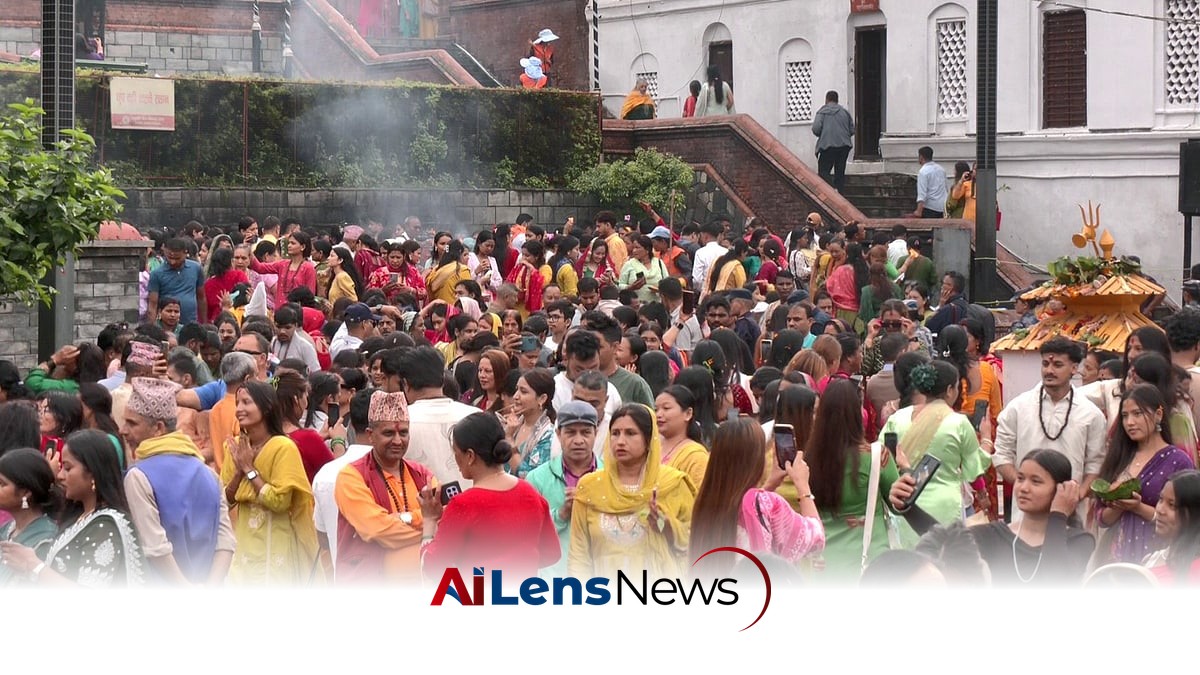


Thousands of Hindu devotees from Nepal and India gather at Pashupatinath Temple in Kathmandu to observe the first Monday of Shrawan, dedicated to Lord Shiva.
Kohima, India Jul 21, 2026 ALN: Kathmandu: Thousands of Hindu devotees from Nepal and India are thronging the Pashupatinath Temple in Kathmandu, observing the first Monday of the holy month of Shrawan, which is dedicated to Lord Shiva.
Serpentine lines stretched to all corners of the temple, where devotees holding baskets of offerings waited for their turn to enter the temple for worship. The atmosphere was filled with devotion and anticipation as people from various backgrounds united in their spiritual quest. The Pashupatinath Temple, a UNESCO World Heritage Site, is one of the most significant Hindu temples dedicated to Lord Shiva in the world. It attracts not only local devotees but also tourists and pilgrims from around the globe, particularly during religious festivals. The temple's architecture and cultural significance contribute to its status as a spiritual epicenter, making it a focal point for Shrawan observances.
The fourth month, Shrawan, as per the Nepali calendar, is considered sacred by Hindu devotees. It is dedicated to Lord Shiva, one of the principal deities of Hinduism, who is revered as the destroyer and transformer in the holy trinity of Brahma, Vishnu, and Shiva. During this time, females keep a fast, adorning themselves with green, yellow, and red bangles and beads, which are symbolic of their devotion and commitment to their families and spiritual practices. This vibrant display of colors not only signifies personal devotion but also serves as a visual representation of the rich cultural heritage associated with Shrawan.
"Today, on the first Monday of Shrawan, we have come to worship Bholenath, Lord Shiva. Seeking the blessings of Lord Shiva and Parbati for good health and benevolence, not only for us but also for the entire nation, as well as longevity, respect, and honour, we have come to the Pashupatinath Temple," Meena Guragain, a devotee, expressed her sentiments. Her words reflect a common theme among the devotees, who view this period as an opportunity to connect with the divine and seek blessings for themselves and their loved ones. The devotion shown during this time is often characterized by a deep sense of purpose and a desire for spiritual fulfillment.
As per religious belief, one's wishes are fulfilled, and Lord Shiva showers fortune on devotees who visit shrines dedicated to him and pay homage after taking an early morning shower on the first Monday of the month of Shrawan. This ritual is viewed as a purification process, allowing devotees to approach the deity with a clean heart and mind. The early morning hours are particularly significant, as they symbolize a fresh start and a commitment to spiritual practices that can lead to personal transformation.
During this month, especially on Mondays, devotees of all ages and sexes go to Shiva temples to worship the Lord. It is believed that an unmarried girl who keeps a fast every Monday of the month shall get a husband of her choice. Married women, however, keep the fast for the good health and prosperity of their husbands and family members. These practices highlight the significant role that gender plays in the rituals associated with Shrawan, as women often take on the responsibility of ensuring the welfare of their families through their spiritual observances. This aspect of Shrawan underscores the intersection of faith, culture, and gender roles within Hindu society.
Shrawan is not only a time for personal devotion but also a period that fosters community spirit. Many families make it a tradition to visit the temple together, reinforcing familial bonds and shared beliefs. The gathering of thousands of devotees creates a vibrant atmosphere filled with chants, prayers, and the sounds of traditional musical instruments, further enhancing the spiritual experience. The communal aspect of these observances serves to strengthen social ties and foster a sense of belonging among participants.
In addition to the physical act of worship, the month of Shrawan also encourages a sense of introspection and spiritual growth among devotees. Many individuals take the opportunity to reflect on their lives, seek forgiveness for past mistakes, and make resolutions for personal improvement. This period of fasting and prayer is often seen as a time to cultivate virtues such as patience, humility, and compassion. The spiritual practices observed during Shrawan can lead to a deeper understanding of oneself and one's place in the world, aligning personal goals with broader spiritual aspirations.
The significance of Shrawan extends beyond individual worship; it also has broader implications for societal values and cultural practices. The observance of this month reinforces the importance of spirituality in daily life and serves as a reminder of the interconnectedness of community members through shared beliefs and traditions. In a rapidly modernizing world, such observances provide a sense of continuity and stability, linking contemporary worshippers with their ancestors and cultural heritage. This continuity is crucial for maintaining cultural identity in an age of globalization.
Moreover, the influx of devotees to Pashupatinath Temple during Shrawan can have significant economic implications for the local community. The increase in visitors often leads to a boost in local businesses, including food stalls, souvenir shops, and transportation services. Many families rely on the influx of pilgrims during this time to sustain their livelihoods, making the observance of Shrawan not only a spiritual event but also an economic one. This economic aspect is particularly vital for many local vendors and service providers who depend on the seasonal surge of visitors for their income.
Local authorities and temple management often prepare for the influx of visitors by enhancing security measures and ensuring that facilities are equipped to handle the large crowds. This preparation is crucial in maintaining the sanctity of the worship experience while also ensuring the safety and comfort of all attendees. Volunteers from the community often step forward to assist with crowd management and provide guidance to visitors, further fostering a sense of community and shared responsibility. The collaborative efforts of local authorities and community members exemplify the spirit of unity that characterizes the observance of Shrawan.
As the month of Shrawan progresses, devotees will continue to gather at Pashupatinath Temple and other Shiva shrines across Nepal and India, participating in rituals that have been passed down through generations. The dedication and fervor displayed by the devotees serve as a testament to the enduring power of faith and the cultural significance of religious observances in the lives of individuals and communities. Ultimately, Shrawan is a time of renewal, hope, and devotion, where the teachings of Lord Shiva inspire millions to seek a deeper connection with the divine and with each other. The observance of Shrawan not only enriches the spiritual lives of individuals but also contributes to the social fabric and cultural identity of the communities involved.
To learn more about the latest developments in Religious Events, stay updated with our exclusive reports and analyses on AiLensNews.

