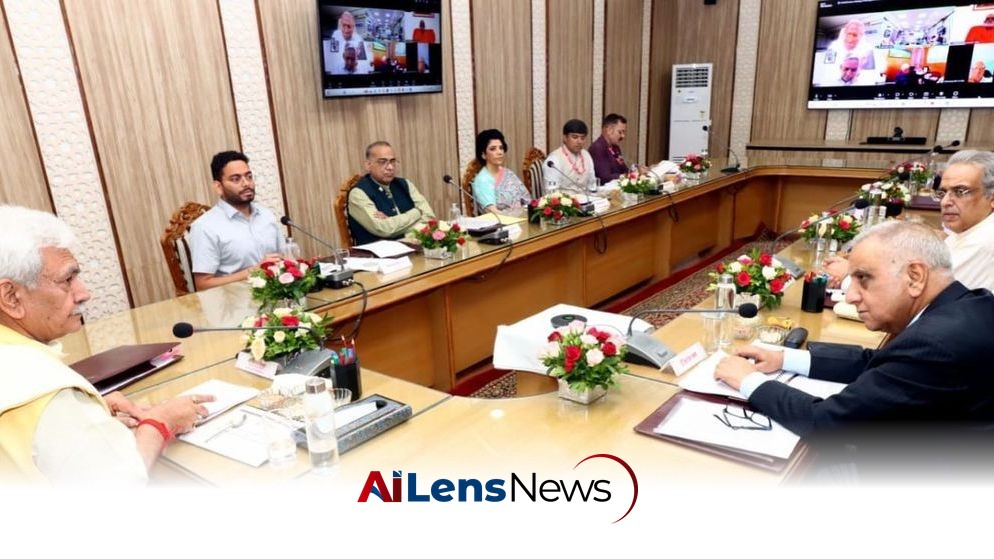


Lieutenant Governor Manoj Sinha chaired a meeting to assess the management system for offerings and donations at the Shri Mata Vaishno Devi Shrine, ensuring transparency and accountability.
New Delhi, India Jul 16, 2026 ALN: Lieutenant Governor Manoj Sinha on Thursday chaired a high-level meeting with the Members of Shri Mata Vaishno Devi Shrine Board and senior officials, reviewing the Offerings and Donations Management System at the holy Shri Mata Vaishno Devi ji Shrine. This meeting underscores the ongoing efforts by the administration to enhance the management of donations and offerings at one of India's most revered pilgrimage sites.
The Shri Mata Vaishno Devi Shrine, located in the Trikuta Mountains of Jammu and Kashmir, is a significant religious destination for millions of devotees from across the country and around the world. The shrine is dedicated to Goddess Vaishno Devi, a manifestation of the Hindu goddess Durga, and is believed to fulfill the wishes of those who visit. The annual footfall of pilgrims to the shrine often exceeds several million, leading to substantial donations and offerings made by devotees. Given the scale of financial transactions involved, effective management of these offerings is crucial.
The meeting was attended by the Members of the Shrine Board, including Mahamandleshwar Swami Vishveshvaranand Giriji Maharaj, Baleshwar Rai, Dr. Ashok Bhan, Sudha Murty, Gunjan Rana, Dr. K.K. Talwar, Kulbhushan Ahuja, Lalit Bhasin, Suresh Kumar Sharma, Dr. Mandeep K. Bhandari, Principal Secretary to the Lieutenant Governor, Sachin Kumar Vaishya, Chief Executive Officer of the Shrine Board, Alok Kumar Maurya, Additional CEO of the Shrine Board, and other senior officials, both in person and through virtual mode, at the Spiritual Growth Centre in Katra. The diverse composition of the board reflects a blend of religious, administrative, and financial expertise, aimed at ensuring the shrine's operations are managed efficiently.
To ensure complete transparency, accountability, and adherence to established Standard Operating Procedures (SOPs) in the management of offerings and donations received at the Holy Shrine, a comprehensive review of the collection, counting, accounting, safeguarding, and utilization of devotees’ offerings was made during the meeting. This review is part of a broader initiative to bolster trust among devotees and stakeholders regarding the handling of donations.
A presentation during the meeting highlighted the robust systems and institutional mechanisms put in place by the Shrine Board for the secure and transparent handling of offerings received through various channels, including donation boxes, counters, online platforms, and offerings in the form of precious metals. The Shrine Board has developed a multi-faceted approach to ensure that all offerings are meticulously accounted for and managed in a way that maximizes their benefit to the shrine and its associated welfare activities.
During the meeting, the Board was apprised of verification processes, surveillance mechanisms, banking safeguards, and periodic audits that govern every stage of the process. These measures are critical in preventing mismanagement and ensuring that every rupee donated is utilized for the intended purposes. The Board emphasized that all financial transactions pertaining to offerings and donations are undertaken strictly in conformity with prescribed banking norms, statutory provisions, and the guidelines issued by the Government of India from time to time. This compliance is essential not only for legal reasons but also for maintaining the faith of the devotees in the shrine's administration.
The Board also noted the stringent security protocols adopted for handling and storage of the offerings received in the form of precious metals. These offerings are often substantial, and their proper management is vital. The secure transportation, processing, and refinery of these precious metals are conducted through reputed Government-approved institutions, including the Reserve Bank of India and the India Government Mint in Hyderabad. This ensures that the offerings are handled with the utmost care and integrity, further reinforcing the trust placed in the shrine's management.
After a detailed review, the Board expressed satisfaction over the transparency, accountability, and efficiency of the existing arrangements. The Board's positive assessment reflects the success of the measures implemented to manage the shrine’s financial resources effectively. Additionally, the Board appreciated the comprehensive safeguards and monitoring mechanisms adopted to ensure that the sacred offerings made by devotees are managed with the highest standards of integrity, financial discipline, and public trust. This is particularly important in a religious context, where the faith of devotees is paramount.
The implications of this meeting and the ongoing improvements to the offerings and donations management system are significant. By enhancing transparency and accountability, the Shrine Board aims to strengthen the relationship between the shrine and its devotees. Trust is a critical component of religious institutions, and by taking proactive steps to ensure the proper management of donations, the Board is likely to encourage even greater participation from devotees. This could lead to increased offerings, which in turn can be utilized for various welfare activities associated with the shrine, including community development, education, and health services.
Furthermore, the Shrine Board's commitment to adhering to government guidelines and banking norms also positions it as a model for other religious institutions in India. As many shrines and temples grapple with the challenges of managing large volumes of donations, the practices adopted by the Shri Mata Vaishno Devi Shrine could serve as a blueprint for enhancing operational efficiency and accountability in similar contexts.
In conclusion, the meeting chaired by Lieutenant Governor Manoj Sinha represents a significant step forward in the management of offerings and donations at the Shri Mata Vaishno Devi Shrine. Through ongoing reviews and the implementation of robust systems, the Shrine Board aims to uphold the highest standards of integrity and trust, ensuring that the sacred offerings of devotees are preserved and utilized in a manner that reflects their faith and devotion.
To learn more about the latest developments in Hinduism, stay updated with our exclusive reports and analyses on AiLensNews.

