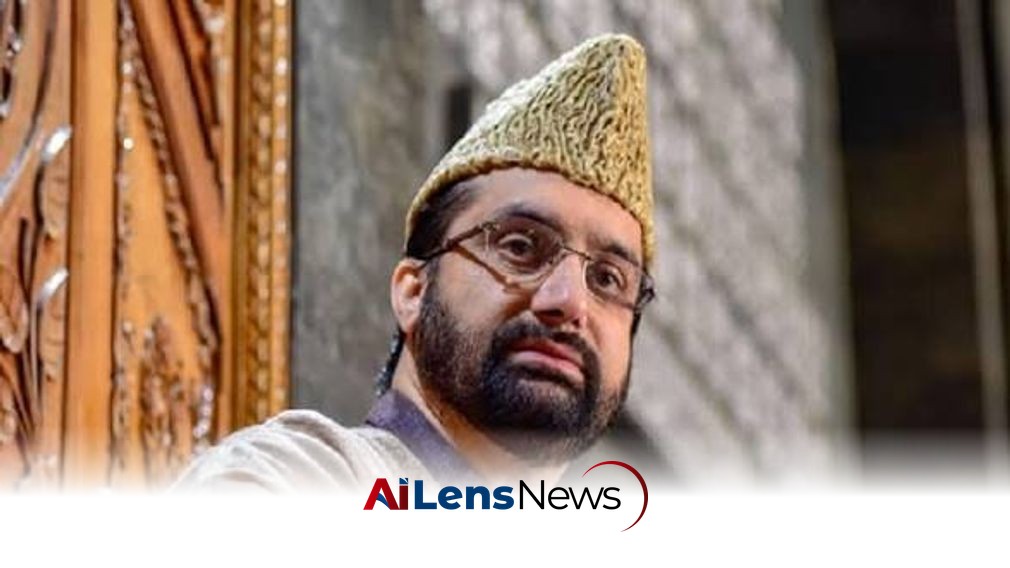


Mirwaiz Umar Farooq mourns the loss of Sheikh Hamad bin Khalifa Al Thani, recalling his gracious hospitality and commitment to peace in South Asia.
Leh, India Jul 13, 2026 ALN: Srinagar: Mirwaiz Umar Farooq on Monday expressed deep sorrow over the passing of Sheikh Hamad bin Khalifa Al Thani, referring to him as the "Father Amir" of Qatar. Sheikh Hamad, who ruled Qatar from 1995 until his abdication in 2013, was a pivotal figure in modernizing the nation and enhancing its profile on the global stage. His leadership marked a significant transition for Qatar, transforming it from a relatively obscure nation into a prominent player in international politics, economics, and culture.
Sheikh Hamad bin Khalifa Al Thani ascended to the throne following a bloodless coup that ousted his father, Sheikh Khalifa bin Hamad Al Thani. This transition was not merely a change in leadership; it heralded a new era for Qatar, characterized by ambitious development plans and a strategic vision aimed at elevating the country's status internationally. Under Sheikh Hamad's rule, Qatar invested heavily in infrastructure, education, and healthcare, laying the groundwork for what would become one of the wealthiest nations per capita in the world. The country's substantial natural gas reserves served as a significant driver for this transformation, allowing for unprecedented economic growth and development.
In a post on X, Mirwaiz recalled meeting Sheikh Hamad during an Organisation of Islamic Cooperation (OIC) meeting in Doha and described him as "gracious and generous" in his hospitality. The OIC, an organization of Muslim-majority countries, serves to promote cooperation and solidarity among its members. It has been instrumental in addressing various global issues affecting the Muslim community, including conflicts, humanitarian crises, and economic development. Mirwaiz's participation in such meetings underscores the importance of dialogue and diplomacy in fostering peace and understanding within the Muslim world. This is particularly relevant in an era where geopolitical tensions often overshadow cooperative efforts among countries with shared cultural and religious ties.
Mirwaiz noted, "I had the privilege of meeting him during an OIC meeting in Doha, where he was gracious and generous in his hospitality towards us. He also took a keen interest in peace in South Asia and favoured engagement and dialogue as the way forward." This statement reflects Sheikh Hamad's broader diplomatic approach, which emphasized dialogue over confrontation, particularly in regions experiencing conflict. His commitment to peace in South Asia is particularly noteworthy, given the complex geopolitical landscape that includes longstanding tensions between India and Pakistan, as well as the challenges facing Afghanistan. Sheikh Hamad's vision for peace extended beyond mere rhetoric; he actively sought to mediate conflicts and foster understanding among diverse groups, which has had lasting implications for the region's stability.
During his reign, Sheikh Hamad bin Khalifa Al Thani implemented significant reforms that modernized Qatar's economy and society. His government invested heavily in infrastructure, education, and healthcare, transforming Qatar into a hub for international business and tourism. The establishment of Al Jazeera, a global news network, under his leadership further amplified Qatar's voice on the international stage, allowing it to shape narratives and discussions on critical global issues. Al Jazeera became a platform for diverse viewpoints and often challenged established narratives, contributing to a more informed and engaged global citizenry. This media outlet has played a vital role in not only reporting news but also influencing public opinion across the Arab world and beyond.
Additionally, Sheikh Hamad's foreign policy was characterized by a willingness to engage with various factions and governments, often acting as a mediator in regional conflicts. His efforts in promoting dialogue and understanding among conflicting parties have earned him respect and recognition across the globe. This approach aligns with Mirwaiz's emphasis on dialogue and engagement as essential tools for peace, particularly in the context of South Asia, where tensions have historically run high. Sheikh Hamad's diplomatic strategies included fostering relationships with both Western and Eastern powers, which allowed Qatar to maintain a unique position in international relations. His balancing act of engaging with global superpowers while advocating for Arab and Muslim interests is a testament to his nuanced understanding of international diplomacy.
Mirwaiz prayed for the departed leader, saying, "May Allah grant him Jannah and patience and solace to Tamim bin Hamad, his family, and the people of Qatar." This expression of condolences not only reflects personal grief but also acknowledges the significant impact Sheikh Hamad had on his country and the broader region. The transition of leadership to his son, Sheikh Tamim bin Hamad Al Thani, has been closely watched, as many hope to see the continuation of his father's policies and vision for Qatar. Sheikh Tamim has already shown a commitment to sustaining Qatar's independent foreign policy, which has sometimes put the nation at odds with its neighbors, particularly during the Gulf crisis that began in 2017. The ongoing regional dynamics will test the younger leadership's ability to navigate the complexities established by his father while addressing new challenges that arise.
In the context of Sheikh Hamad's passing, it is important to recognize the implications for Qatar and the Gulf region. His leadership style and policies have set a precedent for how future leaders may approach governance and international relations. The new leadership under Sheikh Tamim is expected to continue the legacy of Qatar's proactive engagement in global affairs, particularly in areas such as mediation in conflicts and investment in human capital. However, the geopolitical landscape is continuously evolving, and the challenges faced by Qatar today differ significantly from those of the past. The nation must adapt to new realities, including shifting alliances and the increasing importance of non-state actors in international relations.
Mirwaiz concluded his condolence message with the Quranic verse: "Inna lillahi wa inna ilayhi raji'un" (Indeed, to Allah we belong and to Him we shall return). This verse is often recited in times of loss and serves as a reminder of the transient nature of life. It encapsulates the sentiments of many who mourn the passing of influential leaders, reflecting on their legacies and the impact they have had on their nations and the world. The death of Sheikh Hamad bin Khalifa Al Thani is not only a personal loss for his family and the people of Qatar but also a moment for reflection on the broader implications for the region and the international community.
The death of Sheikh Hamad bin Khalifa Al Thani not only marks the end of an era for Qatar but also invites reflection on the challenges and opportunities that lie ahead for the nation. As Qatar continues to navigate its role on the global stage, the principles of engagement and dialogue championed by Sheikh Hamad will likely remain central to its diplomatic efforts. Leaders and citizens alike will need to draw upon his legacy as they confront the complexities of contemporary geopolitics, particularly in a region characterized by rapid change and uncertainty. The emphasis on dialogue that Sheikh Hamad promoted will be essential in addressing the myriad issues facing the Gulf region, including security concerns, economic diversification, and environmental challenges.
In conclusion, the expressions of condolences from figures like Mirwaiz Umar Farooq highlight the interconnectedness of global leaders and the shared values of peace and dialogue. As the world reflects on Sheikh Hamad's contributions to Qatar and the international community, it is essential to honor his memory by continuing to pursue understanding and cooperation in addressing the pressing challenges of our time. The legacy of Sheikh Hamad bin Khalifa Al Thani serves as a reminder of the power of visionary leadership and the importance of fostering a spirit of collaboration among nations, especially in an increasingly polarized world.
To learn more about the latest developments in Islam, stay updated with our exclusive reports and analyses on AiLensNews.

