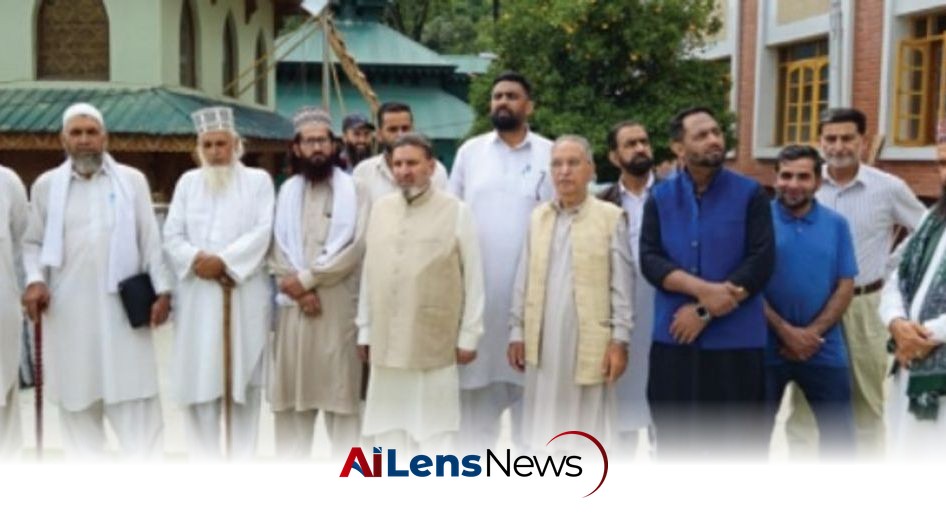


During his visit to the Shahdara Sharief shrine, Apni Party President Syed Mohammad Altaf Bukhari prayed for peace and stability in Jammu and Kashmir.
Leh, India Jul 14, 2026 ALN: Apni Party President Syed Mohammad Altaf Bukhari, accompanied by the party's Senior Vice President Ghulam Hassan Mir and District President Rajouri Syed Manzoor Bukhari, paid obeisance at the revered shrine of the renowned Sufi saint Baba Ghulam Shah Badshah (RA) at Shahdara Sharief in Rajouri on Sunday. This visit comes at a time when the region of Jammu and Kashmir is grappling with various socio-political challenges, making the call for peace and stability particularly poignant.
The shrine of Baba Ghulam Shah Badshah, a prominent figure in the Sufi tradition, has long been a center of spiritual solace and communal harmony in the region. Sufism, characterized by its emphasis on love, tolerance, and the inner dimensions of faith, plays a significant role in the cultural and spiritual landscape of Jammu and Kashmir. The teachings of such saints often transcend religious boundaries, promoting unity and understanding among diverse communities.
During the visit, the leaders prayed for lasting peace, stability, progress, and prosperity in Jammu and Kashmir. The act of visiting a shrine for prayers is not just a personal or communal ritual; it symbolizes a collective yearning for a better future amidst the backdrop of historical unrest and conflict in the region. The leaders also interacted with the shrine management and devotees who had gathered at the revered spiritual center, highlighting the importance of community engagement in fostering a sense of belonging and hope.
Speaking to reporters on the occasion, Syed Mohammad Altaf Bukhari stated that they had come to seek blessings and pray for the well-being of the people of Jammu and Kashmir. His remarks reflect a broader sentiment among many leaders in the region who believe in the power of spiritual appeal to bring about social change and healing.
"This sacred shrine stands as a beacon of spirituality, communal harmony, and brotherhood. The timeless teachings of Baba Ghulam Shah Badshah (RA) continue to inspire people across generations to uphold the values of peace, compassion, and unity. We prayed for lasting peace, stability, prosperity, and happiness for every resident of Jammu and Kashmir," he said. This statement underscores the enduring influence of Sufi philosophy in promoting peace and reconciliation in a region that has witnessed significant turmoil.
Furthermore, Bukhari's visit also highlights the role of political leaders in engaging with spiritual and cultural institutions. By aligning themselves with the values espoused by revered figures like Baba Ghulam Shah Badshah, leaders can strengthen their connection with the local populace, who often look to such figures for guidance and inspiration in times of distress.
In addition to spiritual matters, Bukhari also appreciated the developmental initiatives undertaken at the Shahdara Sharief shrine complex. His acknowledgment of these efforts reflects a growing trend among political leaders to recognize the importance of infrastructure development in enhancing the experience of devotees and promoting tourism in the region. The shrine's management has made significant strides in improving facilities, which is crucial for accommodating the increasing number of visitors, particularly during religious observances.
Bukhari praised Waqf Board Chairperson Dr. Syed Darakhshan Andrabi for her efforts and contributions in this regard. The Waqf Board, responsible for the management of religious endowments in the region, plays a critical role in ensuring that such sites are maintained and developed sustainably. The initiatives taken by the board are seen as vital for preserving the cultural heritage of Jammu and Kashmir, while also providing economic benefits through increased tourism.
He added, "I sincerely appreciate the efforts made to enhance the shrine's infrastructure, especially the construction of the state-of-the-art Grand Mosque, a guest house, and other facilities for devotees." The construction of such facilities not only serves the practical needs of visitors but also reflects a commitment to fostering a welcoming environment for spiritual seekers. This is particularly important in a region where religious tourism can significantly contribute to the local economy, offering livelihoods to many families.
The implications of Bukhari's visit extend beyond the immediate context of spiritual and political engagement. It signals a recognition of the need for inter-community dialogue and cooperation in a region where tensions have often flared due to historical grievances and ongoing conflicts. By emphasizing the values of Sufism, which advocate for inclusivity and peace, leaders like Bukhari can help to bridge divides and promote a culture of understanding among different groups.
Moreover, the call for peace and stability is particularly relevant in the context of ongoing discussions about the future of Jammu and Kashmir. The region has experienced significant political changes in recent years, including the abrogation of Article 370, which granted special status to Jammu and Kashmir. This change has led to increased scrutiny and debate about governance and representation in the region, making the role of local leaders and their engagement with spiritual institutions even more critical.
As the leaders continue to advocate for peace, their efforts can also serve as a reminder of the importance of community-based initiatives in addressing the root causes of conflict. Engaging with local populations, understanding their needs, and fostering a sense of belonging can contribute to long-term stability and development in Jammu and Kashmir.
In conclusion, Syed Mohammad Altaf Bukhari's visit to the Shahdara Sharief shrine is emblematic of a broader movement towards peace and reconciliation in Jammu and Kashmir. By invoking the teachings of Baba Ghulam Shah Badshah (RA), Bukhari and his colleagues are not only seeking spiritual blessings but are also reinforcing the values of compassion, unity, and progress that are essential for the region's future. The ongoing efforts to enhance the shrine's infrastructure and engage with the community further demonstrate a commitment to fostering a harmonious and prosperous environment for all residents of Jammu and Kashmir.
To learn more about the latest developments in Islam, stay updated with our exclusive reports and analyses on AiLensNews.

