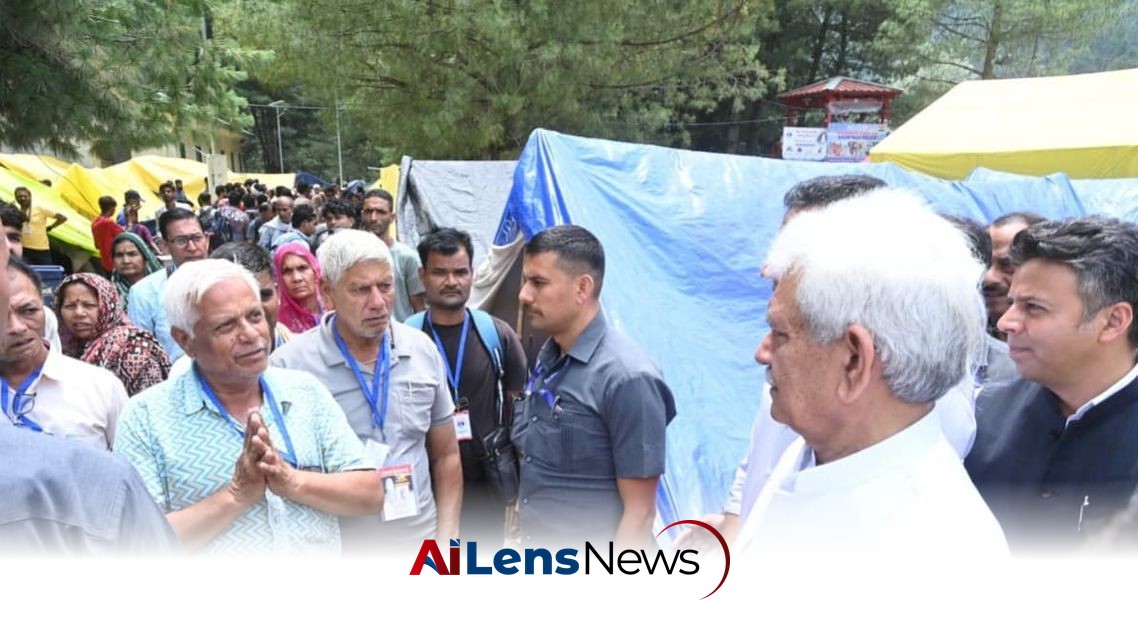


Lieutenant Governor Manoj Sinha reports that the Amarnath Yatra has seen over 350,000 pilgrims in its first 15 days, highlighting the smooth organization and local economic benefits.
Leh, India Jul 17, 2026 ALN: Lieutenant Governor Manoj Sinha announced that over 3.50 lakh pilgrims have visited the holy Amarnath cave shrine during the first 15 days of the annual Shri Amarnath Ji Yatra. This pilgrimage, one of the most significant religious events in India, attracts thousands of devotees each year who undertake a challenging journey to pay homage to Lord Shiva at the sacred cave, believed to be over 5,000 years old. The cave itself houses a naturally occurring ice Shiva Lingam, which is formed from the water that drips down from the cave ceiling and freezes during the summer months.
The Amarnath Yatra is not just a religious undertaking; it is a cultural phenomenon that draws people from various parts of India, showcasing the diversity of faith and devotion. The pilgrimage typically takes place during the Hindu month of Shravan (July-August) and lasts for about 40 days, culminating on the day of Raksha Bandhan. This year, the Yatra commenced on July 1 and is expected to conclude in mid-August. The journey to the shrine involves trekking through challenging terrains, with the most common routes starting from Pahalgam and Baltal, each offering its own unique set of challenges and experiences for the pilgrims.
Lieutenant Governor Sinha attributed the smooth and peaceful conduct of the pilgrimage to the blessings of Lord Shiva and the coordinated efforts of all stakeholders involved in managing the event. He visited the Nunwan Base Camp in Pahalgam, where he inspected the facilities provided to pilgrims and chaired a high-level review meeting with senior officials to assess the arrangements for the ongoing Yatra. This proactive approach by the administration is critical in ensuring that the needs and safety of the pilgrims are prioritized, especially given the large number of attendees.
During his visit, Sinha expressed satisfaction with the arrangements made for the pilgrims. He stated that the pilgrimage has been progressing smoothly with enthusiastic participation from devotees arriving from across the country. “Today marks 15 days since the pilgrimage began, and more than 3.50 lakh pilgrims have had darshan of Baba Bholenath. By the grace of Baba Amarnath, the yatra is proceeding peacefully and smoothly,” he said. His remarks highlight the importance of both divine blessings and effective governance in managing such a large-scale event.
Sinha praised the efforts of the Jammu and Kashmir administration, J&K Police, the Army, Central Armed Police Forces (CAPFs), and all other agencies involved in managing the pilgrimage. He noted that this year’s arrangements have been significantly strengthened to ensure the safety and comfort of devotees. Such comprehensive coordination is essential, given the potential risks associated with large gatherings, including health emergencies and natural challenges posed by the mountainous terrain.
The economic implications of the Amarnath Yatra cannot be overstated. Sinha highlighted that the annual pilgrimage is expected to provide a substantial boost to Jammu and Kashmir’s economy. Local businesses, transport operators, hoteliers, pony owners, laborers, and other service providers are set to benefit significantly from the influx of pilgrims. The Yatra serves as a vital source of income for many in the region, particularly in areas that have faced economic challenges in recent years due to various factors, including political instability and the COVID-19 pandemic.
In this context, the Lieutenant Governor referred to Prime Minister Narendra Modi’s appeal to pilgrims to purchase locally made products. Sinha stated that this initiative would further strengthen the livelihoods of local artisans, traders, and entrepreneurs. By encouraging pilgrims to engage with local markets, the government aims to create a more sustainable economic model that supports community development and empowers local populations.
Later, in a post on X, the Lieutenant Governor mentioned that he had inspected the facilities at the Nunwan Base Camp and reviewed arrangements for the smooth conduct of the Yatra. He emphasized that the review meeting focused on essential services, including drinking water, electricity, telecom connectivity, accommodation, and food facilities. All departments have been directed to operate in mission mode to ensure the welfare and convenience of pilgrims. Such meticulous planning and execution are crucial in preventing any disruptions during the pilgrimage, which can be detrimental to both the experience of the pilgrims and the reputation of the event.
Sinha also noted the tremendous enthusiasm among devotees from across the country and appreciated the active support of local residents and service providers in making the annual pilgrimage a success. The involvement of local communities is vital, as they play a significant role in facilitating the journey for pilgrims, offering services ranging from food and accommodation to transportation and guidance along the trekking routes.
The Amarnath Yatra is not just a journey of faith; it is also a testament to the resilience and spirit of the human experience. As pilgrims traverse the rugged landscapes, they often share stories of their devotion, struggles, and the sense of community that arises from such collective experiences. The Yatra fosters a spirit of unity among devotees, transcending regional and cultural differences.
Moreover, the event holds significant implications for interfaith dialogue and communal harmony in a region historically marked by tension and conflict. The pilgrimage provides an opportunity for people of different backgrounds to come together in a shared experience of spirituality and devotion. This aspect of the Yatra is particularly important in a diverse nation like India, where religious coexistence is often challenged.
As the Yatra progresses, it remains to be seen how the administration will continue to adapt and respond to the needs of pilgrims, ensuring that the event remains a safe, enriching, and transformative experience for all involved. The successful management of the Amarnath Yatra can serve as a model for future large-scale religious events, showcasing the importance of planning, coordination, and community involvement in ensuring the safety and satisfaction of participants.
In conclusion, the first 15 days of the Amarnath Yatra have seen a remarkable turnout, with over 3.50 lakh pilgrims undertaking the journey to the sacred cave. The collaborative efforts of various stakeholders, along with the unwavering faith of the devotees, have contributed to the smooth conduct of this revered pilgrimage. As the Yatra continues, its impact on the local economy, community dynamics, and interfaith relations will be closely observed, reflecting the broader significance of such religious events in contemporary society.
To learn more about the latest developments in Hinduism, stay updated with our exclusive reports and analyses on AiLensNews.

