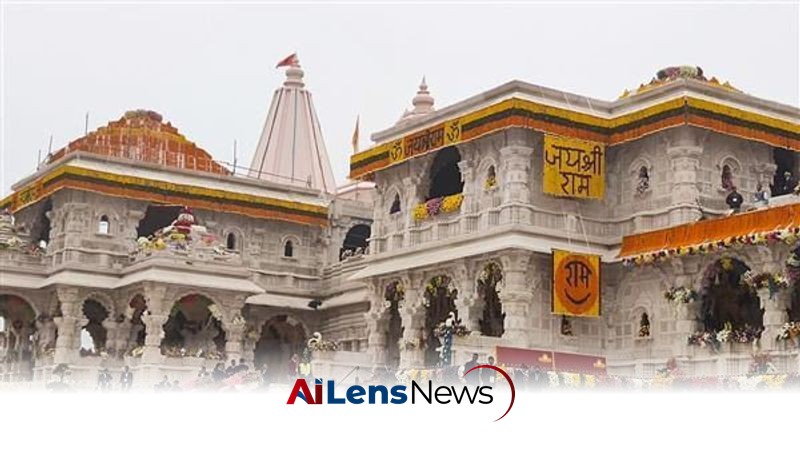


The Supreme Court has directed the Special Investigation Team to submit a status report regarding the donation controversy surrounding the Ram Temple in Ayodhya.
Chandigarh, India Jul 14, 2026 ALN: The Supreme Court of India has mandated the Special Investigation Team (SIT) to file a status report concerning the ongoing controversy surrounding donations for the Ram Temple in Ayodhya. This directive comes amid rising tensions and demands for accountability from various stakeholders, including the Central Government and the Trust overseeing the temple's construction.
In a recent hearing, the court put both the Centre and the Trust on notice, emphasizing the need for transparency in the handling of funds raised for the temple. The controversy has drawn significant public attention, with various groups questioning the legitimacy of the donations and the financial practices of the Trust.
The Ram Temple in Ayodhya has been a focal point of religious and political significance in India. The site, believed by many Hindus to be the birthplace of Lord Ram, has a long and contentious history, marked by communal tensions and legal battles. Following the Supreme Court's verdict in 2019, which allowed the construction of the temple at the disputed site, a massive fundraising campaign was launched to support its development. This decision was seen as a historic moment by many in the Hindu community, while it also reignited discussions about religious identity and communal relations in India.
However, concerns have been raised regarding the sources of these donations and the potential misuse of funds. The temple's Trust, formed to oversee the construction and management of the temple, has been under scrutiny for its financial transparency. Various reports and allegations have surfaced, questioning whether the funds are being raised and utilized in accordance with legal and ethical standards.
Several individuals, including Champat Rai, the general secretary of the Trust, have been called to provide clarity on the financial transactions associated with the temple. Critics argue that without proper oversight, there is a risk of financial irregularities that could undermine the temple's integrity. The call for accountability is not merely a matter of financial ethics; it also touches on the broader issues of trust in religious institutions and their governance. The public's faith in the temple's mission could be significantly affected by the revelations that may arise from the SIT's investigation.
Moreover, the demands for accountability are reflective of a larger societal expectation for transparency in the handling of religious funds. In a country as diverse as India, where religious sentiments can strongly influence public opinion and political landscapes, ensuring that donations are used appropriately is crucial. The implications of mismanagement or corruption could extend beyond the Trust, affecting the relationship between the state and religious communities.
The Supreme Court's involvement signifies the legal complexities surrounding the temple's funding. The SIT's report will likely address various aspects, including the legality of the donations and the financial management practices of the Trust. The court's decision to intervene highlights the judiciary's role in ensuring accountability in matters of public interest. The legal framework governing charitable donations and religious trusts in India is intricate, and the outcomes of this inquiry could set precedents for how similar cases are handled in the future.
Furthermore, the Supreme Court's action underscores the significance of judicial oversight in maintaining the rule of law, especially in cases that intertwine with deeply held beliefs and national identity. As the investigation unfolds, it may also prompt discussions about the regulatory mechanisms in place for religious organizations and the need for reforms to enhance transparency and accountability.
The SIT is expected to conduct a thorough investigation and present its findings to the court in the coming weeks. This process will likely involve scrutinizing financial records, interviewing key stakeholders, and assessing the overall governance structures of the Trust. The outcome of this inquiry could have significant implications for the Trust and its operations, as well as for the broader discourse surrounding religious funding in India.
As the situation develops, stakeholders will be closely monitoring the proceedings to ensure that the principles of transparency and accountability are upheld in the management of the Ram Temple's donations. The implications of the SIT's findings could resonate beyond Ayodhya, influencing public trust in religious institutions across the nation. Additionally, the political ramifications of this investigation could impact the ruling party's standing among its constituents, especially in a landscape where religious identity plays a pivotal role in electoral politics.
The Ayodhya Ram Temple issue has historically been a polarizing topic in Indian society. For many Hindus, the temple is not just a place of worship but a symbol of cultural and religious resurgence. Conversely, for some minority communities, the temple's construction is viewed through a lens of historical grievances and communal tensions. The Supreme Court's directive for an SIT report comes at a time when public sentiment is particularly sensitive, and the findings could further polarize opinions.
Political parties in India have long leveraged religious sentiments to galvanize support, and the Ram Temple is no exception. The ruling party has often positioned itself as the champion of Hindu interests, and any findings that suggest mismanagement or corruption within the Trust could have implications for its electoral strategies. As such, the SIT's investigation is not merely a legal matter but a significant event that could influence the political dynamics in the lead-up to future elections.
The inquiry into the Ram Temple donations could also have broader implications for religious institutions across India. As public scrutiny increases, religious organizations may be compelled to adopt more transparent practices in their financial dealings. This could lead to a reevaluation of how donations are solicited and managed, with an emphasis on accountability and ethical governance.
In addition, the findings from the SIT report may catalyze discussions about the regulatory frameworks governing religious trusts and charitable organizations in India. Currently, there is a lack of uniformity in the oversight mechanisms for such entities, and this inquiry could prompt lawmakers to consider reforms aimed at enhancing transparency and accountability across the board.
In conclusion, the Supreme Court's directive for an SIT report represents a crucial step in addressing the controversies surrounding the Ram Temple's donations. As India grapples with the intersections of faith, politics, and governance, the outcomes of this inquiry will likely be a significant chapter in the ongoing narrative of religious funding and accountability in the country. The public's response to the findings will also be instrumental in shaping future discussions about the role of religion in Indian society and the responsibilities of those who manage religious institutions. The unfolding developments will be closely watched, as they may not only affect the Ram Temple Trust but could also set a precedent for the governance of religious organizations in India.
To learn more about the latest developments in Hinduism, stay updated with our exclusive reports and analyses on AiLensNews.

