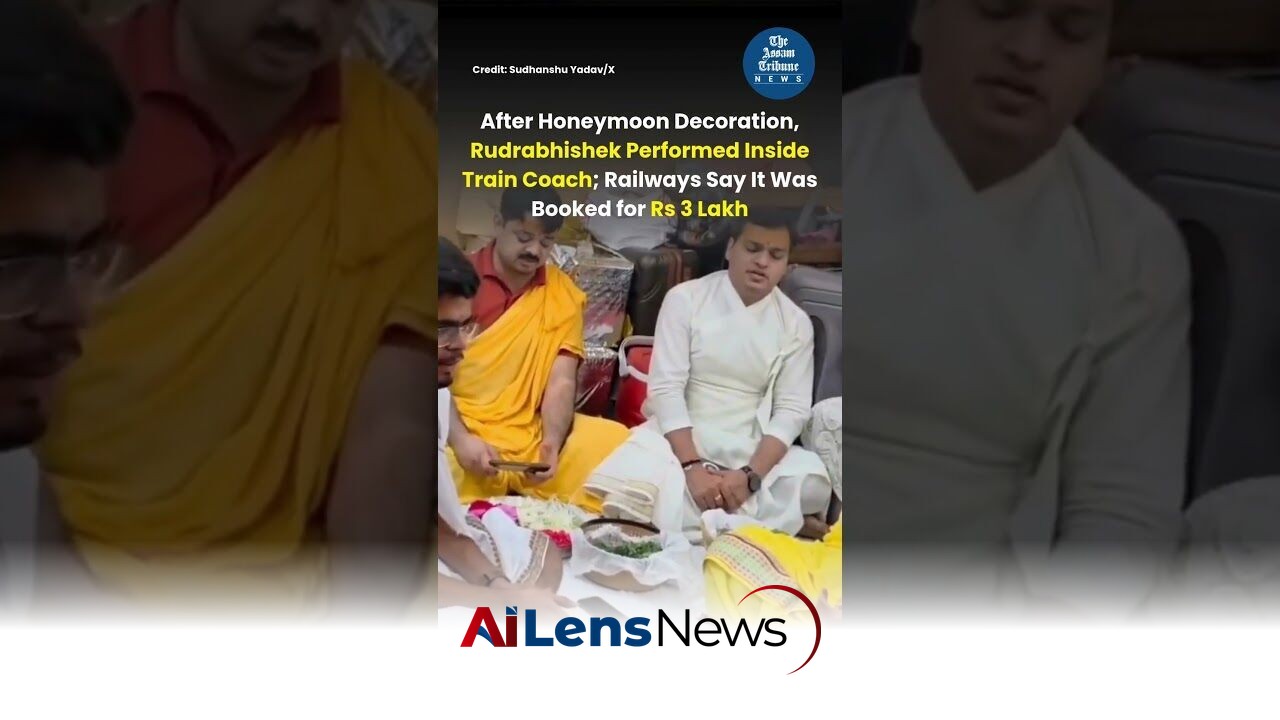


A Rudrabhishek ceremony was held inside a train coach, reportedly booked for ₹3 lakh, raising questions about railway policies.
Itanagar, India Jul 13, 2026 ALN: A unique event unfolded recently when a Rudrabhishek ceremony was conducted inside a train coach, stirring a mix of curiosity and concern among railway authorities and passengers alike. The Rudrabhishek is a significant Hindu ritual that involves the worship of Lord Shiva, and it is often performed to seek blessings and spiritual purification. Conducting such a ceremony in a train coach, a space primarily designated for travel, has raised eyebrows and prompted discussions about the appropriateness of religious practices in public transport.
The religious ritual, which is significant in Hinduism, was reportedly booked for a staggering ₹3 lakh. This amount reflects the high value placed on religious ceremonies in certain segments of society, where elaborate rituals are considered essential for spiritual fulfillment. The ceremony involved traditional offerings, chanting of mantras, and other religious activities that are typical of a Rudrabhishek. The choice of a train coach as the venue for such an event is unusual and speaks to the innovative ways individuals are seeking to blend personal beliefs with modern life.
Rudrabhishek ceremonies are often performed in temples or homes, but the decision to conduct it in a train coach raises questions about the appropriateness and logistics of such an event. The train coach, typically filled with passengers traveling for various reasons, was transformed into a space of worship, which could be seen as a disruption to the usual environment of the public transport system.
In response to the incident, railway officials confirmed that the train coach had indeed been booked for the ceremony. They stated that the booking was made through the proper channels, adhering to the necessary protocols. This raises further questions about the existing policies governing the use of railway facilities for private events. Railway officials emphasized that while the booking was legitimate, they would review the situation to ensure that such events do not interfere with regular train operations or passenger experiences.
The railway's acknowledgment of the event indicates an openness to accommodating diverse cultural practices, but it also highlights the need for clear guidelines to prevent potential conflicts between religious activities and the primary purpose of railway services. Officials mentioned that they are committed to maintaining a balance between facilitating cultural expressions and ensuring that public transport remains accessible and comfortable for all users.
The event has sparked a debate among the public regarding the use of railway facilities for religious ceremonies. Many are questioning whether such activities should be allowed in a public space that is primarily meant for transportation. Some passengers expressed discomfort at the idea of a religious ceremony taking place in a confined space, where they would typically expect a focus on travel and transit. Others, however, viewed the event as a celebration of faith and a creative use of public spaces.
This dichotomy in public opinion reflects broader societal attitudes towards the intersection of religion and public life in India, a country known for its rich tapestry of cultural and religious diversity. While some advocate for the separation of religious practices from public transport, others argue that such expressions should be embraced as part of the cultural fabric of society.
This incident may lead to a review of the policies governing the booking of train coaches for private events. Railway authorities are expected to assess the implications of such bookings on service delivery and passenger comfort. The review process may involve consultations with various stakeholders, including passengers, religious leaders, and transport experts, to gauge the broader impact of allowing religious ceremonies in public transport facilities.
Additionally, the railway authorities might consider implementing stricter regulations regarding the types of events that can be conducted within train coaches. This could include guidelines on the size of gatherings, noise levels, and the potential disruption to other passengers. The aim would be to ensure that while cultural and religious expressions are respected, they do not compromise the primary function of the railway system.
The practice of conducting rituals in unconventional spaces is not entirely new in India. Over the years, various religious and cultural events have taken place in public spaces, from temples to street corners and even in public parks. However, the railway system, being a vital mode of transportation for millions, has traditionally maintained a distinct separation between travel and religious practices. This incident raises questions about how societal norms are evolving and how they intersect with public services.
Moreover, the Indian railways have been known to accommodate various cultural events, such as music concerts or art exhibitions, in designated areas. The blending of such events with religious practices may indicate a growing trend towards utilizing public spaces for personal expressions of faith, which can be both celebrated and critiqued depending on one's perspective.
From a legal standpoint, the booking of a train coach for a religious ceremony may fall within the rights of individuals to practice their religion freely. However, the ethical implications of such actions cannot be overlooked. The railway authorities must navigate the fine line between respecting individual rights and ensuring that the public transport system serves its primary function without disruption.
Additionally, this incident may prompt discussions around the need for a comprehensive framework that addresses the use of public transport for private events. Such a framework could outline the rights of passengers, the responsibilities of the railway authorities, and the expectations for those wishing to conduct events in public spaces.
The Rudrabhishek ceremony inside a train coach has opened up discussions about the intersection of religion and public transport. As the railway authorities evaluate their policies, the event serves as a reminder of the diverse ways in which people seek to celebrate their beliefs. It also highlights the ongoing challenge of accommodating various cultural practices within the framework of public services designed for the general populace.
As society continues to evolve, so too will the conversations surrounding the use of public spaces for personal and communal expressions of faith. The railway authorities' response to this incident may set a precedent for how similar situations are handled in the future, potentially influencing the relationship between public transport systems and the cultural practices of the communities they serve.
Ultimately, this incident serves as a catalyst for broader discussions about the role of public spaces in a multicultural society. The balance between personal beliefs and public utility will remain a critical topic as communities navigate the complexities of modern life, and the railway system, as a vital public service, will need to adapt to these evolving dynamics.
To learn more about the latest developments in Religious Events, stay updated with our exclusive reports and analyses on AiLensNews.

