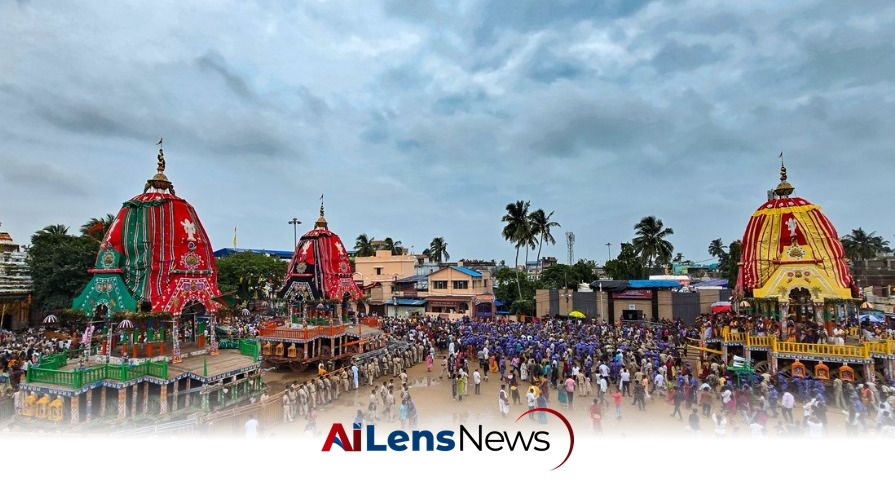


Devotees flock to Puri as Bahuda Yatra rituals commence, marking the return of Lord Jagannath and siblings from Gundicha Temple.
Itanagar, India Jul 24, 2026 ALN: Lakhs of devotees thronged the coastal town of Puri in Odisha as the Bahuda Yatra commenced on Friday with the Pahandi Bije rituals of Lord Jagannath, elder brother Lord Balabhadra, sister Devi Subhadra, and the celestial weapon Chakraraj Sudarshan.
The Bahuda Yatra, which translates to the "Return Journey," marks the deities' return journey from the Gundicha Temple back to the Shree Jagannath Temple after their nine-day sojourn during the annual Rath Yatra festival. This event is one of the most significant in the Hindu calendar and attracts millions of devotees and tourists from across the country and beyond. The Rath Yatra itself is celebrated with great fervor, where the deities are taken out in massive chariots, symbolizing their journey to their garden palace in Gundicha.
The holy triad was brought to their respective chariots from Gundicha Temple or Adap Mandap in a grand ceremonial Pahandi Bije procession, which is characterized by the enthralling and divine sound of traditional musical instruments. The Pahandi Bije is a key ritual that signifies the moment when the deities are ceremoniously carried back to their chariots, and it is marked by a vibrant atmosphere filled with music, dance, and devotion.
The coastal city of Puri was reverberating with holy chants of "Jay Jagannath" and "Hari Bol" as lakhs of devotees gathered to witness this divine spectacle. The atmosphere was filled with devotion as priests chanted sacred Vedic hymns; traditional Odissi artists presented enthralling dance performances, and devotees, in a state of devotional ecstasy, danced and chanted the Lord's holy names. This vibrant display of faith and culture highlights the deep-rooted traditions of the region and the importance of the Jagannath cult in Odisha.
As per the tradition, after the deities are seated on their respective chariots, the king of Puri, Gajapati Dibya Singh Deb, will carry out the ceremonial sweeping of the chariots with a golden broom, popularly known as the 'Chera Pahanra' ritual. This act symbolizes humility and service, as the king, representing the people, cleanses the chariots before the deities embark on their return journey. The ritual underscores the belief that all are equal in the eyes of the divine, and it is a moment of great significance for the devotees.
The officials of the temple and district administration are on high alert to ensure the smooth completion of all rituals and to avoid any repetition of past mishaps. The Odisha Police have made extensive security and traffic arrangements to ensure the smooth and hassle-free conduct of the Bahuda Yatra, 'Suna Besha' rituals, and other associated events. The Suna Besha, or the "Golden Attire" ceremony, where the deities are adorned in gold ornaments, is another highlight of the festivities and is expected to draw an even larger crowd.
Speaking to media persons, Satyajit Naik, Inspector General of Police (Central Range), stated that 223 police personnel have been deployed for crowd control, traffic management, chariot dragging, night guarding, coastal security, and other related duties on the occasion of Bahuda Yatra. The police presence is crucial, given the sheer number of devotees expected to participate in the festivities. This year, the authorities have heightened security measures in response to the anticipated heavy influx of pilgrims during both the Bahuda Yatra and the subsequent 'Suna Besha' rituals.
According to the IGP, around seven lakh devotees are expected to throng Puri for the Bahuda Yatra on Friday, as the holy city is likely to witness a footfall of more than 10 lakh devotees during the 'Suna Besha' ritual on Saturday. This significant increase in attendance highlights the enduring appeal of the Jagannath Temple and the Rath Yatra celebrations, which have become a focal point of cultural and spiritual tourism in Odisha.
The Bahuda Yatra not only serves as a spiritual pilgrimage for many but also acts as a catalyst for local businesses and the economy of Puri. The influx of tourists during this period provides a boost to local vendors, hotels, and transportation services, creating a vibrant atmosphere of commerce alongside the religious fervor. The local government and tourism boards often take this opportunity to showcase the rich cultural heritage of Odisha, including its cuisine, handicrafts, and traditional art forms.
In addition to the economic implications, the Bahuda Yatra also fosters a sense of community and belonging among the devotees. The shared experience of participating in the rituals, chanting together, and witnessing the divine procession creates bonds that transcend social and cultural barriers. This communal aspect of the festival plays a vital role in reinforcing the values of unity, harmony, and devotion that are central to the Jagannath tradition.
As the Bahuda Yatra unfolds, it serves as a reminder of the deep spiritual significance of the Jagannath cult and the enduring traditions that have been passed down through generations. The rituals reflect the rich tapestry of cultural practices in Odisha, where religion and art are intricately woven into the fabric of daily life. The anticipation surrounding the 'Suna Besha' and subsequent rituals adds to the excitement, as devotees look forward to witnessing the deities adorned in their finest attire, a sight that is both awe-inspiring and deeply moving.
In conclusion, the Bahuda Yatra is not merely a religious event; it is a celebration of faith, culture, and community. As lakhs of devotees gather in Puri, they partake in a timeless tradition that continues to resonate with people of all ages and backgrounds, reinforcing the significance of Lord Jagannath in the lives of millions. The successful conduct of these rituals and the safety of the devotees remain paramount concerns for the authorities, who are committed to ensuring that the spirit of the Bahuda Yatra is preserved for generations to come.
The Bahuda Yatra, while primarily a religious observance, also serves as a potent reminder of the intersection between spirituality and sociocultural identity in India. The Jagannath cult, with its unique blend of inclusivity and devotion, embodies the ethos of communal harmony. The rituals and festivities surrounding this event highlight the syncretic nature of Indian spirituality, where devotion transcends caste, creed, and social status.
This inclusivity is particularly significant in the context of contemporary India, where communal tensions can sometimes overshadow the rich tapestry of diversity that defines the nation. Events like the Bahuda Yatra provide a platform for unity, as individuals from various backgrounds come together to celebrate a shared faith. The chants, the music, and the collective participation foster a sense of belonging and togetherness that is essential in today's fragmented society.
Moreover, the Bahuda Yatra has implications beyond the immediate religious and cultural context. It serves as a model for sustainable tourism practices, showcasing how religious events can drive economic growth while preserving cultural heritage. The local artisans, craftsmen, and food vendors benefit significantly from the influx of tourists, and the opportunity to showcase their skills and products during such events contributes to the preservation of traditional crafts and culinary practices.
Furthermore, the Bahuda Yatra and its associated rituals are a testament to the resilience of cultural traditions in the face of modernization. As urbanization and globalization continue to influence lifestyles, events like the Bahuda Yatra remind individuals of their roots and the importance of cultural heritage. This connection to tradition is vital for maintaining a sense of identity in an ever-changing world.
In essence, the Bahuda Yatra is a multifaceted event that encapsulates the spirit of Odisha and the broader Indian ethos. It is a celebration that goes beyond the religious, touching upon economic, social, and cultural dimensions of life. As the festivities unfold, they serve as a reminder of the enduring power of faith, the richness of cultural traditions, and the importance of community in fostering a sense of belonging. The successful conduct of the Bahuda Yatra not only honors the deities but also reinforces the values and traditions that have shaped the lives of countless devotees, ensuring that these practices continue to thrive for future generations.
To learn more about the latest developments in Hinduism, stay updated with our exclusive reports and analyses on AiLensNews.

