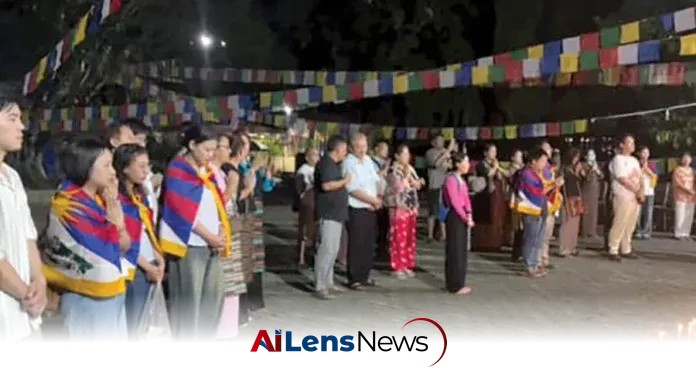


A candlelight vigil was held in Itanagar to honor Tibetan activist Pawo Lobga Rangzen, who self-immolated in protest against China's Ethnic Unity Law.
Itanagar, India Jul 15, 2026 ALN: ITANAGAR, 14 Jul: Members of the Students for a Free Tibet (SFT)-Itanagar chapter organised a candlelight vigil at the Thuptan Gatsal-ling monastery here on Monday to pay tribute to Tibetan independence activist Pawo Lobga Rangzen.
The programme was held in memory of Rangzen, who, according to the organisation, self-immolated in front of the United Nations headquarters in New York on 2 July, coinciding with the implementation of China’s ‘Ethnic Unity Law’.
The SFT alleged that the law empowers the Chinese state to dismantle and forcibly assimilate minority communities under the rule of the Chinese Communist Party. This law has raised significant concerns among various human rights organizations and activists globally, as it is perceived as a tool for cultural erasure and suppression of ethnic identities across China, particularly affecting Tibetan and Uighur communities.
The candlelight vigil, attended by members of the SFT Itanagar chapter and supporters, was organised in remembrance of Rangzen’s sacrifice and was inspired by what the organisation described as his final call for unity and collective action. The act of self-immolation, while tragic, is often viewed within the Tibetan community as a profound statement of resistance against oppression and a desperate plea for international attention to the plight of Tibetans.
Participants lit candles and observed a solemn tribute while reflecting on the sacrifices made by Tibetan martyrs in their struggle for freedom. The act of lighting candles symbolizes hope and remembrance, often used in vigils to honor those who have suffered or died in the pursuit of justice. It serves as a reminder of the ongoing struggles faced by the Tibetan people under Chinese rule, where reports of human rights abuses, religious repression, and cultural assimilation are prevalent.
Addressing the gathering, members reaffirmed their commitment to advocating the Tibetan cause and called for continued solidarity with the Tibetan people. This solidarity is crucial as it fosters a sense of community and shared purpose among activists and supporters, both within and outside Tibet. The SFT has been instrumental in raising awareness about the Tibetan issue, mobilizing support, and advocating for the rights of Tibetans internationally.
The programme also served as an appeal to the international community and world leaders to support efforts towards a peaceful, just and harmonious resolution to the Tibetan issue. The call for international support is particularly relevant in the current geopolitical climate, where the actions of the Chinese government towards ethnic minorities are increasingly scrutinized. Activists argue that global attention can pressure the Chinese government to change its policies and respect the rights of minorities.
The event concluded with prayers and a message of peace, with participants expressing hope for greater global awareness and support for the aspirations of the Tibetan people. The spiritual aspect of the event, held at a monastery, underscores the deep cultural and religious significance of the Tibetan struggle. Buddhism plays a central role in Tibetan identity, and many activists draw upon its teachings to inspire non-violent resistance and promote peace.
The vigil is part of a broader movement that seeks to highlight the plight of Tibetans both within Tibet and in exile. The Tibetan diaspora has been active in advocating for human rights and seeking autonomy or independence from Chinese rule. The situation in Tibet remains a contentious issue, with various international organizations calling for dialogue and negotiations between the Chinese government and Tibetan representatives.
The self-immolation of Pawo Lobga Rangzen is not an isolated incident but part of a series of similar protests that have occurred over the years, where individuals have resorted to such extreme measures to draw attention to their cause. These acts of self-immolation are often met with mixed reactions; while they can galvanize support and awareness, they also highlight the desperation felt by many Tibetans in the face of ongoing repression.
In recent years, the Chinese government has intensified its efforts to control and assimilate Tibetan culture, language, and religion, leading to widespread criticism from human rights advocates. The Ethnic Unity Law is seen as a continuation of these policies, aiming to enforce a homogeneous national identity that undermines the distinct cultural identities of minority groups.
As the situation evolves, the role of international advocacy groups like SFT becomes increasingly vital. They work to ensure that the voices of Tibetan activists are heard on global platforms, seeking to influence policy decisions that affect the region. The vigil in Itanagar is a testament to the resilience of the Tibetan spirit and the ongoing struggle for recognition and rights.
The candlelight vigil serves multiple purposes beyond simply honoring Pawo Lobga Rangzen. It acts as a platform for raising awareness about the broader issues of human rights violations in Tibet and the ongoing cultural genocide that many believe is being perpetrated against the Tibetan people. The gathering of individuals from various backgrounds, united in a common cause, exemplifies the power of collective action.
Furthermore, the vigil highlights the importance of cultural preservation in the face of aggressive assimilation policies. Tibetan culture, characterized by its unique language, traditions, and religious practices, is at risk of being lost under the weight of the Chinese government's push for ethnic unity. Activists argue that preserving Tibetan culture is not just a matter of heritage but also a crucial aspect of human dignity and identity.
The implications of the Ethnic Unity Law extend beyond Tibet, affecting various minority groups in China. The Uighurs, for instance, have faced similar policies that have led to mass detentions, cultural suppression, and allegations of genocide. The international community's response to these issues has been mixed, with some countries taking a strong stance against China's treatment of its minorities, while others choose to prioritize economic relations over human rights concerns.
The candlelight vigil in Itanagar is a reminder that the struggle for Tibetan rights is part of a larger global fight against oppression and injustice. It calls for solidarity not only among Tibetans but also among all those who value human rights and freedom. As the world becomes increasingly interconnected, the actions taken in one region can resonate across borders, inspiring movements for justice and change elsewhere.
In conclusion, the candlelight vigil in Itanagar not only honors the memory of Pawo Lobga Rangzen but also serves as a reminder of the ongoing challenges faced by the Tibetan people. It highlights the importance of collective action and international solidarity in the fight for justice and freedom. As awareness grows, the hope remains that the aspirations of the Tibetan people will gain the attention they deserve on the world stage, leading to meaningful dialogue and change. The legacy of activists like Rangzen continues to inspire new generations to stand up against oppression, advocating for a future where the rights and identities of all people are respected and upheld.
To learn more about the latest developments in Religious Events, stay updated with our exclusive reports and analyses on AiLensNews.

