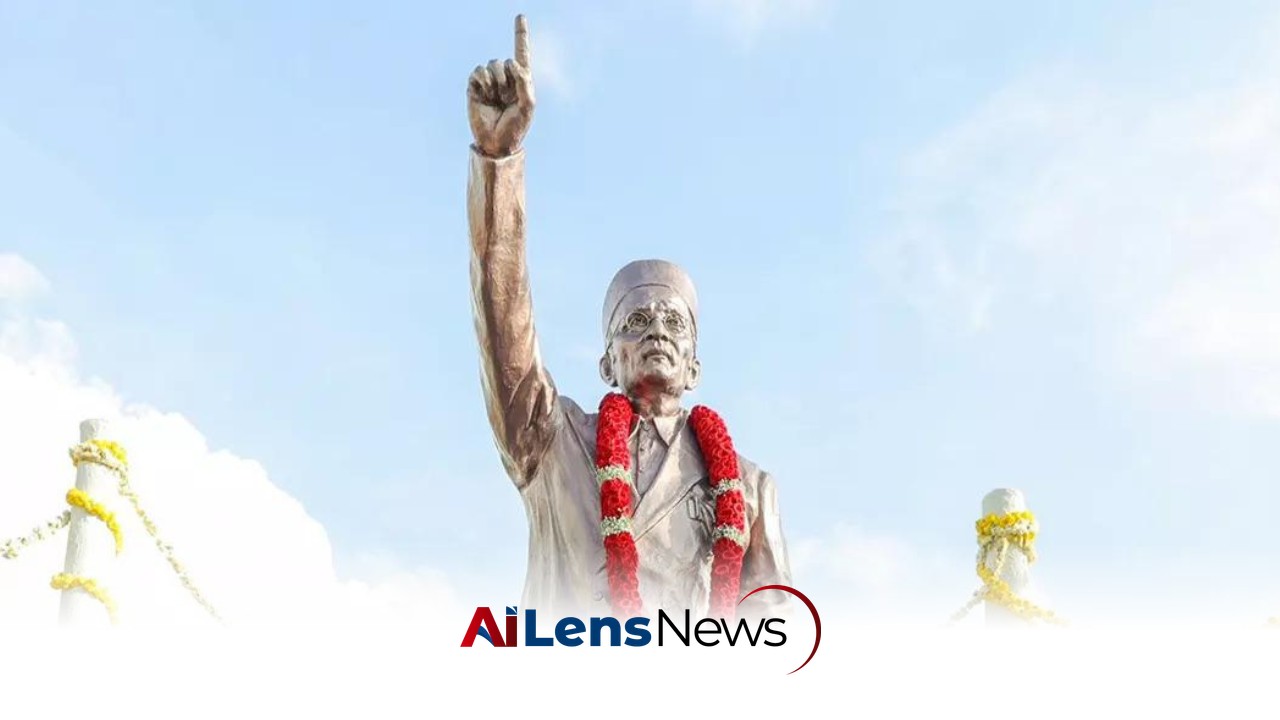


BJP MLA Sudhir Mungantiwar criticizes the Maharashtra government for delaying a resolution to honor Vinayak Savarkar with the Bharat Ratna, highlighting ideological inconsistencies.
New Delhi, India Jul 10, 2026 ALN: In a surprising turn of events, BJP MLA Sudhir Mungantiwar has publicly questioned the BJP-led Maharashtra government's inaction regarding a resolution that seeks to posthumously confer the Bharat Ratna on Vinayak Damodar Savarkar, a prominent Hindutva ideologue. This statement has sparked discussions within political circles and among the party's supporters, highlighting the complexities of honoring historical figures in contemporary politics.
During a session in the state assembly, Mungantiwar expressed his discontent, stating,
"Your actions don't match your ideology."
This statement underscores a growing concern among party members about the government's commitment to honoring Savarkar, who played a significant role in 's struggle for independence and is a revered figure among many in the BJP. The call for the Bharat Ratna, 's highest civilian award, reflects not only a desire to recognize Savarkar's contributions but also a broader aim to solidify the BJP's ideological stance within the political landscape.
Vinayak Damodar Savarkar, often referred to as V D Savarkar, was a freedom fighter, lawyer, and politician. He is best known for his advocacy of Hindutva, a term he coined to promote Hindu nationalism. Savarkar's contributions to the n independence movement are significant, having been involved in revolutionary activities against British rule. His political philosophy emphasized the importance of Hindu identity and unity, which has resonated with many within the BJP and its supporters.
However, Savarkar's legacy is not without controversy. His views on Hindu nationalism and his writings have sparked debates about communalism and secularism in . Critics argue that his ideology fosters division and undermines the secular fabric of the nation. This polarization complicates the BJP's efforts to honor him, as the party must navigate the potential backlash from various sections of society that view Savarkar's legacy with skepticism.
Mungantiwar's remarks come at a time when the BJP is keen on consolidating its base among Hindu voters. The Bharat Ratna is seen as a significant honor that could further elevate Savarkar's legacy and align with the party's Hindutva ideology. However, the delay in the resolution has raised questions about the government's priorities and its commitment to its ideological roots. The BJP has historically positioned itself as a champion of Hindu interests, and honoring Savarkar could be a step towards reinforcing that narrative.
The political landscape in Maharashtra is complex, with various parties vying for influence among different voter demographics. The Shiv Sena, a key political player in the state, has historically had a tumultuous relationship with the BJP, particularly regarding issues of Hindu identity and nationalism. As the BJP navigates its coalition dynamics, the question of how to honor Savarkar becomes intertwined with broader electoral strategies and alliances.
Reactions to Mungantiwar's comments have been mixed within the party. Some members support his call for action, arguing that honoring Savarkar is essential for the BJP's identity and ideological coherence. They believe that recognizing Savarkar's contributions would resonate with the party's core supporters and help solidify its position as the leading voice for Hindu nationalism in .
Others, however, caution against potential backlash from various sections of society. The BJP has faced criticism for its perceived alignment with extremist views, and honoring Savarkar could exacerbate these tensions. Critics within and outside the party argue that while Savarkar's contributions to the freedom struggle are undeniable, his controversial views on Hindu identity could alienate non-Hindu voters and further polarize the political landscape.
The discussion surrounding Savarkar's Bharat Ratna is not just a matter of political strategy; it also reflects broader societal sentiments regarding nationalism, identity, and historical memory in . As the country grapples with its colonial past and the narratives surrounding its freedom struggle, figures like Savarkar become focal points for debates about what it means to be n in the 21st century.
Public opinion on Savarkar is deeply divided, with some viewing him as a martyr and a champion of Hindu rights, while others see him as a divisive figure whose ideas could lead to communal strife. This polarization is evident in the ongoing discourse about nationalism, secularism, and the role of religion in politics. The BJP, as the ruling party, must carefully consider these dynamics as it seeks to honor historical figures like Savarkar without alienating significant portions of the electorate.
The Bharat Ratna, established in 1954, is 's highest civilian award and is conferred for exceptional service in any field of human endeavor. The award has been given to a diverse range of individuals, including leaders in politics, arts, literature, and sciences. However, the selection process and the criteria for awarding the Bharat Ratna have often been subjects of debate, particularly when it comes to honoring figures with contentious legacies. Savarkar's potential inclusion in this elite group raises questions about how chooses to remember its past and how it defines its national identity.
The BJP's ideological framework is heavily influenced by the Rashtriya Swayamsevak Sangh (RSS), a Hindu nationalist organization that has played a crucial role in shaping the party's policies and public persona. The RSS and its affiliates have long advocated for the recognition of Savarkar as a national hero, emphasizing his contributions to the freedom struggle and his vision for a Hindu nation. However, the party's leadership must balance these ideological commitments with the practical realities of governance and the diverse electorate it serves.
As the BJP navigates this internal debate over Savarkar's recognition, it faces a critical juncture that could define its future trajectory. The resolution's fate could have far-reaching implications for the BJP's identity, electoral strategies, and its relationship with various voter demographics in Maharashtra and beyond. The party must weigh the potential benefits of solidifying its Hindutva credentials against the risks of alienating broader sections of the electorate.
Ultimately, the outcome of this debate may not only influence the BJP's internal dynamics but also shape the broader narrative of nationalism and identity in as the country moves forward in an increasingly polarized political environment. The discussion around Savarkar and the Bharat Ratna is emblematic of larger questions about how reconciles its past with its present and future, and how it navigates the complex interplay of history, politics, and identity.
To learn more about the latest developments in Political Controversies, stay updated with our exclusive reports and analyses on AiLensNews.

