

Wisconsin public worker and teachers unions face a setback as the appeals court overturns a ruling that had restored their collective bargaining rights lost 15 years ago.
Madison, United States Jul 30, 2026 ALN: In a significant legal development, the Wisconsin appeals court has overturned a previous ruling that had restored collective bargaining rights to public worker and teachers unions. This decision represents a setback for unions that have been striving to regain the rights they lost over a decade ago. The ruling has not only reignited debates about labor rights in Wisconsin but also raises questions about the future of collective bargaining across the United States.
The collective bargaining rights for many state workers were eliminated in 2011 under Governor Scott Walker's administration. This legislative change, known as Act 10, was part of a broader effort to address the state's budget deficit. The law significantly restricted the ability of public sector unions to negotiate wages, benefits, and working conditions. It required public employees to contribute more to their pensions and health care, while also limiting their bargaining rights to only wage increases tied to inflation.
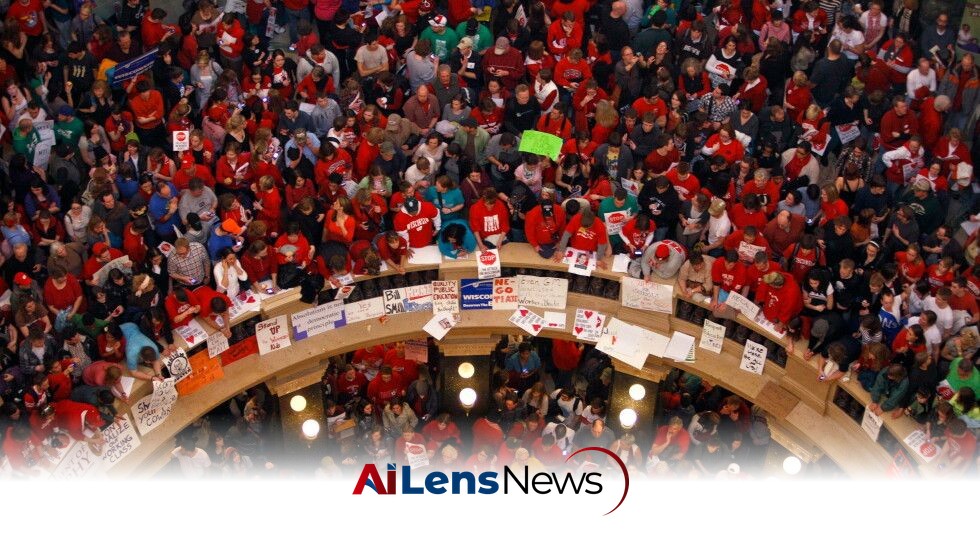
The passage of Act 10 triggered widespread protests across Wisconsin, with thousands of union members and supporters gathering at the State Capitol in Madison. These demonstrations highlighted the deep divisions in public opinion regarding labor rights and the role of unions in the public sector. The protests drew national attention and became a flashpoint in the ongoing debate about the power of labor unions in the United States.
In the years that followed, unions and their supporters engaged in a series of legal battles to challenge the constitutionality of Act 10. These efforts culminated in a previous court ruling that had restored some collective bargaining rights to public worker and teachers unions, citing concerns about workers' rights to organize and negotiate collectively.
The recent ruling by the appeals court has reignited tensions between the state government and labor unions. The court's decision was based on interpretations of state law and previous rulings that have shaped the landscape of labor rights in Wisconsin. The judges argued that the earlier ruling had misinterpreted the legal precedents and statutes governing labor relations in the state.
This latest decision has drawn criticism from union leaders and advocates who argue that it undermines the fundamental rights of workers to negotiate for fair wages and working conditions. They contend that collective bargaining is essential for ensuring that public employees are treated fairly and that their voices are heard in the workplace.
In response to the ruling, union leaders have vowed to continue their fight for collective bargaining rights, emphasizing that these rights are crucial not only for public employees but for the broader labor movement in Wisconsin and beyond. They have also called on their members and supporters to mobilize and advocate for legislative changes that could restore these rights.
The implications of this ruling extend beyond the immediate impact on Wisconsin unions. Nationally, labor unions have been facing challenges in maintaining their membership and influence in the wake of various legal and political battles. The decision may hinder efforts to organize and advocate for workers' rights in the state, particularly in sectors where union representation is already limited.
For many public employees, the ability to collectively bargain is linked to job security, fair compensation, and adequate working conditions. The overturning of the previous ruling could exacerbate existing disparities in pay and benefits among public workers, particularly in areas such as education, healthcare, and public safety.
Furthermore, this ruling could discourage potential union members from joining, as the perceived lack of bargaining power may diminish the appeal of union representation. As unions regroup and strategize, they will need to find new ways to engage their members and advocate for their rights in a challenging legal environment.
This ruling could set a precedent for future legal challenges regarding labor rights in Wisconsin and potentially influence similar cases across the country. As unions and labor advocates assess their options, the outcome of this legal battle will be closely monitored by both supporters and opponents of labor rights. Legal experts suggest that the appeals court's decision may embolden other states to pursue similar restrictions on collective bargaining rights, particularly in the wake of a political climate that has increasingly favored anti-union measures.
Additionally, the ruling may impact the political landscape in Wisconsin as labor unions have historically played a significant role in mobilizing voters and influencing elections. The response from unions could shape the strategies of political candidates, particularly those seeking to align with labor interests in upcoming elections.
As the legal and political battles continue, it remains to be seen how this ruling will affect the broader movement for labor rights across the United States. The challenges faced by Wisconsin unions may resonate with workers in other states who are also grappling with similar issues regarding collective bargaining and labor representation.
The overturning of the collective bargaining restoration ruling marks a pivotal moment in Wisconsin's labor history. As unions continue to fight for their rights, the implications of this decision will resonate throughout the state and beyond. The ongoing struggle for collective bargaining rights reflects broader societal debates about workers' rights, economic equity, and the role of unions in advocating for fair labor practices.
In the coming months, the response from unions, lawmakers, and the public will be critical in shaping the future of labor rights in Wisconsin and potentially influencing the national conversation around collective bargaining. The legal landscape for unions may continue to evolve, and the outcomes of these battles will have lasting effects on the rights and protections afforded to workers in the public sector and beyond.
To learn more about the latest developments in Political Controversies, stay updated with our exclusive reports and analyses on AiLensNews.

