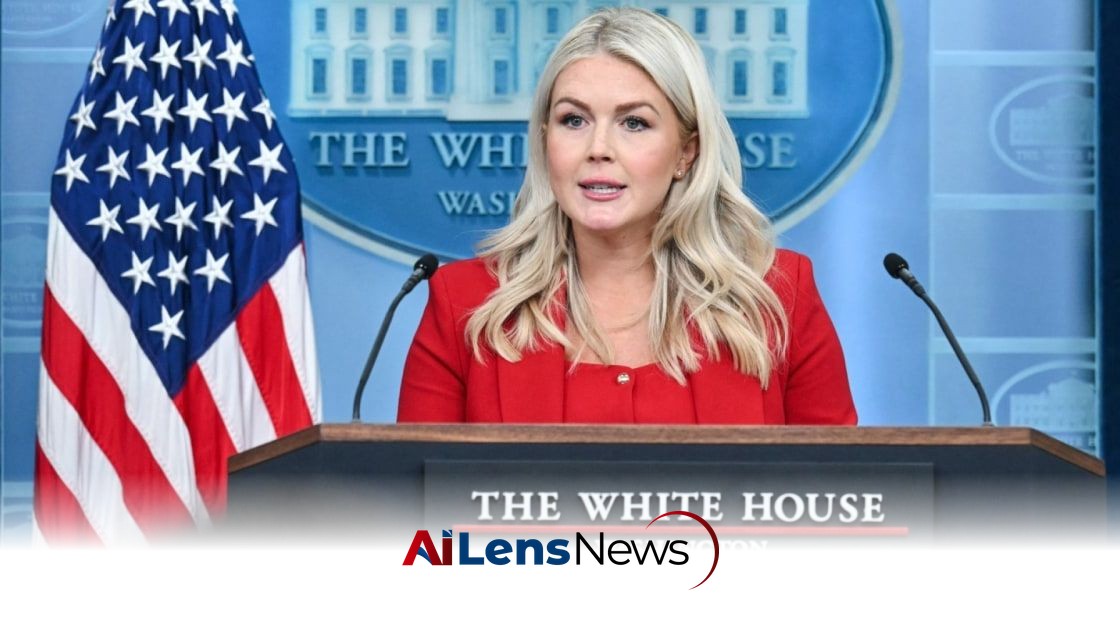


The White House has stated that any nuclear agreement with Saudi Arabia will depend on the country joining the Abraham Accords, as reiterated by Press Secretary Karoline Leavitt.
Washington DC, United States Jul 23, 2026 ALN: During a recent press briefing, White House press secretary Karoline Leavitt emphasized that any potential nuclear deal with Saudi Arabia would be contingent upon the kingdom's participation in the Abraham Accords. This statement reflects a broader strategy aimed at strengthening diplomatic ties in the Middle East, a region that has long been characterized by complex relationships and ongoing conflicts. The linkage of nuclear negotiations to the Abraham Accords highlights the Biden administration’s intent to leverage diplomatic agreements as a means to address critical security concerns.
Leavitt's comments echoed a social media post from former President Donald Trump, who has been vocal about the importance of the Abraham Accords in fostering peace and stability in the region. The accords, which were signed in 2020, normalized relations between Israel and several Arab nations, including the United Arab Emirates and Bahrain. This normalization marked a significant shift in Middle Eastern geopolitics, as it represented a break from the longstanding Arab consensus that peace with Israel could only be achieved following the resolution of the Israeli-Palestinian conflict. The Abraham Accords were hailed by many as a diplomatic breakthrough, paving the way for increased economic cooperation, security partnerships, and cultural exchanges between Israel and its Arab neighbors.
The Biden administration's current approach to linking nuclear negotiations with Saudi Arabia to these accords indicates a desire to build upon this momentum, furthering U.S. foreign policy objectives in the region. Saudi Arabia, as a key player in the Middle East, has been under scrutiny regarding its potential pursuit of nuclear capabilities. The kingdom has expressed interest in developing a civilian nuclear program, which raises concerns about the possibility of nuclear proliferation. The White House's stance suggests that the Biden administration is seeking to use the leverage of the Abraham Accords to encourage Saudi Arabia to engage more closely with Israel and other signatory nations, thereby potentially reducing tensions and promoting regional stability.
However, the implications of such a deal could have far-reaching consequences for regional security and geopolitical dynamics. Critics argue that tying nuclear negotiations to political agreements could complicate efforts to address nuclear proliferation concerns. This is particularly relevant given the historical context of nuclear proliferation in the Middle East, where countries like Iran have pursued nuclear programs that have raised alarms among neighboring states and the international community. The prospect of a nuclear-armed Saudi Arabia could exacerbate existing tensions and lead to a regional arms race.
Furthermore, the potential for Saudi Arabia to develop nuclear weapons has been a longstanding concern. Should Saudi Arabia pursue nuclear capabilities, it could trigger a regional arms race, prompting other nations in the Middle East to enhance their own military capabilities, including nuclear arsenals. The Biden administration's strategy, therefore, must carefully consider the balance between diplomatic engagement and the imperative of non-proliferation. The challenge lies in ensuring that any agreements reached do not undermine the non-proliferation treaty (NPT) and that they incorporate robust safeguards to prevent the diversion of nuclear materials for military use.
In the coming weeks, the White House is expected to outline its strategy further, detailing how it plans to navigate the complexities of Middle Eastern diplomacy while addressing the pressing issue of nuclear development in Saudi Arabia. This includes not only the potential nuclear deal but also how the administration intends to engage with other key players in the region, including Iran and the Palestinian territories, which remain critical to the overall stability of the area. The administration's approach will likely involve consultations with allies and partners, as well as a careful assessment of the geopolitical landscape.
This development marks a significant moment in U.S.-Saudi relations, as the Biden administration seeks to balance traditional alliances with emerging diplomatic frameworks in the region. Historically, the U.S. has maintained a close relationship with Saudi Arabia, largely driven by economic interests, particularly in oil, and mutual security concerns. However, the evolving geopolitical landscape necessitates a reevaluation of these relationships in light of new challenges and opportunities. The U.S. has been keen to reduce its dependence on Middle Eastern oil, especially as it pivots towards renewable energy sources, and this shift could influence its diplomatic strategies.
The Biden administration's approach to the Middle East is characterized by a desire to move beyond past policies that have often prioritized short-term gains over long-term stability. By linking nuclear negotiations with the Abraham Accords, the administration aims to create a framework that not only addresses immediate security concerns but also fosters a broader peace initiative in the region. This aligns with the administration's broader foreign policy goals of promoting democracy, human rights, and stability in conflict-prone areas.
Moreover, the involvement of Saudi Arabia in the Abraham Accords could have implications for the Israeli-Palestinian conflict. Should Saudi Arabia normalize relations with Israel, it could encourage other Arab nations to follow suit, potentially altering the dynamics of peace negotiations and the broader Arab-Israeli conflict. However, this also raises questions about the Palestinian leadership's role and how their interests will be addressed in any future agreements. The Palestinian Authority has historically been wary of Arab normalization with Israel without significant concessions regarding Palestinian statehood and rights.
The complexities of Middle Eastern politics mean that the Biden administration's strategy will require careful navigation. Engaging Saudi Arabia in nuclear negotiations while encouraging participation in the Abraham Accords represents a delicate balancing act, one that must consider the diverse interests and historical grievances of the various stakeholders involved. The administration must also be mindful of domestic political considerations, as public opinion in the U.S. regarding foreign policy, particularly in the Middle East, has become increasingly polarized.
In conclusion, the White House's linkage of a potential nuclear deal with Saudi Arabia to participation in the Abraham Accords underscores a significant shift in U.S. foreign policy in the Middle East. As the administration prepares to outline its strategy, the implications of this approach will be closely watched by both regional actors and the international community. The outcomes of these negotiations could shape the future of security, diplomacy, and peace in the Middle East for years to come. The evolving situation will require ongoing engagement and dialogue to ensure that the interests of all parties are considered and that a sustainable and peaceful resolution is sought in this historically tumultuous region.
To learn more about the latest developments in Elections, stay updated with our exclusive reports and analyses on AiLensNews.

