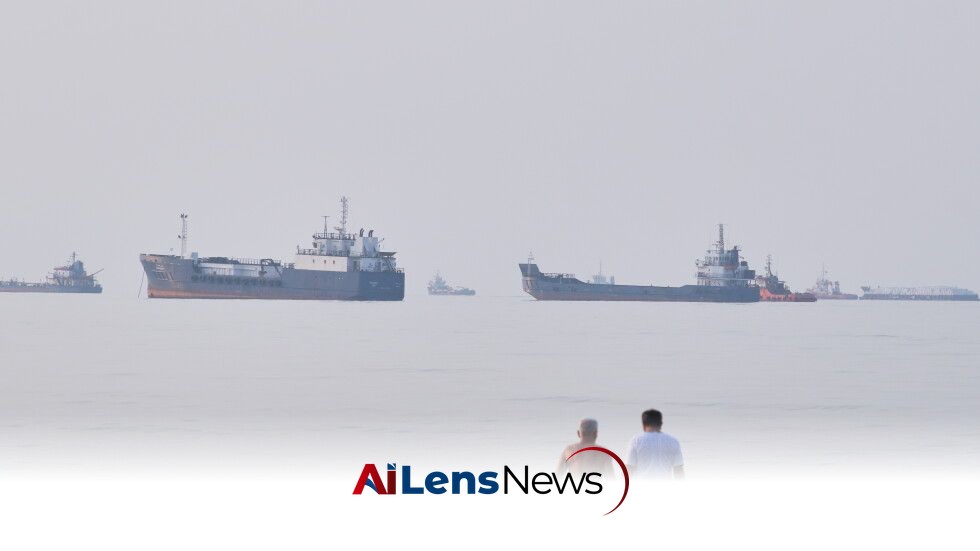


The US and Iran are escalating hostilities, crossing each other's red lines, with a recent drone attack marking a significant increase in tensions.
Washington DC, United States Jul 19, 2026 ALN: The ongoing conflict between the United States and Iran has reached a new level of intensity as both nations have crossed critical thresholds in their hostilities. The latest escalation began with an Iranian drone attack on a cargo ship in the strategically vital Strait of Hormuz on June 25, 2026. This incident occurred just a week after both countries had signed an interim agreement aimed at de-escalating tensions. The timing of this attack raises significant questions about the stability of diplomatic efforts and the potential for further military confrontations.
The Strait of Hormuz, a crucial maritime route for global oil shipments, has long been a flashpoint for US-Iran relations. Approximately one-fifth of the world’s oil supply passes through this narrow waterway, making it a vital artery for international trade and energy security. The recent drone attack is viewed as a direct challenge to US naval presence in the region, which has been heightened in response to Iran's aggressive actions over the past few years, including previous incidents involving harassment of commercial vessels and military exercises in the area.
Historically, tensions between the US and Iran have been exacerbated by a series of events, including the 1979 Iranian Revolution, which resulted in the overthrow of the US-backed Shah and the establishment of the Islamic Republic of Iran. The subsequent US Embassy hostage crisis further entrenched animosities. In more recent years, the US exit from the Joint Comprehensive Plan of Action (JCPOA) in 2018 under the Trump administration led to renewed sanctions on Iran, which has retaliated with a series of provocative actions, including attacks on shipping and military installations. This long-standing animosity has created a cycle of distrust and aggression that has proven difficult to break.
In the wake of the drone attack, the US military has increased its operational readiness in the region. A video released by U.S. Central Command showcased the deployment of a Corsair unmanned surface vessel, designed for one-way attacks, approaching the Bandar Abbas Naval Base in Iran. This move signals a significant escalation in military posturing between the two nations. The Corsair, which represents a new generation of unmanned military technology, underscores the US commitment to maintaining a robust military presence in the Gulf, aimed at deterring Iranian aggression.
Moreover, the US has intensified its naval patrols in the region, and there are reports of additional aircraft being deployed to bases in the area. These actions are intended to reinforce the message that any further aggression from Iran will be met with a decisive response. The US has also sought to rally its allies in the region, including Gulf Cooperation Council (GCC) countries, to present a united front against Iranian provocations. This coalition-building effort aims to enhance collective security and deter potential Iranian threats.
The Iranian government, for its part, has framed its actions as a necessary response to perceived US aggression and interference in the region. Iranian officials have consistently warned that any military action against Iran would provoke a strong and coordinated response, hinting at the possibility of retaliatory strikes against US interests in the region or against allied nations. This rhetoric further complicates the already tense situation and raises the stakes for both sides.
The international community has expressed alarm over the rising tensions. Several countries have called for restraint and dialogue to prevent further escalation. The European Union, which has played a mediating role in the past, has reiterated its commitment to finding a diplomatic solution to the crisis. Meanwhile, nations like Russia and China have criticized US actions, viewing them as provocative and destabilizing. These countries have called for a multilateral approach to address the underlying issues in US-Iran relations, emphasizing the need for dialogue rather than military confrontation.
Regional powers, particularly those in the Middle East, are closely monitoring the situation. Countries like Saudi Arabia and the United Arab Emirates, which have historically viewed Iran as a rival, are likely to support US efforts to contain Iranian influence. However, there is also concern that an escalation could lead to a broader regional conflict, drawing in multiple actors and further destabilizing the area. The potential for proxy conflicts, where regional powers engage in indirect confrontations through supporting opposing factions, is a significant concern for analysts observing the situation.
Moreover, the United Nations has called for de-escalation, highlighting the need for diplomatic engagement to resolve the underlying issues that have led to the current crisis. Diplomatic channels, including backdoor communications, are believed to be ongoing, but the effectiveness of these efforts remains uncertain amidst the rising hostilities.
The implications of this escalating conflict extend beyond the US and Iran. A potential military confrontation could disrupt global oil supplies and destabilize the already volatile Middle East. Analysts warn that the situation could have far-reaching consequences for international relations and global security. An increase in military activity in the Strait of Hormuz could lead to higher oil prices, affecting economies worldwide and potentially triggering economic instability in oil-dependent nations. The global economy is intricately tied to the flow of oil, and any disruption could result in significant economic repercussions, including inflation and reduced economic growth.
Furthermore, a military escalation could lead to unintended consequences, including civilian casualties and increased refugee flows from conflict zones. The humanitarian impact of a conflict in the Middle East could be profound, exacerbating existing crises in countries like Syria and Yemen, where conflicts are already ongoing. The potential for a wider conflict involving other regional players could also lead to a protracted and complex geopolitical struggle, reminiscent of past conflicts in the region.
Additionally, the prospect of a military confrontation raises concerns about the safety of commercial shipping in the Strait of Hormuz. Insurance rates for vessels traversing the area could increase dramatically, leading to higher costs for consumers worldwide. Shipping companies may also reconsider their routes, potentially leading to significant delays in global supply chains.
As the US and Iran continue to cross red lines, the risk of an all-out war looms larger. Both nations must tread carefully to avoid a catastrophic escalation that could engulf the region in conflict. The coming weeks will be crucial in determining the trajectory of US-Iran relations and the overall stability of the Middle East. The international community's role in facilitating dialogue and promoting peaceful resolutions will be essential in mitigating the risks associated with this escalating conflict. As tensions rise, the need for diplomatic engagement and conflict resolution strategies becomes ever more pressing to avert a potentially devastating military confrontation. The stakes are high, and the consequences of miscalculation could reverberate far beyond the immediate region, affecting global stability and security.
To learn more about the latest developments in Political Controversies, stay updated with our exclusive reports and analyses on AiLensNews.

