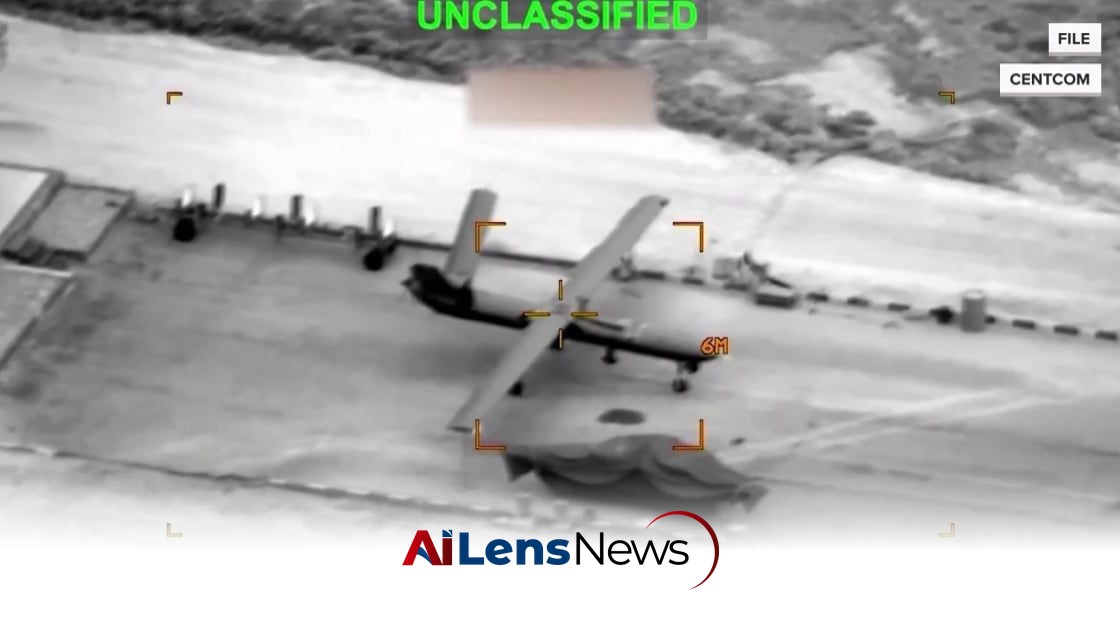


The US and Iran have intensified military actions against each other, jeopardizing ongoing ceasefire negotiations. President Trump insists the Strait of Hormuz remains open despite conflicting Iranian claims.
Washington DC, United States Jul 13, 2026 ALN: The United States and Iran have engaged in a series of military strikes, marking one of the most intense exchanges in recent months. This escalation comes as efforts to maintain a fragile ceasefire continue to deteriorate. The situation is particularly alarming given the historical context of U.S.-Iran relations, which have been fraught with tension since the 1979 Iranian Revolution that led to the overthrow of the U.S.-backed Shah and the establishment of the Islamic Republic of Iran. Since then, the two nations have been at odds over various issues, including nuclear proliferation, regional influence, and support for proxy groups.
The military exchanges come against the backdrop of a long-standing conflict that has seen both sides engage in a series of provocations. The U.S. has maintained a significant military presence in the Middle East, citing the need to protect its interests and allies in the region, particularly Israel and Saudi Arabia. Iran, on the other hand, has sought to expand its influence through support for militant groups in Lebanon, Syria, Iraq, and Yemen. This proxy warfare has often spilled over into direct confrontations, leading to the current state of heightened military activity.
On Sunday, President Donald Trump addressed the situation during an interview with Kristen Welker on NBC's Meet the Press. He asserted that the Strait of Hormuz, a critical waterway for global oil transport, remains open. This statement contradicts earlier claims made by Iranian officials, who stated that the strait had been closed. The Strait of Hormuz is of paramount importance to the global economy, as it handles a significant portion of the world's oil supply. Any disruption in this vital shipping lane could lead to soaring oil prices and a ripple effect throughout the global economy.
The ongoing conflict has raised concerns among international observers, as both nations appear to be escalating their military postures. The exchange of attacks has not only heightened tensions but also put diplomatic efforts at risk. Previous attempts at dialogue, such as the Joint Comprehensive Plan of Action (JCPOA) established in 2015, aimed to curb Iran's nuclear ambitions in exchange for sanctions relief. However, the U.S. withdrawal from the agreement in 2018 under the Trump administration, followed by a re-imposition of sanctions, has led to increased hostility and a breakdown in trust between the two nations.
As the situation unfolds, analysts are closely monitoring the implications of these military actions on regional stability and global oil markets. The potential for further escalation remains a pressing concern, as both sides seem unwilling to back down. Iran's military capabilities, including its missile technology and naval forces, pose a significant threat to U.S. interests in the region. Conversely, the U.S. has indicated that it will respond decisively to any attacks on its personnel or allies, raising the stakes for both nations.
In light of these developments, the international community is calling for renewed diplomatic efforts to address the underlying issues fueling this conflict. The hope is that dialogue can pave the way for a more sustainable resolution, preventing further violence and instability in the region. Multilateral talks involving key players, including European nations, Russia, and China, may be necessary to facilitate a diplomatic breakthrough.
Furthermore, the implications of this conflict extend beyond the immediate region. Global oil markets are sensitive to geopolitical tensions, and any sustained military engagement could lead to significant fluctuations in oil prices. Countries that rely heavily on oil imports, especially in Europe and Asia, could face economic challenges if the situation escalates further.
As the situation evolves, it is crucial for stakeholders to remain vigilant and engaged in diplomatic discussions to mitigate the risks of a broader conflict. The potential for miscalculation or unintended consequences is high, especially given the complex web of alliances and enmities in the Middle East. The U.S. and Iran must consider the long-term repercussions of their actions, not only for their own national interests but also for regional and global stability.
In conclusion, the recent military strikes between the United States and Iran signify a dangerous escalation in a long-standing conflict that has the potential to destabilize the entire region. As both nations navigate this precarious situation, the importance of diplomacy cannot be overstated. The international community must rally to support efforts aimed at de-escalation and conflict resolution, ensuring that history does not repeat itself in a cycle of violence and retaliation. Only through sustained dialogue and a commitment to understanding each other's perspectives can a path towards peace and stability be forged.
To fully appreciate the current tensions, it is essential to understand the historical context of U.S.-Iran relations. The 1979 Iranian Revolution was a pivotal moment that transformed Iran from a monarchy to an Islamic republic. The revolution was marked by widespread protests against the Shah, who was seen as a puppet of Western powers, particularly the United States. The subsequent hostage crisis, in which American diplomats were held for 444 days, solidified a deep-seated animosity between the two nations.
In the decades that followed, U.S.-Iran relations have been characterized by mutual distrust and hostility. Iran's pursuit of nuclear technology has been a significant point of contention, with the U.S. and its allies fearing that Iran's nuclear program could lead to the development of nuclear weapons. The 2015 nuclear deal, known as the Joint Comprehensive Plan of Action (JCPOA), was a landmark agreement aimed at curbing Iran's nuclear ambitions in exchange for relief from economic sanctions. However, the U.S. withdrawal from the agreement in 2018 under President Trump marked a turning point, leading to the re-imposition of harsh sanctions that have crippled Iran's economy.
In response to U.S. actions, Iran has gradually escalated its nuclear activities, including enriching uranium beyond the limits set by the JCPOA. This tit-for-tat escalation has raised alarms among international observers, who fear that the situation could spiral out of control, leading to military confrontation. The regional dynamics are further complicated by Iran's support for various militant groups, such as Hezbollah in Lebanon and Houthi rebels in Yemen, which the U.S. and its allies view as destabilizing forces.
Moreover, the geopolitical landscape of the Middle East has been shaped by the rivalry between Iran and Saudi Arabia, which has led to proxy conflicts across the region. The U.S. has traditionally aligned itself with Saudi Arabia, viewing it as a counterbalance to Iranian influence. This rivalry has manifested in various conflicts, including the ongoing war in Yemen, where Iran supports the Houthi rebels, while Saudi Arabia leads a coalition against them.
As military tensions escalate, the potential for miscalculation increases. Both the U.S. and Iran have significant military assets deployed in the region, and any perceived provocation could trigger a rapid escalation into open conflict. The Strait of Hormuz, through which a substantial portion of the world's oil supply passes, remains a flashpoint. Iran has previously threatened to close the strait in response to U.S. sanctions, and any attempt to disrupt shipping in this vital waterway could provoke a strong military response from the U.S.
In light of these complexities, the role of international diplomacy becomes even more critical. The United Nations and various countries have called for dialogue to de-escalate tensions and find a path forward. The involvement of other global powers, such as Russia and China, is also essential, as they have maintained a more favorable stance towards Iran and could play a mediating role in negotiations.
Ultimately, the stakes are high for both the U.S. and Iran, as their actions could have far-reaching consequences not only for their own national security but also for global stability. The international community must remain engaged, advocating for peaceful solutions to prevent further escalation and to address the underlying issues that have fueled this long-standing conflict.
To learn more about the latest developments in Political Controversies, stay updated with our exclusive reports and analyses on AiLensNews.

