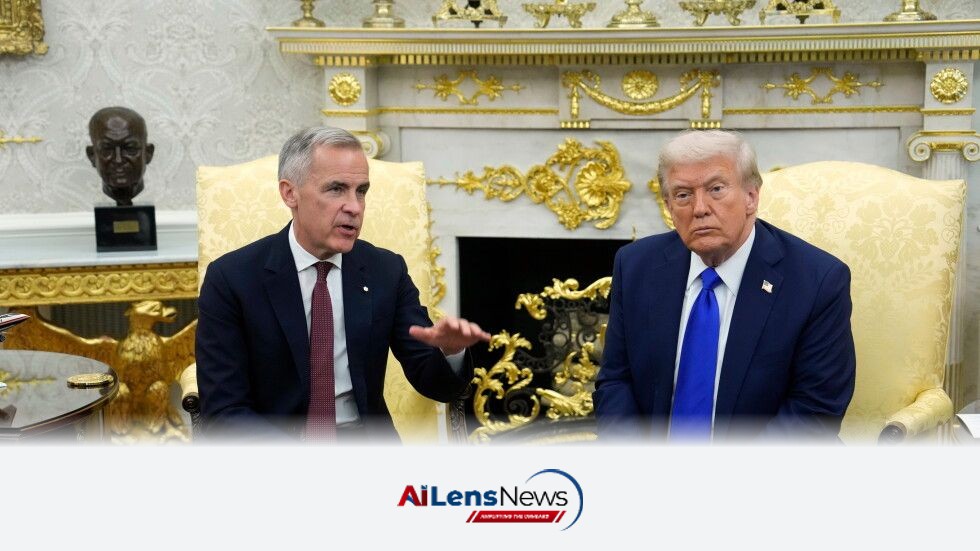



The ongoing trade conflict between the US and Canada intensifies with new tariffs, raising concerns over economic impacts in both nations.
Washington DC, United States Aug 23, 2026 ALN: The trade relationship between the United States and Canada has deteriorated significantly as both countries impose new tariffs on each other's goods. This escalation comes after failed negotiations aimed at resolving ongoing trade disputes, leading to heightened tensions and economic uncertainty. The imposition of tariffs marks a critical juncture in the economic relations between these two neighboring countries, which have historically shared a robust trading partnership.
In recent developments, the US government announced a series of tariffs targeting Canadian imports, which are expected to increase prices for consumers and businesses alike. Canadian officials have responded with their own set of tariffs, further complicating the economic landscape. The back-and-forth imposition of tariffs is a strategy often employed in trade disputes, where one country retaliates against perceived unfair trade practices by another, creating a cycle of escalation.
The trade war between the US and Canada has roots in various disagreements over trade policies, tariffs, and market access. Key issues include disputes over agricultural products, lumber, and energy exports. The situation has been exacerbated by political rhetoric from both sides, with leaders blaming each other for the breakdown in negotiations. The North American Free Trade Agreement (NAFTA), which was replaced by the United States-Mexico-Canada Agreement (USMCA), attempted to address some of these issues, but tensions have persisted.
Moreover, external factors such as global economic conditions, shifts in supply chain dynamics, and the impact of the COVID-19 pandemic have added layers of complexity to the trade relationship. The pandemic has led to disruptions in production and logistics, prompting countries to reassess their trade dependencies and strategies.
The new tariffs are projected to have a ripple effect on both economies. Consumers in both countries may face higher prices on everyday goods, while businesses that rely on cross-border supply chains could see increased operational costs. The imposition of tariffs often leads to inflationary pressures, as businesses pass on the higher costs of imported goods to consumers.
The trade war is not just an economic issue; it has significant political implications as well. Leaders in both countries are under pressure to protect their domestic industries, which may lead to further escalation of tariffs and retaliatory measures. The political landscape is complicated by domestic considerations, with politicians needing to balance the interests of various stakeholders, including labor unions, business groups, and consumers.
As negotiations remain stalled, experts warn that the ongoing trade conflict could lead to a prolonged period of economic instability for both nations. The situation is being closely monitored, as any further developments could have far-reaching consequences. The potential for a prolonged trade war raises concerns about its impact on economic growth, employment rates, and consumer confidence in both countries.
The trade tensions between the US and Canada also reflect broader global trends in trade policy. Many countries are increasingly adopting protectionist measures in response to perceived threats from foreign competition. This shift toward nationalism in trade policy can lead to a decrease in global trade volumes and could potentially trigger a global economic slowdown. The interconnectedness of modern economies means that trade disputes can have cascading effects, impacting countries far beyond the immediate parties involved.
The trade war between the US and Canada has entered a new phase with the introduction of new tariffs. As both countries grapple with the implications of these economic measures, the focus remains on finding a diplomatic resolution to avoid further escalation. The stakes are high, not only for the economies of the US and Canada but also for the broader global trading system. Stakeholders from various sectors are advocating for renewed negotiations and dialogue to address the underlying issues and restore a more stable and cooperative trade relationship.
To learn more about the latest developments in Political Controversies, stay updated with our exclusive reports and analyses on AILensNews.

