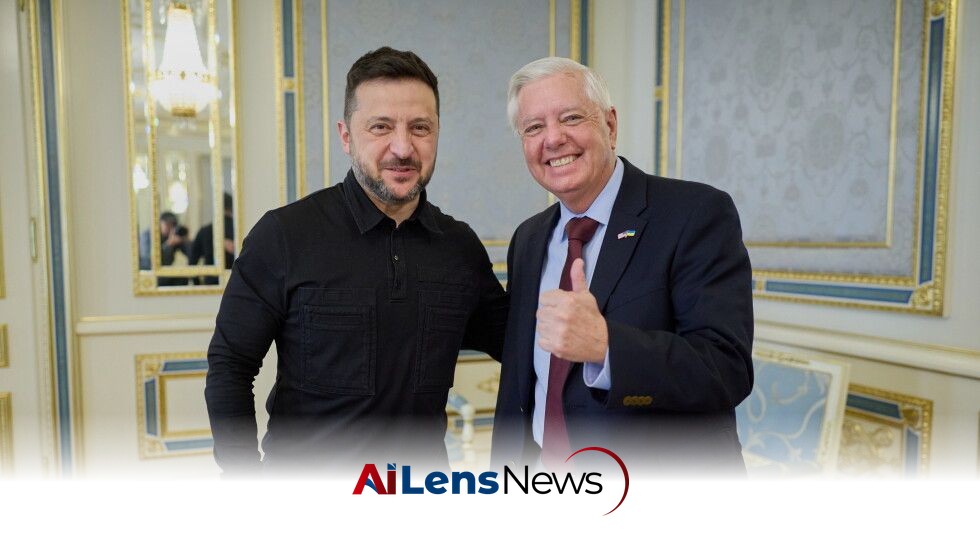


The passing of Senator Lindsey Graham, a key ally of Ukraine in the U.S. Senate, raises concerns about the future of support for Ukraine amid ongoing conflict.
Washington DC, United States Jul 14, 2026 ALN: Senator Lindsey Graham, a prominent Republican figure and a staunch ally of former President Donald Trump, has passed away at the age of 71 following a brief and sudden illness, as confirmed by his office. Graham was well-known for his vigorous advocacy for a more assertive U.S. foreign policy, particularly concerning Ukraine amidst the ongoing conflict with Russia. His death not only marks the loss of a significant political figure but also raises critical questions about the future of U.S. involvement in international conflicts, especially in Eastern Europe.
Graham's political career spanned over two decades, during which he established himself as a key player in shaping U.S. foreign policy. He served as a U.S. Senator from South Carolina since 2003 and was a member of several important committees, including the Senate Judiciary Committee and the Senate Armed Services Committee. His influence extended beyond domestic issues, as he was particularly vocal about the need for the United States to take a strong stance against authoritarian regimes. Graham viewed Russia's actions in Ukraine as a direct challenge to democratic values and international norms, which fueled his commitment to supporting Ukraine in its fight against aggression.
His advocacy for military assistance to Ukraine was not merely a political stance; it was rooted in a belief that the sovereignty of nations should be upheld against aggression. Graham was a consistent voice in Congress urging for increased military aid to Ukraine, arguing that a strong U.S. response was necessary not only for the security of Ukraine but also for the stability of Europe and the integrity of international law. His efforts were crucial during key moments in the conflict, such as the annexation of Crimea in 2014 and the ongoing war in the Donbas region, where he called for stronger sanctions against Russia and greater support for Ukrainian forces.
With Graham's passing, Ukrainian officials are expressing concern over the potential weakening of their support in Washington. The senator had been instrumental in rallying bipartisan support for Ukraine, advocating for increased military assistance and sanctions against Russia. His ability to bridge the gap between different factions in Congress made him a unique asset in securing funding and legislative support for Ukraine. Ukrainian President Volodymyr Zelenskyy and other leaders have acknowledged Graham's contributions, emphasizing the importance of continued U.S. support in their fight against Russian aggression.
The loss of such a prominent advocate raises questions about the future of U.S. policy towards Ukraine, especially as the conflict continues to evolve. Graham's death comes at a time when Ukraine is facing heightened military pressure from Russia, and the need for U.S. support is more critical than ever. The uncertainty surrounding U.S. foreign policy in the wake of his passing could lead to a reassessment of strategic priorities in Congress, potentially impacting the level of assistance that Ukraine receives moving forward.
Political leaders from both parties have expressed their condolences and highlighted Graham's commitment to national security and foreign policy. His passing is seen as a significant loss not only for his constituents in South Carolina but also for allies abroad who relied on his influence in Congress. Many have noted that Graham's bipartisan approach to foreign policy was essential in fostering a united front against threats to democracy. His ability to collaborate with Democrats on issues of national security was a hallmark of his career, and his absence will likely create a void in bipartisan efforts to support Ukraine.
In the wake of his death, there are calls for renewed commitment to supporting Ukraine. Leaders are urging Congress to maintain a strong stance against Russian aggression and continue providing the necessary resources for Ukraine to defend itself. The importance of U.S. involvement in international conflicts, particularly in the context of Ukraine, has been underscored by Graham's legacy. His passing may serve as a catalyst for discussions about how to preserve and enhance U.S.-Ukraine relations moving forward, as lawmakers grapple with the implications of his absence.
In the wake of this loss, it remains to be seen how the U.S. Congress will navigate its foreign policy priorities, particularly regarding Ukraine. The political landscape is shifting, and the absence of Graham's voice may alter the dynamics of support for Ukraine in the coming months. As Congress prepares for future appropriations and discussions about military aid, the challenge will be to find new champions who can advocate for Ukraine with the same vigor and commitment that Graham exhibited.
As Ukraine continues to face challenges, the importance of strong allies in Washington cannot be overstated. The future of U.S.-Ukraine relations will depend on how effectively new leaders can step into the roles previously held by Graham and maintain the momentum of support. This transition period could be critical, as Ukraine is still engaged in a protracted conflict that demands sustained international attention and assistance. The geopolitical implications of Graham's death extend beyond Ukraine, as the balance of power in Eastern Europe is delicate, and any perceived reduction in U.S. support could embolden adversaries like Russia.
As analysts assess the potential shifts in U.S. foreign policy, there is a growing concern that without strong bipartisan support, Ukraine may find itself isolated in its struggle against aggression. The need for a cohesive strategy that supports democratic nations facing aggression is more critical than ever, and Graham's absence will be felt as the U.S. navigates these complex international waters. The ongoing conflict in Ukraine, marked by significant military engagements and humanitarian crises, underscores the urgency for a robust U.S. response, which Graham had consistently championed throughout his career.
In conclusion, Senator Lindsey Graham's death marks a pivotal moment for U.S.-Ukraine relations, leaving many to ponder the implications for future support as the conflict with Russia persists. His legacy will likely influence discussions about foreign policy in the coming years, and it remains to be seen how the U.S. will respond to the ongoing challenges in Ukraine without one of its most ardent advocates in Congress. As the situation evolves, the commitment to uphold democratic values and support allies in their time of need will be tested, and the memory of Graham's dedication to these principles will resonate in the halls of Congress as lawmakers chart the way forward.
To learn more about the latest developments in Political Controversies, stay updated with our exclusive reports and analyses on AiLensNews.

