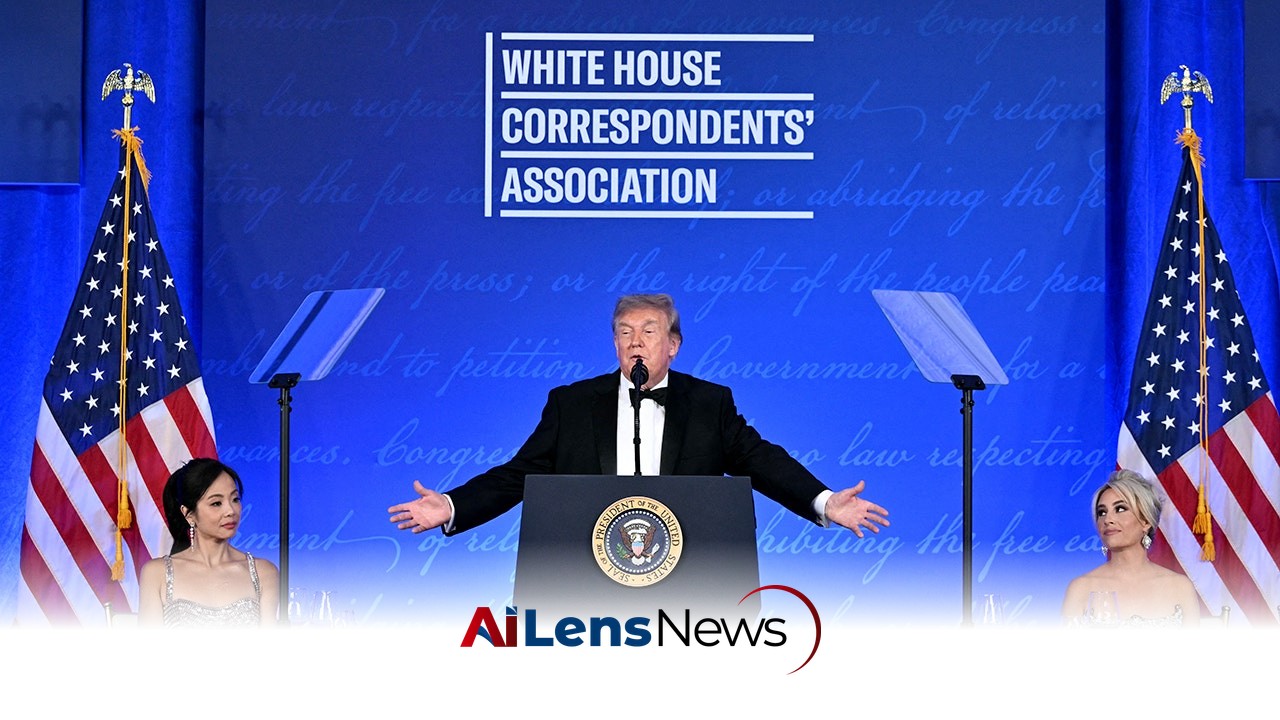


At the rescheduled White House Correspondents' Dinner, Trump struck a balance between humor and seriousness, addressing the press, Democrats, and his own cabinet while emphasizing unity after a recent assassination attempt.
Washington DC, United States Jul 25, 2026 ALN: President Donald Trump delivered a notably different speech at the rescheduled White House Correspondents' Dinner on Friday, adopting a tone of unity and gratitude that diverged from the combative rhetoric he had initially prepared. This shift in tone was significant, particularly in light of the recent assassination attempt that had marred the original event in April, leading to its abrupt cancellation. The incident, which involved an armed suspect named Cole Allen, was described by authorities as a serious threat to the president's safety and resulted in heightened security measures not only for the dinner but for Trump’s public appearances going forward.
In his remarks, Trump acknowledged the gravity of the moment, stating, "The speech that I had ready just a short while. Oh, that was going to be a doozy. I was so psyched. I was going to rip people. And I don't know, just something changed it — really for the better. But I just wouldn't want to do that." This statement reflects a recognition of the delicate balance he must strike between his characteristic humor and the need for a more serious approach following a violent episode. He emphasized that the evening would be different, remarking, "And in many ways it's a more beautiful evening, actually."
Trump's choice of walk-out music, Lee Greenwood's "God Bless the U.S.A.," set a patriotic tone as he began his address. He quickly transitioned into humor, joking about the prospect of seeking a third term in office, before expressing sincere gratitude to the Secret Service for their protection, particularly in the wake of the attack. His acknowledgment of their efforts served to highlight the risks associated with the presidency and the ongoing threats that public figures often face.
The speech extended for over an hour, a length that allowed Trump to delve into various topics, combining humor with pointed commentary. He remarked, "Just like my presidency, the second time is always better. It's always better, and the third time will be better yet. I'm only kidding," eliciting laughter from the audience. This playful jab at his own political ambitions underscored his knack for blending humor with self-promotion, a hallmark of his public persona.
While he refrained from delivering the harsh critiques of the press that he had initially planned, Trump did not shy away from poking fun at both Democratic figures and members of his own cabinet. His comments included a humorous anecdote about the quality of the dinner, where he referenced the preparation of beef tenderloin, quipping about the late Robert F. Kennedy's involvement in the hypothetical scenario of running over a cow to provide the meal. This style of humor, while lighthearted, also served to underscore the often absurd nature of political discourse.
Trump's jabs were not limited to humor; he also made pointed remarks about notable Democratic figures, including California Governor Gavin Newsom and former Vice President Kamala Harris. His comment about Illinois Governor J.B. Pritzker, suggesting that he had never used the word "fat," was indicative of Trump's tendency to use personal characteristics as a basis for humor, a strategy that has been both criticized and celebrated by various audiences.
In addition to his jokes, Trump addressed more serious topics, including the ongoing Israel-Hamas conflict. He took aim at Senator Chuck Schumer's criticisms of Israel, suggesting that he would send Schumer a Palestinian outfit to wear when meeting with Israeli Prime Minister Benjamin Netanyahu. This comment not only served as a punchline but also highlighted the complexities and sensitivities surrounding U.S. foreign policy, particularly in the Middle East.
Amidst the humor, Trump made a notable call for term limits in Congress, stating, "all joking aside, I do think we need term limits in Congress." This comment aligns with a broader political discourse regarding the longevity of incumbents in Washington and reflects a desire among some voters for fresh perspectives in government.
Trump's humor also took a personal turn when he recounted a joke about a senator receiving a suggestive text message, stating that he couldn't engage in both physical activity and intimacy due to energy constraints. This anecdote, while humorous, also reflects the often personal nature of political jokes that can serve to humanize politicians in the eyes of the public.
During the dinner, the White House Correspondents' Association honored U.S. Secret Service Officer Victor Gonzales for his bravery in preventing the armed assailant from entering the ballroom, a recognition that underscored the real dangers faced by those tasked with protecting public officials. The context of this honor served as a poignant reminder of the risks associated with political events and the importance of security measures.
In light of the assassination attempt, Trump also addressed criticisms surrounding the $200 million project for the White House Ballroom, which had faced scrutiny and lawsuits. He defended the project by suggesting that the recent events had shifted public perception, stating, "In light of what we went through, I think people understand it. It's going to be amazing, a phenomenal one of the biggest drone ports anywhere in the world." This comment reflects Trump's tendency to pivot from criticism to optimism, framing challenges as opportunities for growth and improvement.
Looking ahead, Trump expressed his intention to return for next year’s WHCA dinner, stating, "They said, 'Would you do it next year?' I said, 'I will be back next year.'" This commitment signals a desire to maintain a presence in the public eye and engage with the press, despite the contentious relationship he has often had with media outlets. His closing remarks included a playful announcement of his candidacy for a fourth presidential term, as he donned a red "TRUMP 2028" hat, further solidifying his position as a perennial figure in American politics.
The dinner, while marked by humor and lightheartedness, also served as a platform for Trump to reinforce his political messaging and maintain his connection with supporters. The blend of comedy, political commentary, and personal anecdotes exemplified the unique nature of the WHCA dinner as an event where the lines between politics and entertainment often blur. As the nation looks ahead to the next election cycle, Trump's performance at the dinner may serve as a reflection of his enduring influence and the strategies he will employ as he seeks to navigate the complex landscape of American politics.
To learn more about the latest developments in Elections, stay updated with our exclusive reports and analyses on AiLensNews.

