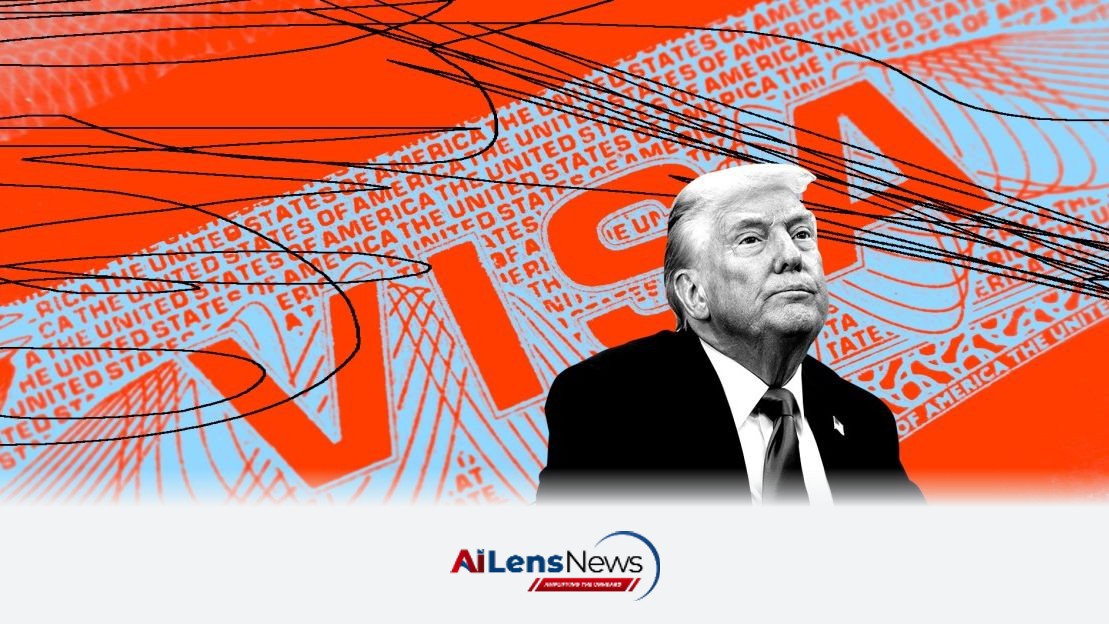



The Department of Homeland Security has announced a staggering fee increase for H-1B visas, while the State Department prepares to revoke up to 200,000 asylum seekers' visas, marking a significant shift in immigration policy.
Washington DC, United States Aug 26, 2026 ALN: In a significant move on Monday, the Department of Homeland Security (DHS) revealed plans to implement a fee exceeding $103,000 for H-1B visas. This announcement coincided with news that the State Department intends to revoke the visas of up to 200,000 asylum seekers, potentially marking the largest mass visa revocation in U.S. history. The H-1B visa program, designed to allow U.S. companies to temporarily employ foreign workers in specialty occupations, has been a critical avenue for tech companies to recruit talent from around the globe. However, the recent proposed fee increase raises questions about the future viability of this program and its implications for both the labor market and the economy.
As President Donald Trump enters the latter part of his second term, it has become increasingly evident that his administration is focused on achieving higher deportation numbers by stripping legal immigrants of their status. This strategy aligns with a broader agenda aimed at tightening immigration policies and enforcing stricter regulations on noncitizens. Beyond the arrests and deportations carried out by Immigration and Customs Enforcement (ICE), the administration is reportedly pressuring noncitizens to “self-deport,” a tactic that involves imposing civil fines and threatening asset seizures. This approach has raised concerns among immigrant advocates and legal experts about the potential erosion of legal protections for immigrants.
The H-1B visa program is particularly crucial for the tech industry, with major companies like Amazon, Meta, and Microsoft being the largest employers of H-1B workers. These companies often rely on the program to fill skill gaps in the U.S. labor market, particularly in fields such as information technology, engineering, and healthcare. A federal judge previously blocked Trump's attempt to raise the cost of these high-skilled employment visas in June, but not before over 70 employers had already paid the $100,000 fee. Now, Trump aims to increase the cost to $103,265, a substantial burden for many companies that depend on these visas to attract qualified talent.
Concerns are mounting among advocates and business leaders that the administration may soon target the Optional Practical Training (OPT) program, which allows international students to work in their field of study for up to 36 months after graduation. The DHS hinted that this program could soon carry a fee of $100,000 as well, further complicating the pathway for international students who wish to gain practical experience in the U.S. job market. The OPT program has been instrumental in allowing graduates to transition from academia to the workforce, and any changes to its structure could have significant repercussions on the ability of U.S. businesses to hire skilled graduates.
“Every single other pathway is harder, outlawed, eliminated, more bureaucratic, more difficult across the board.”
Todd Schulte, president of FWD.us, an immigration reform organization founded by tech executives including Mark Zuckerberg, stated, “This is clearly unlawful. We don’t have to guess what this is for. This is to get rid of the OPT and H-1B program, which will have upstream and downstream devastating consequences: companies will be started elsewhere, people will be hired elsewhere.” His comments reflect a growing concern among industry leaders that the proposed changes will not only deter foreign talent from coming to the U.S. but also prompt existing companies to relocate their operations to countries with more favorable immigration policies.
The implications of these changes extend beyond the tech industry. The previous fee increase has already exacerbated labor shortages in rural hospitals and schools, which have increasingly relied on high-skilled immigrant workers due to local population declines. Many rural communities face significant challenges in attracting qualified professionals, particularly in healthcare and education, where the demand for skilled workers often exceeds the supply. While the fee hike may pose challenges for large corporations like Amazon and Meta, it could be catastrophic for rural communities struggling to attract qualified candidates. The potential loss of access to skilled immigrant workers could hinder economic growth and exacerbate existing inequalities in access to essential services.
Moreover, foreign workers are not the only legal immigrants facing challenges under Trump's policies. Reports indicate that the State Department plans to rescind up to 200,000 business and travel visas issued between 2016 and 2026 to individuals who applied for asylum after arriving in the U.S. This sweeping action underscores the administration's aggressive stance on immigration and its potential impact on various sectors of the economy. By targeting these visas, the administration is not only affecting individuals but also creating ripples throughout industries that depend on a diverse workforce.
The proposed changes to the H-1B visa program and the mass visa revocation plan have sparked widespread debate among policymakers, business leaders, and immigrant advocates. Critics argue that such measures could have dire consequences for the U.S. economy, which has historically benefited from the contributions of immigrants. As the nation grapples with labor shortages and economic recovery post-pandemic, the timing of these proposed changes raises questions about the administration's commitment to fostering a competitive and inclusive workforce.
In conclusion, the Trump administration's recent announcements regarding H-1B visa fees and mass visa revocations signal a significant shift in U.S. immigration policy. As the administration continues to implement stricter measures, the long-term implications for the economy, the tech industry, and immigrant communities remain uncertain. The potential for reduced access to skilled labor could hinder innovation and growth, while the broader implications of mass visa revocations could lead to increased instability for families and businesses alike. As these developments unfold, it will be critical for stakeholders across sectors to engage in dialogue and advocate for policies that support a balanced approach to immigration that recognizes the vital contributions of immigrants to the U.S. economy.
To learn more about the latest developments in Political Controversies, stay updated with our exclusive reports and analyses on AILensNews.

