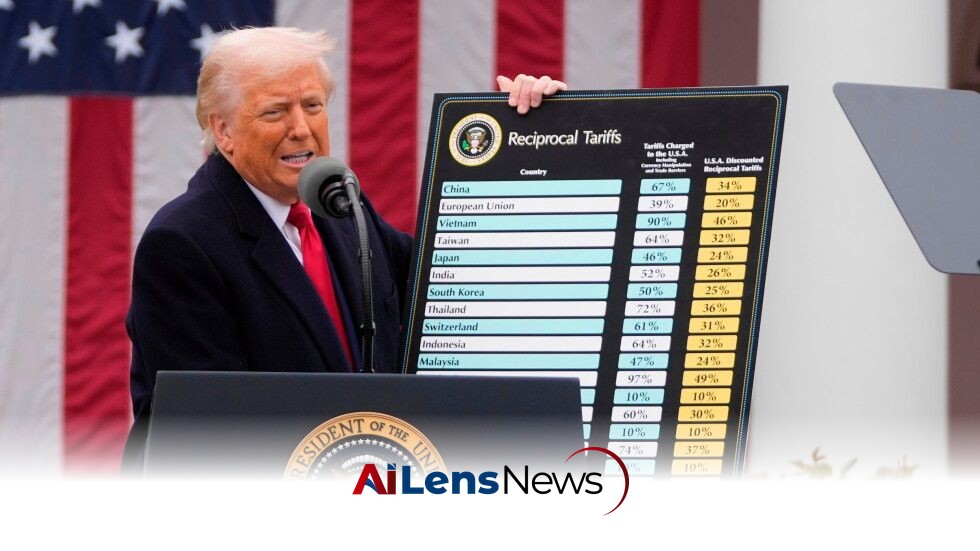


President Donald Trump has announced a 50% tariff on most Canadian goods, citing unfair discrimination against American products, particularly in the auto, alcohol, and dairy sectors.
Washington DC, United States Jul 21, 2026 ALN: In a significant escalation of trade tensions, President Donald Trump has imposed a 50% tariff on a wide range of Canadian goods. This decision, announced during a press conference in the Rose Garden at the White House, comes as a response to what Trump describes as unfair practices by Canada that discriminate against American products. The tariffs are part of a broader strategy by the Trump administration to renegotiate trade agreements and protect American industries from what it perceives as unfair competition.
The tariffs primarily target the automotive, alcohol, and dairy sectors, which Trump claims have been adversely affected by Canadian trade policies. "Canada has been taking advantage of the United States for years, and it’s time to put an end to it," Trump stated, emphasizing the need to protect American jobs and industries. This statement reflects a longstanding belief among some U.S. politicians that trade agreements have favored other countries at the expense of American workers.
The trade relationship between the United States and Canada has been strained for some time, with both countries imposing tariffs on each other's goods. The United States and Canada share one of the largest trading relationships in the world, with billions of dollars in goods exchanged daily. However, disputes have arisen over various issues, including softwood lumber, dairy products, and tariffs on steel and aluminum.
The latest round of tariffs is expected to exacerbate these tensions, potentially leading to retaliatory measures from Canada. Historically, trade disputes between the two nations have often resulted in back-and-forth tariff implementations, which can escalate into broader trade wars. Such conflicts can strain diplomatic relations and complicate cooperative efforts on other issues, including security and environmental concerns.
Trade experts warn that such tariffs could lead to increased prices for consumers and disrupt supply chains. "This move could have far-reaching implications for both economies," said one analyst. "Consumers may face higher prices, and businesses could see delays in receiving essential goods." The imposition of tariffs can lead to inflationary pressures as businesses pass on the increased costs to consumers, which could further impact economic growth.
Canadian officials have expressed strong opposition to the new tariffs. Prime Minister Mark Carney stated, "We will not be bullied into accepting unfair trade practices. Canada stands ready to defend its interests and the interests of its workers." This statement underscores Canada's commitment to maintaining its trade sovereignty and protecting its industries from what it views as aggressive moves by the U.S.
The Canadian government is currently evaluating its options, including potential retaliatory tariffs on American goods. "We will respond in a measured and strategic manner to protect our economy," Carney added. This response highlights the delicate balance Canada must maintain: protecting its economic interests while avoiding an all-out trade war that could harm both nations.
As the situation develops, analysts will be closely monitoring the responses from both governments and the potential long-term effects on U.S.-Canada trade relations. The economic interdependence between the two nations means that any significant disruption could have ripple effects throughout North America and beyond.
In conclusion, Trump's decision to impose tariffs on Canadian goods marks a significant shift in trade policy that could have lasting repercussions for both nations. The coming weeks will be crucial in determining how this trade dispute unfolds. Policymakers and business leaders will need to navigate the complexities of international trade and seek solutions that promote fair competition while minimizing negative impacts on consumers and the economy.
The broader implications of this tariff imposition extend beyond just the immediate economic impact. It raises questions about the future of trade agreements, such as the United States-Mexico-Canada Agreement (USMCA), which was designed to replace the North American Free Trade Agreement (NAFTA) and create a more balanced trade environment. If trade tensions continue to escalate, it may lead to a re-evaluation of such agreements and a shift in how countries approach trade negotiations in the future.
Furthermore, the political ramifications of this decision could also be significant. As the 2024 presidential election approaches, trade policy is likely to become a central issue in the campaign, with candidates taking positions on how to best protect American jobs and industries. The outcome of this trade dispute may influence voter sentiment and impact the political landscape in both the U.S. and Canada.
The trade relationship between the United States and Canada has a long and complex history. The two nations have enjoyed a close economic partnership for over a century, characterized by the exchange of goods, services, and investments. The establishment of the North American Free Trade Agreement (NAFTA) in 1994 marked a significant milestone in U.S.-Canada trade relations, as it eliminated tariffs on many goods traded between the two countries and Mexico.
However, NAFTA also faced criticism, particularly from American labor unions and some political factions, who argued that it led to job losses in the U.S. as companies relocated manufacturing to lower-cost regions. This discontent paved the way for the renegotiation of the agreement, culminating in the USMCA, which was signed in 2018 and aimed to address some of the concerns raised by critics of NAFTA.
Despite these efforts, trade tensions have persisted, with issues such as dairy tariffs and softwood lumber disputes remaining contentious points. The imposition of tariffs by the Trump administration on steel and aluminum imports from Canada in 2018 further strained relations, leading to retaliatory measures from Canada that targeted U.S. agricultural products.
As both countries navigate this latest round of tariffs, the potential for a trade war looms large. The interconnectedness of their economies means that any significant disruptions could have far-reaching consequences not only for the U.S. and Canada but also for their trading partners around the world. Businesses on both sides of the border are already bracing for the impact, with many expressing concerns about the uncertainty that tariffs bring to their operations.
Moreover, the ongoing trade dispute raises broader questions about the future of multilateral trade agreements and the global trading system. As countries increasingly adopt protectionist measures, the principles of free trade and open markets may come under threat, leading to a more fragmented global economy.
In summary, the imposition of tariffs on Canadian goods by the Trump administration is a pivotal moment in U.S.-Canada trade relations. The implications of this decision are likely to be felt across multiple sectors and could shape the future of trade policy in North America and beyond. As both nations grapple with the consequences of these tariffs, the importance of dialogue and negotiation cannot be overstated in seeking to resolve disputes and foster a more equitable trading environment.
To learn more about the latest developments in Elections, stay updated with our exclusive reports and analyses on AiLensNews.

