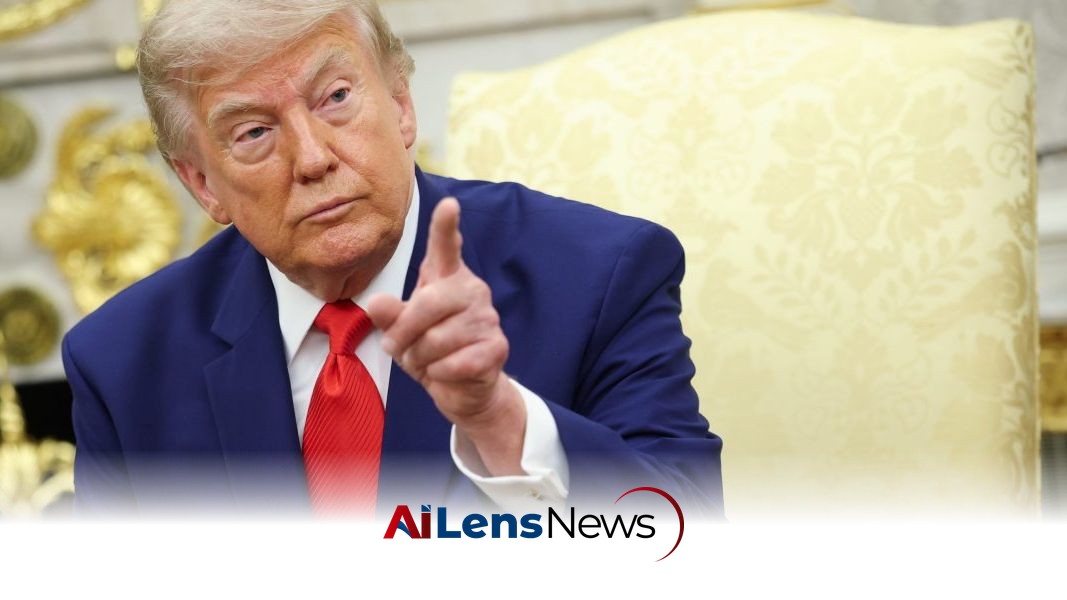


The Committee for a Responsible Federal Budget reveals Trump's new tariff scheme will generate $950 billion but still leaves a $825 billion revenue shortfall.
Washington DC, United States Jul 24, 2026 ALN: In a significant announcement that has stirred both economic and political conversations, U.S. Trade Representative Jamieson Greer, acting under the direction of President Trump, revealed that the United States would be imposing tariffs on 60 nations. This decision is rooted in allegations that these countries are producing goods with forced labor, a claim that carries serious implications for international trade and human rights considerations. The move reflects growing concerns within the U.S. and among its allies about the ethical implications of trade practices and the need to align economic policies with fundamental human rights standards.
The new tariffs, which fall under Section 301 of the Trade Act, are set to levy rates between 10% and 12.5% on imports from specific nations. Notably, countries such as Canada, Mexico, and the United Kingdom will face the lower tariff rate of 10%, while imports from Japan, the European Union, and South Korea will be subject to the higher rate of 12.5%. This tiered approach reflects a strategic decision by the Trump administration to target specific economies based on their perceived compliance with labor standards. By differentiating tariff rates, the administration aims to exert pressure on countries deemed less compliant with ethical labor practices, thereby encouraging them to reform their labor policies.
This move comes in the wake of a Supreme Court ruling in February that limited the administration's ability to use the International Emergency Economic Powers Act (IEEPA) to impose tariffs. The court's decision mandated that the administration repay approximately $175 billion in revenues that had been generated under the previous tariff regime. This ruling has forced the administration to rethink its approach to trade tariffs, leading to the current strategy. The ruling has also sparked debates about the balance of power between the executive branch and the judiciary in matters of trade policy, raising questions about the extent to which the executive can unilaterally impose economic measures.
The White House had previously indicated that revenues from these tariffs would play a crucial role in addressing the nation’s budget deficit, with aspirations that they might even contribute to reducing the staggering $39 trillion national debt. However, the latest analysis from the Committee for a Responsible Federal Budget (CRFB) suggests that the new tariff plan may fall short of these ambitious goals. The CRFB's projections underscore the challenges that the administration faces in grappling with a national debt that has reached unprecedented levels, and the complexities involved in using tariffs as a tool for fiscal policy.
According to the CRFB, the tariffs announced recently, combined with a 50% levy on Canadian goods instituted earlier in the week and a 25% tariff on certain Brazilian imports, could potentially generate up to $950 billion by the year 2036. While this figure appears substantial, the CRFB has highlighted that it is significantly less than the revenue that could have been generated had the tariffs been enacted under the IEEPA authority, which had been previously invalidated by the Supreme Court. This discrepancy illustrates the limitations imposed by legal rulings on the administration's ability to generate revenue through tariffs, and the potential long-term implications for budgetary planning.
In their assessment, the CRFB noted that the total revenue loss due to the Supreme Court's ruling could reach as high as $1.7 trillion over the next decade. Furthermore, adjustments to tariffs on steel, aluminum, and copper have resulted in a projected revenue shortfall of $100 billion compared to earlier estimates from the second Trump administration. Overall, the CRFB’s analysis indicates that the tariffs enacted since January 2025 are expected to yield $825 billion less revenue than initially projected, which could lead to an increase in the national debt to 122% of GDP by 2036, surpassing the 120% threshold predicted in the Congressional Budget Office’s (CBO) February 2026 baseline. This projection raises alarms about the sustainability of the national debt and the potential economic ramifications of an increasing debt-to-GDP ratio.
The longevity of the administration's tariff proposals has been a matter of concern, as previous tariffs have faced various challenges and legal hurdles. Some tariffs were invalidated, while others were intended to be temporary and were subsequently ruled illegal by the U.S. Court of International Trade in May, pending appeal. However, the latest round of tariffs appears to have a more stable foundation. The CRFB has pointed out that the tariffs linked to forced labor are likely to remain in effect until the government deems them unnecessary for addressing unfair trade practices. Similarly, the tariffs imposed on Canada are designed to be maintained indefinitely. The potential permanence of these tariffs highlights a shift in U.S. trade policy that prioritizes ethical considerations alongside economic interests.
Despite the apparent stability of these measures, they are not immune to potential legal challenges. President Trump has articulated a clear intention regarding the revenue generated from these tariffs, stating, "The purpose of what I’m doing is primarily to pay down debt, which will happen in very large quantity," during a media briefing last summer. This emphasis on debt reduction highlights the administration's broader economic strategy, which seeks to balance trade practices with fiscal responsibility. However, the reliance on tariffs as a primary source of revenue raises questions about the long-term viability of this approach, especially in light of the fluctuating nature of international trade and the potential for retaliatory tariffs from affected countries.
However, the CRFB has raised concerns about the adequacy of the current tariff strategy. They warn that while the tariffs will generate significant revenue, they will not fully offset the revenue lost due to the Supreme Court's ruling against IEEPA tariffs in February. To completely replace that revenue shortfall, the administration would need to consider implementing additional tariffs, increasing other revenue streams, reducing spending, or a combination of these approaches. The complexity of the situation underscores the challenges that the Trump administration faces in navigating the intricate landscape of international trade, domestic economic policy, and legal constraints. The need for a multifaceted approach to fiscal policy is becoming increasingly apparent as the administration grapples with the implications of its trade decisions.
This tariff plan, while ambitious, reflects the ongoing struggle of the U.S. government to balance economic growth with ethical trade practices. The implications of these tariffs extend beyond mere financial calculations; they touch upon broader issues of human rights, international relations, and the economic well-being of American consumers and businesses. As the administration moves forward with this plan, the potential for both domestic and international repercussions looms large, making it a pivotal moment in U.S. trade policy. The tariffs could lead to increased prices for consumers as businesses pass on the costs of tariffs, potentially impacting consumer spending and economic growth.
In conclusion, while President Trump’s tariff plan aims to generate significant revenue for debt reduction and address labor concerns in international trade, the CRFB's analysis indicates that it may not achieve the desired financial outcomes. The ongoing legal battles and the need for additional revenue measures further complicate the landscape, leaving many to speculate on the future effectiveness of these tariffs in achieving the administration's economic goals. As the U.S. navigates this complex web of trade relationships, the implications of these tariffs will likely resonate beyond the immediate economic impacts, influencing U.S. foreign policy and its standing in the global community.
To learn more about the latest developments in Political Controversies, stay updated with our exclusive reports and analyses on AiLensNews.

