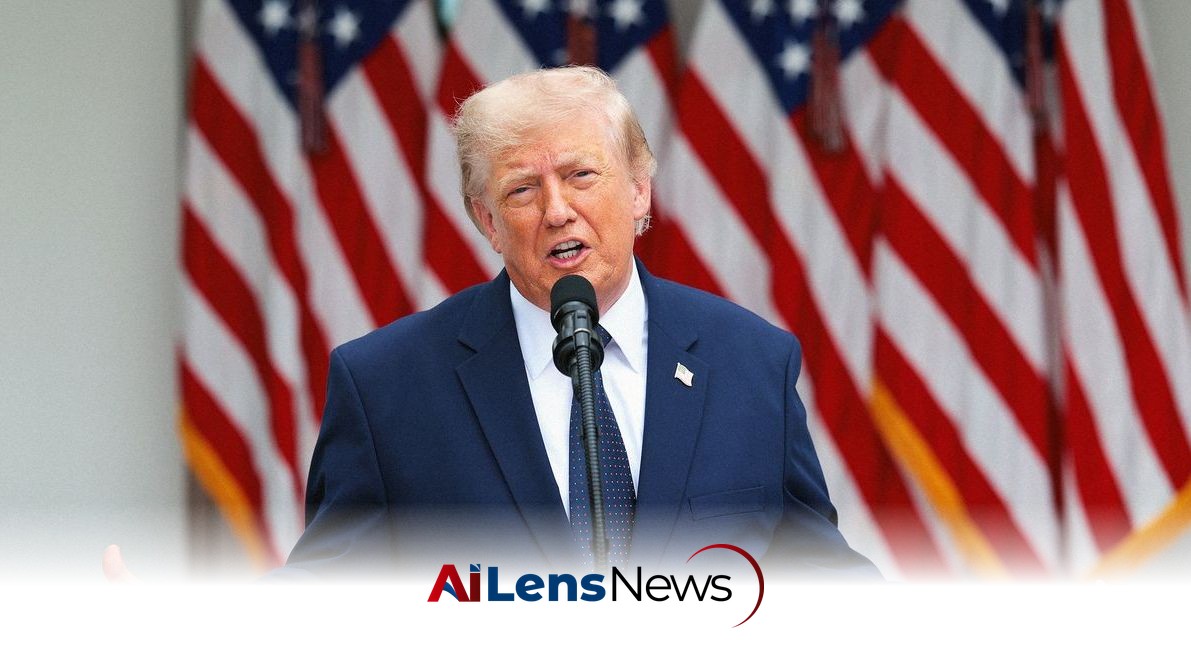


President Trump's recent speech has ignited conspiracy theories among election deniers, suggesting it could pave the way for invoking the Insurrection Act.
Washington DC, United States Jul 17, 2026 ALN: President Donald Trump’s recent speech, which was highly anticipated by his supporters, promised significant revelations regarding alleged interference in the 2020 election. However, the address ultimately fell short of delivering any substantial evidence or new insights. On Thursday night, Trump made sweeping claims about foreign interference, particularly focusing on accusations against China, while also alleging cover-ups by what he referred to as the "deep state." He reiterated previously debunked claims regarding noncitizen voting, a narrative that has been widely discredited by election experts and officials. In an effort to substantiate his claims, Trump pointed to a document drop on the White House website. Nonetheless, critics noted that the files released did not contain any credible evidence to support the assertions made during his speech.
Despite the lack of concrete evidence, the speech resonated with Trump's loyal base. Patrick Byrne, an election denier and ally of Trump, described the speech as a "grand slam" during a conversation with conspiracy theorist Alex Jones shortly after its conclusion. Byrne's enthusiastic response included a comparison of the speech's significance to the release of the JFK files, although he neglected to mention that the Trump administration had already released those files in the previous year. Jones, known for promoting various conspiracy theories, echoed Byrne's sentiments, suggesting that the so-called "deep state" was in a state of panic following Trump's claims.
Among the conspiracy theorists, there was a notable discussion about the potential implications of Trump's speech, particularly regarding the Insurrection Act. This law could theoretically empower the president to deploy military forces to polling locations in the upcoming November elections. However, the legal framework surrounding the military's role in domestic electoral processes remains ambiguous, leading to widespread speculation and concern among legal experts and political analysts.
Lara Logan, a former CBS news reporter who has gained notoriety within the election denial community, characterized Trump's speech as a "reckoning." She took to social media platform X to assert that the address was "the opening salvo in a much bigger plan." This sentiment was echoed by various election deniers who believe that Trump is maneuvering to implement more aggressive strategies to secure the 2026 midterm elections. They speculate that if Congress does not pass the proposed SAVE America Act, Trump might resort to invoking greater powers, including the Insurrection Act.
One member of the Sarasota Patriots, an election denial group, expressed confidence that Trump had the political capital to take drastic measures, including deploying military and federal law enforcement to secure polling locations. This sentiment was further reinforced by Jacob Creech, a prominent online conspiracy theorist known as WarClandestine, who claimed that Trump would eventually invoke the Insurrection Act after demonstrating that he had exhausted all other options. Arizona state senator Wendy Rogers, also a vocal election conspiracy theorist, shared Creech's post, suggesting that the current events were laying the groundwork for such actions.
Michael Flynn, the former national security adviser who has been deeply involved in the election denial movement, called for immediate arrests of intelligence officials from Trump's first term, alleging treason without providing concrete evidence. Flynn's assertions reflect the broader trend among some Trump supporters who are increasingly calling for punitive measures against perceived enemies of the former president.
Experts who have been monitoring the election denial movement closely expressed concern over the rhetoric and implications of Trump's speech. Alexandra Chandler, the director of impact programs at the nonprofit organization Protect Democracy and a former intelligence community member, criticized the address as a rehash of discredited narratives designed to create a pretext for unlawful actions. She emphasized that the speech was not genuinely about national security or the 2020 election but rather aimed at mobilizing Trump's supporters to contest the results of the 2026 midterms if they do not favor Trump or his allies.
The response to Trump's speech and the accompanying document release was overwhelmingly negative from election officials and experts in the field of voting integrity. Cisco Aguilar, Nevada's secretary of state, dismissed the claims as "all bullshit" in a statement. Congressman Jamie Raskin, a former House impeachment manager, characterized Trump's speech as "gibberish," "drivel," and "almost self-debunking," highlighting the lack of coherence and substantiation in the claims made.
Perhaps the most striking condemnation came from within Trump's own administration. John Solomon, a conservative journalist who had been appointed to review documents related to alleged election interference, was unable to validate Trump's assertions during a post-speech interview. Despite being involved in the administration's efforts to publicize claims of foreign interference, Solomon stated that he was not aware of any evidence suggesting that a foreign power had altered votes in the 2020, 2022, or anticipated 2024 elections. When pressed about the accuracy of the 2020 election results, he stated, "I’m still researching," indicating a lack of definitive conclusions.
In a notable contradiction, while Trump did not mention Russia's role in his speech, the documents released included references to a 2020 assessment stating that Russia was the only country actively attempting to meddle in American elections, specifically targeting Joe Biden. This omission raises questions about the selective narrative being promoted by Trump and his allies.
Cleta Mitchell, a former Trump adviser and prominent election denier who heads the influential Election Integrity Network, praised Solomon for his efforts to bring the administration's information into public view. Mitchell claimed that Solomon had taken significant steps to expose what she described as the truth about the Chinese Communist Party's alleged attack on the 2020 election. However, this assertion contradicts findings from a 2021 report by the Office of the Director of National Intelligence, which concluded that China did not deploy interference efforts aimed at changing the outcome of the U.S. presidential election.
The aftermath of Trump's speech has left many questions unanswered and has further polarized the discourse surrounding election integrity in the United States. As the nation approaches the 2026 midterm elections, the implications of Trump's rhetoric and the actions of his supporters could have far-reaching consequences for the democratic process. The ongoing debates about election security, the role of misinformation, and the potential for political violence underscore the need for vigilance and critical examination of claims made by public figures, especially in the context of a highly charged political climate.
To learn more about the latest developments in Political Controversies, stay updated with our exclusive reports and analyses on AiLensNews.

