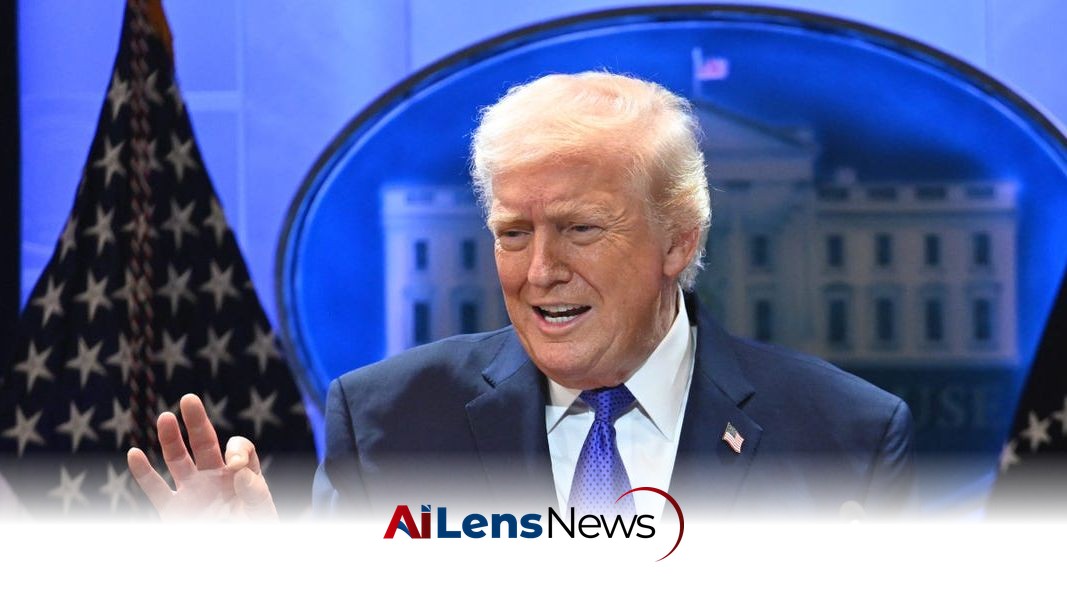


The Trump administration has announced new tariffs ranging from 10% to 12.5% on various U.S. trading partners, following a five-month investigation into forced labor practices.
Washington DC, United States Jul 24, 2026 ALN: The Trump administration on Thursday finalized new double-digit tariffs on dozens of U.S. trading partners, marking a significant shift in the United States' trade policy. These tariffs, which range from 10% to 12.5%, are part of a broader effort to address concerns regarding forced labor in global supply chains. The decision follows a five-month investigation into the practices of various countries in eliminating products that are produced using forced labor.
The implementation of these tariffs comes at a critical time, coinciding with the expiration of a temporary global 10% tariff that was previously imposed. Starting Friday, 17 trading partners, including Canada, the European Union, Indonesia, the United Kingdom, and Mexico, will be subjected to a 10% duty. Additionally, another 10 countries that have agreed to address forced labor through signed trade agreements with the U.S. will also face the same tariff rate. In contrast, 43 other nations, including significant players such as Japan, China, South Korea, and Australia, will encounter a higher tariff rate of 12.5%.
The tariffs are based on the preliminary findings of the investigation, which were released in early June. In a statement, a senior administration official emphasized the significance of this action, claiming it to be the most comprehensive international labor rights initiative ever undertaken by the United States. The official, who spoke on the condition of anonymity, stated, "Today's action encourages stronger labor rights enforcement abroad, restores fairness in the global market for American workers, and incentivizes our trading partners to join the United States in eliminating forced labor from global supply chains." This assertion reflects the administration's focus on promoting ethical labor practices while simultaneously protecting American jobs.
While the new tariffs will impact a wide range of goods, the administration has maintained existing exemptions for certain products, including coffee and goods compliant under a 2020 North American trade agreement. Furthermore, new carveouts have been introduced for specific products like cork, which is primarily sourced from Portugal, as well as roses from Switzerland and precious gems such as diamonds and rubies from various countries. These exemptions are intended to mitigate the economic impact of the tariffs on consumers and businesses that rely on these imports.
The imposition of these tariffs is executed under Section 301 of the Trade Act of 1974, which allows the U.S. government to take action against foreign trade practices that are deemed unfair. This move is seen as a response to the Supreme Court's ruling in February that struck down some of the previous tariffs, compelling the Trump administration to rebuild the tariff wall that had been diminished. Following the Supreme Court decision, President Trump had imposed a 10% global tariff under Section 122 of the same statute; however, that law only permits tariffs for a limited duration of 150 days, leading to the need for new measures.
Many countries are currently facing tariff rates that are lower than those imposed last year. For instance, China had been subjected to a 20% tariff on most products under previous tariffs, while Japan and South Korea faced 15%. Other nations, including Indonesia, Malaysia, Pakistan, and Thailand, were subjected to tariffs as high as 19%. The new tariff structure represents a shift in strategy, as senior administration officials sought to clarify that these tariffs are not merely a replication of previous measures struck down by the Supreme Court.
As part of the ongoing trade strategy, the Office of the U.S. Trade Representative is expected to introduce additional tariffs following the completion of other Section 301 investigations that are still in progress. One such investigation is focused on manufacturing overcapacity among 16 trading partners, which could lead to higher duties on countries like China, the EU, Indonesia, South Korea, Vietnam, Mexico, Japan, and India. When questioned about the status of this second probe, the senior administration official affirmed that it is not on hold, stating, "We're trying to be quite thorough. The issues surrounding structural excess capacity are quite complex. That investigation continues apace."
Additionally, another Section 301 investigation is examining Germany's pharmaceutical pricing practices, with U.S. Trade Representative Jamieson Greer indicating that similar investigations are pending if discussions with countries like France on drug pricing do not yield satisfactory results. The administration recently concluded a separate probe into Brazil's trade practices, resulting in new 25% tariffs on Brazilian exports, which are set to take effect soon, albeit with significant carveouts for specific products.
The implications of these tariffs extend beyond immediate economic impacts; they also signal a shift in U.S. foreign policy priorities, emphasizing labor rights and ethical sourcing in international trade. The administration's approach could reshape global supply chains as countries adapt to the new tariffs and seek to comply with U.S. labor standards to avoid punitive tariffs. This could lead to increased scrutiny of labor practices in countries that export goods to the United States, potentially fostering improvements in labor rights worldwide.
As the global economic landscape continues to evolve, the repercussions of these tariffs will be closely monitored by economists, trade analysts, and policymakers. The administration's strategy reflects a growing trend among nations to prioritize ethical labor practices and sustainability in trade agreements, which could have lasting effects on international relations and economic cooperation.
This new tariff policy is situated within a broader context of ongoing trade tensions between the United States and various countries, particularly China. The U.S. has long expressed concerns over trade imbalances and unfair practices, and the introduction of these tariffs is seen as a continuation of the Trump administration's hardline stance on trade. The administration has argued that such measures are necessary to protect American industries and jobs from unfair foreign competition.
Critics of the tariffs, however, warn that such actions could lead to trade wars, where retaliatory tariffs from affected countries could escalate tensions and disrupt global trade. The interconnected nature of the global economy means that tariffs imposed on imports can lead to higher prices for consumers and businesses, as the cost of goods rises. This could have a ripple effect on domestic markets, potentially leading to inflationary pressures as companies pass on the costs to consumers.
Moreover, the focus on forced labor and ethical sourcing reflects a growing awareness of social responsibility in trade practices. As consumers become more conscious of the origins of the products they purchase, companies may feel pressured to ensure that their supply chains are free from unethical practices. This could lead to a shift in how businesses operate, with an increased emphasis on transparency and accountability in sourcing materials.
In conclusion, the Trump administration's decision to impose new tariffs on multiple countries represents a significant development in U.S. trade policy, highlighting the administration's commitment to addressing forced labor and promoting labor rights on a global scale. The long-term implications of these tariffs will depend on how trading partners respond, the potential for retaliatory measures, and the broader impact on international trade dynamics. As countries navigate this complex landscape, the emphasis on ethical labor practices may lead to more sustainable trade relationships and a reevaluation of global supply chains.
To learn more about the latest developments in Elections, stay updated with our exclusive reports and analyses on AiLensNews.

