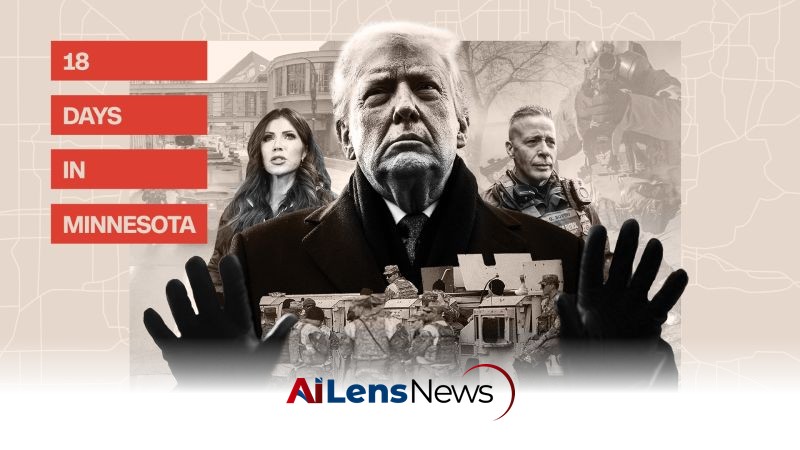


This article explores the events surrounding the deaths of Renee Good and Alex Pretti, highlighting the Trump administration's controversial immigration enforcement tactics and the ensuing chaos.
Washington DC, United States Jul 23, 2026 ALN: The events surrounding the Trump administration's handling of immigration enforcement in early January 2026 have raised significant concerns regarding the safety and legality of federal operations in urban environments. The chaotic 18 days between the fatal shootings of Renee Good and Alex Pretti illustrate a troubling intersection of aggressive law enforcement tactics and the complexities of immigration policy in the United States.
Renee Good, a 37-year-old mother of three, was killed on January 7, 2026, during an operation that was characterized by federal agents as necessary to maintain order amidst rising tensions linked to immigration enforcement. This operation, dubbed Operation Metro Surge, involved a substantial deployment of personnel from various federal agencies, including Immigration and Customs Enforcement (ICE), Customs and Border Protection (CBP), and the Border Patrol. The decision to send Border Patrol agents, typically stationed along the southern border, into urban areas like Minneapolis raised alarms among local officials and law enforcement personnel who were concerned about the appropriateness and potential consequences of such actions.
In the lead-up to Operation Metro Surge, the atmosphere in Minneapolis was already charged. Protests against immigration policies had escalated, and local communities were grappling with the implications of federal enforcement actions. The warning from a Homeland Security Investigations (HSI) agent, predicting that “someone’s going to get killed,” underscored the anxiety among law enforcement personnel about the potential for violence during these operations. The agent's concerns were not unfounded, as the dynamics of urban policing differ significantly from those experienced at the southern border, where Border Patrol agents often operate in isolation and under heightened stress.
Following Good's death, the tensions did not subside. In fact, they intensified. The subsequent killing of Alex Pretti on January 24, 2026, at the hands of federal immigration agents further illustrated the volatility of the situation. This period was marked by an aggressive posture from federal officials, particularly from Gregory Bovino, the Border Patrol commander-at-large overseeing the operation. Bovino's communications with local prosecutors revealed a mindset that prioritized enforcement over community safety, with statements indicating a willingness to escalate the federal presence in Minneapolis to suppress dissent.
During a call with U.S. Attorney Daniel Rosen, which was attended by various prosecutors, Bovino expressed frustration that local law enforcement had not pursued charges against protesters he deemed guilty of assaults on federal officers (AFOs). His remarks, which included a disdainful characterization of Minnesota protesters, reflected a broader strategy that many prosecutors interpreted as an attempt to justify an aggressive crackdown on civil unrest. The prosecutors were taken aback by Bovino's comments, which they felt indicated a troubling disregard for the rule of law and a dangerous inclination to provoke further conflict.
The prosecutors' hesitance to file cases against protesters stemmed from their experiences with federal agents' accounts, which they had found to be frequently exaggerated or misleading. This skepticism about the credibility of federal agents contributed to a growing rift between local and federal law enforcement, complicating the already fraught landscape of immigration enforcement in the U.S. The prosecutors' concerns were compounded by the knowledge that the very agents tasked with enforcing immigration laws were implicated in the violent outcomes of the operations.
In the aftermath of Good's death, Bovino's comments about 'locking down' the city and his suggestion that he would not wait for local police to manage the situation raised alarms among local officials. The rhetoric suggested a readiness to deploy overwhelming force, which many feared would only exacerbate tensions and lead to further violence. The phrase “we’re going to pacify this place” indicated a mindset that sought to dominate rather than collaborate with local communities, a perspective that many believed was fundamentally misaligned with the principles of community policing and public safety.
In discussing the events with CNN, Bovino downplayed the intensity of his statements, framing them as a necessary response to what he perceived as a growing threat from protesters. However, the implications of his approach were significant, particularly in the context of federal law enforcement's relationship with local communities. The tension between aggressive enforcement and community trust is a longstanding issue in U.S. policing, and the events in Minneapolis highlighted the dangers of prioritizing a militarized response over community engagement.
Tom Calhoun-Lopez, then chief of the Violent and Major Crimes section for the Minnesota U.S. Attorney’s Office, articulated the moral and ethical dilemmas faced by prosecutors during this period. He expressed a deep commitment to upholding the rule of law, even as he was pressured to align with the aggressive tactics favored by the Trump administration. Calhoun-Lopez's experiences reflect the broader challenges that law enforcement agencies face when federal policies clash with local realities and community sentiments.
The chaotic 18 days following Good's death serve as a case study in the complexities of immigration enforcement in the U.S. The actions taken during this period not only resulted in tragic loss of life but also highlighted the urgent need for a reevaluation of federal immigration policies and their implementation in urban settings. As the nation grapples with ongoing debates over immigration, law enforcement practices, and community safety, the lessons learned from Minneapolis will undoubtedly inform future discussions about the appropriate balance between enforcement and community engagement.
In conclusion, the events surrounding Operation Metro Surge and the subsequent fatalities are emblematic of the broader tensions inherent in U.S. immigration policy and enforcement. The lack of coordination and communication between federal and local authorities, combined with the aggressive tactics employed by federal agents, created a perfect storm of conflict that ultimately led to tragic outcomes. As policymakers and law enforcement leaders reflect on these events, there will be a critical need to address the underlying issues that contributed to the chaos, ensuring that the lessons learned can guide more effective and humane approaches to immigration enforcement in the future.
To learn more about the latest developments in Political Controversies, stay updated with our exclusive reports and analyses on AiLensNews.

