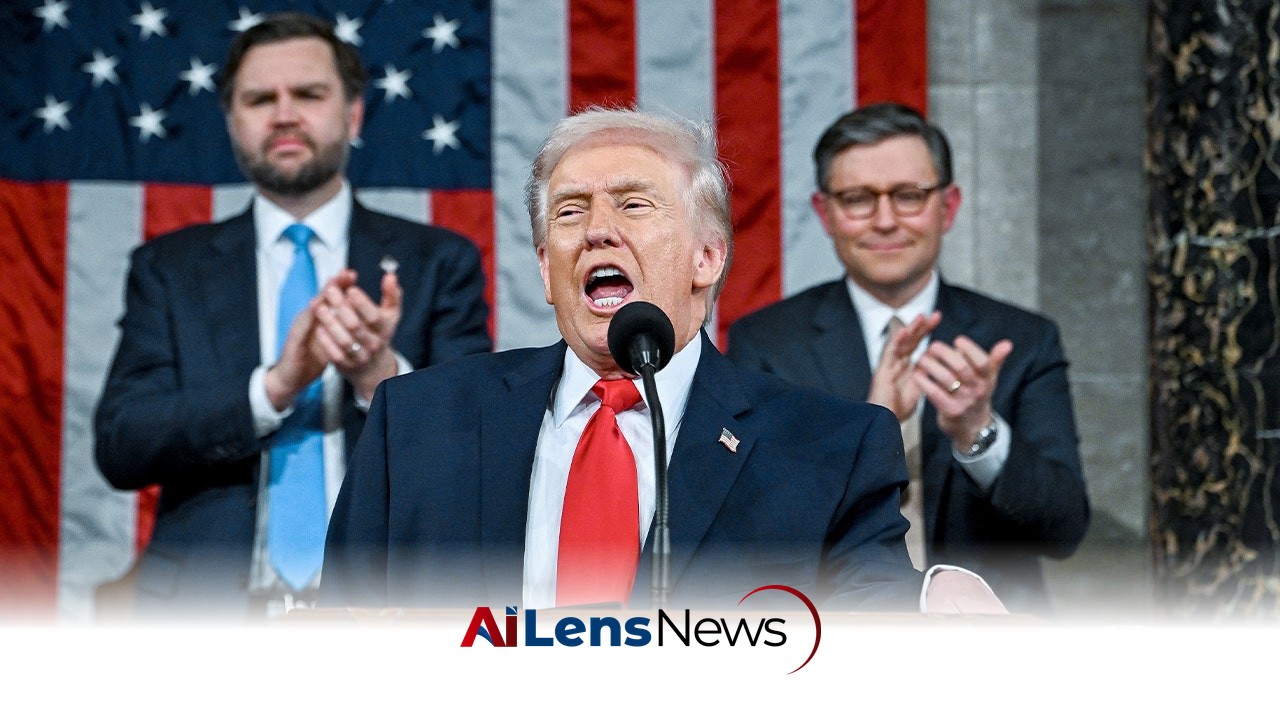


As fiscal hawks express worries over increased spending, Trump pushes House GOP to pass the SAVE America Act, which aims to enhance election security.
Washington DC, United States Jul 20, 2026 ALN: President Donald Trump is rallying House GOP leaders to support the SAVE America Act, a legislative measure aimed at tightening election security. His call comes as some fiscal conservatives express skepticism over the bill's proposed $95 billion increase in federal spending, coinciding with a national debt that has reached $39.5 trillion. The SAVE America Act, which has been a focal point of Trump's agenda, seeks to implement stricter voter ID laws and other measures intended to bolster the integrity of elections.
The national debt, which has grown significantly over the past few decades, presents a considerable challenge for lawmakers. As of 2023, the United States' debt stands at approximately $39.5 trillion, a figure that has raised alarms among fiscal conservatives who are concerned about the long-term implications of such high levels of borrowing. The SAVE America Act's proposed spending increase is thus viewed with skepticism by some members of the GOP, who are wary of adding to the national debt without corresponding cuts elsewhere.
Speaker Mike Johnson, R-La., is leading the charge to incorporate elements of the SAVE America Act into the budget reconciliation process. This legislative strategy would allow the bill to advance without needing Democratic support in the Senate, a crucial consideration given the current partisan divide in Congress. By utilizing budget reconciliation, which requires only a simple majority in the Senate, GOP leaders hope to expedite the legislation and deliver it to Trump’s desk more swiftly.
The proposed legislation includes approximately $73 billion allocated for national security, particularly as tensions between the U.S. and Iran persist amid stalled peace negotiations. National security remains a significant concern for many lawmakers, and the allocation of funds in this area is often prioritized in budget discussions. However, the intertwining of national security funding with election security measures complicates the debate, as some legislators may prioritize one over the other.
Despite broad support among House Republicans for the SAVE America Act, some GOP senators remain hesitant. Their concerns primarily focus on the bill's implementation and its potential effects on election integrity. Critics argue that the proposed voter ID laws and citizenship verification requirements could disenfranchise eligible voters, particularly among minority groups. Rep. Eric Burlison, R-Mo., voiced his opposition to the legislation, citing the absence of provisions to defund Planned Parenthood as a dealbreaker. This highlights the multifaceted nature of political negotiations, where various issues intersect and complicate consensus-building efforts.
Trump took to Truth Social to express gratitude to Johnson and the House Budget Committee members for their efforts in crafting the new reconciliation bill, which aims to secure $95 billion in new government spending through 2036. His public endorsement underscores the importance he places on the SAVE America Act as part of his broader political strategy and agenda. Trump has consistently framed election security as a critical issue, particularly in light of the controversies surrounding the 2020 election, which he and many of his supporters believe were marred by irregularities.
In his message, Trump stated, "I am asking all House Republicans to VOTE YES this week on the Budget Resolution, which is an important first step towards getting a Budget Bill. House Republicans must UNIFY, and fight for THE SAVE AMERICA ACT!" This rallying cry emphasizes the need for party cohesion as GOP leaders navigate the complexities of passing legislation in a divided Congress.
However, the framework of the bill currently lacks any spending cuts, raising alarms among conservatives who are wary of increasing government expenditure without corresponding offsets. The absence of "payfors," or funding offsets, has become a contentious issue within the GOP. Many members have expressed frustration over the lack of a fiscal strategy that would ensure responsible spending. This internal conflict highlights the broader ideological divide within the party, where some members prioritize fiscal conservatism while others focus on expanding government programs they believe are essential for national interests.
Some members of the House Freedom Caucus have indicated a willingness to support the budget framework, provided that the full SAVE America Act is included in the final legislation. This willingness to negotiate reflects the ongoing struggle within the GOP to balance competing priorities, including fiscal responsibility and the push for stronger election security measures.
Rep. Marlin Stutzman, R-Ind., acknowledged the concerns regarding the lack of payfors but stressed the importance of ensuring election security through the SAVE America Act. His comments reflect a sentiment shared by many Republicans who believe that the integrity of the electoral process is paramount, even if it comes at a cost. The debate over the SAVE America Act is emblematic of the broader national conversation about election integrity, voter access, and the role of government in safeguarding democracy.
The SAVE America Act, which has previously passed the House, has encountered obstacles in the Senate, where it requires at least some Democratic votes to move forward. Democrats have criticized the bill as a form of voter suppression, arguing that its provisions disproportionately affect marginalized communities. This characterization has fueled partisan tensions, complicating efforts to reach a bipartisan agreement on election-related legislation.
House GOP leaders are now pushing to integrate elements of the SAVE America Act into the broader reconciliation bill to circumvent opposition, as budget reconciliation only necessitates a simple majority in the Senate. This strategic maneuvering reflects the urgency felt by GOP leaders to advance their legislative priorities, particularly in the face of a looming election cycle where issues of election security are likely to be front and center.
However, this approach is subject to strict guidelines regarding what can be included in a budget reconciliation bill. The Senate parliamentarian, a nonpartisan official responsible for enforcing the chamber's rules, will play a critical role in determining the fate of the SAVE America Act within this legislative framework. If the parliamentarian rules that certain provisions do not qualify for reconciliation, it could derail GOP efforts to pass the bill without Democratic support.
As the political landscape continues to evolve, the implications of the SAVE America Act extend beyond mere legislative outcomes. The ongoing debates surrounding election security, fiscal responsibility, and the role of government reflect broader societal concerns about democracy and governance in the United States. The outcome of this legislative battle could have lasting effects on the electoral process, party dynamics, and the relationship between federal and state authorities in managing elections.
To learn more about the latest developments in Elections, stay updated with our exclusive reports and analyses on AiLensNews.

