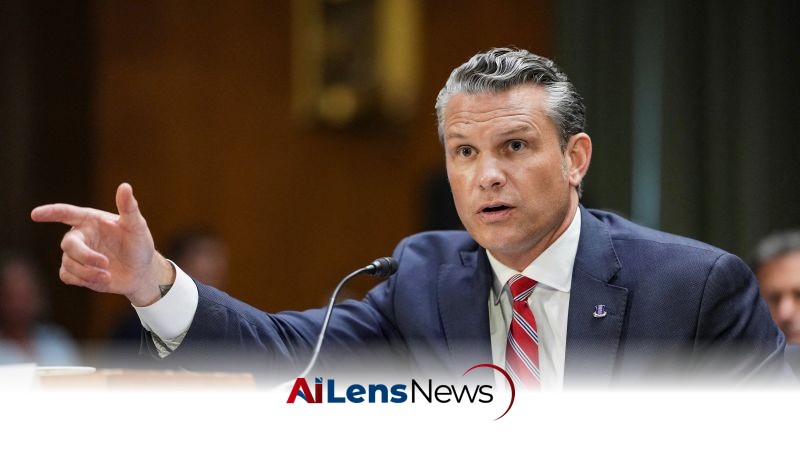


During a Senate hearing, Defense Secretary Pete Hegseth faced tough questions about the ongoing war in Iran, revealing a lack of clear objectives and escalating costs.
Washington DC, United States Jul 22, 2026 ALN: In a recent Senate hearing, significant concerns were raised regarding the ongoing military conflict involving Iran, with particular focus on the costs associated with the war and the objectives set forth by the Trump administration. Republican Senator John Kennedy, known for his lighthearted demeanor, took a more serious tone, demanding clear answers from Defense Secretary Pete Hegseth. The urgency of these inquiries reflects a broader sentiment among Americans who are increasingly questioning the duration and financial implications of the war.
The hearing, which took place on Capitol Hill, revealed a stark divide between the two major political parties. While most Republicans remained steadfast in their support of the administration's military efforts, Democrats used the opportunity to highlight discrepancies between the administration's optimistic claims of victory and the current challenges faced on the battlefield. The conflict, which has drawn criticism for being unpopular among the American public, raises significant questions about the administration's strategy and the justification for continued military engagement.
One of the most telling moments of the hearing came from Democratic Senator Jon Ossoff, who pressed Hegseth on a statement made earlier in the conflict. Ossoff demanded clarification on Hegseth's assertion that Iran's military had been "destroyed and made combat ineffective" within the first two weeks of the war. This line of questioning underscored a critical concern: if the administration's claims of success were unfounded, how could it justify requesting tens of billions of dollars in additional funding for a war that appears to be at a stalemate?
As the hearing progressed, it became evident that the administration was seeking an additional $87.6 billion in funding, with over $67 billion earmarked specifically for the war. Hegseth disclosed that the conflict had already incurred costs of $37.5 billion, a figure that is expected to rise as the situation evolves. The hearing also highlighted the human cost of the conflict, with reports indicating that the number of U.S. military personnel killed had reached 18, while approximately 100 had sustained injuries since early July. This loss of life and the ongoing threat to U.S. troops underscore the urgent need for a clear strategy moving forward.
In addition to the human toll, the conflict has had broader implications for regional stability. Iran's actions in the Strait of Hormuz, a critical shipping route, have raised alarms. The Iranian military has effectively restricted shipping in this vital area, which is crucial for global oil transportation. Furthermore, the Houthi rebels in Yemen, allied with Iran, have threatened alternative routes in the Red Sea, exacerbating tensions in the region. These developments indicate that the conflict is expanding beyond its initial parameters and could have far-reaching consequences for international trade and security.
President Trump, during the hearing, hinted at the possibility of further military escalation. He indicated that he might soon order attacks on additional targets, including Pickaxe Mountain, which is suspected of housing Iranian nuclear facilities. This prospect raises concerns about the potential for a prolonged military engagement, as the administration appears to be preparing for a conflict that could stretch on indefinitely.
Critics of the administration have pointed out inconsistencies in its messaging regarding Iran's nuclear capabilities. Last year, the administration claimed to have "obliterated" Iran's ability to develop nuclear weapons through targeted strikes. If this assertion was accurate, it raises fundamental questions about the rationale for the current war. Conversely, if the threat persists, it suggests that the U.S. may need to maintain a military presence in the region indefinitely to deter Iranian nuclear ambitions.
Hegseth's testimony also hinted at the possibility of a prolonged military campaign. The fact that the Strait of Hormuz was open at the onset of the conflict suggests that ongoing military action may be required to ensure its continued accessibility. Even if the current U.S. bombardment achieves some success, it might necessitate enduring vigilance to prevent further missile and drone attacks on commercial shipping.
Trump's comments during the hearing also indicated that the upcoming midterm elections would not alter his military strategy. This stance may prove problematic for Republican candidates, particularly given that public opinion polls show a majority of Americans oppose the war. The implications of a prolonged conflict could have significant ramifications for the Republican Party's electoral prospects, especially if the war continues to escalate and public sentiment turns increasingly negative.
In a broader context, Trump's comparison of the current conflict's casualty figures to those from previous wars, such as Vietnam and Iraq, raises ethical questions about the value placed on human life in military engagements. By minimizing the significance of the current death toll, the administration risks alienating voters who have grown weary of continuous military interventions.
Furthermore, the unpredictability of Trump's decision-making poses a challenge for both military planners and lawmakers. The potential for abrupt shifts in strategy could lead to further complications in an already volatile situation. Factors such as rising gas prices, dwindling global oil reserves, and economic pressures could prompt a reevaluation of the administration's approach to the conflict.
As the Senate hearing concluded, it became clear that the administration's strategy in Iran remains ambiguous. The lack of a defined timeline for U.S. military involvement, coupled with the absence of clear metrics for success, leaves many unanswered questions about the future of the conflict. Lawmakers and the American public alike are left grappling with the uncertainty surrounding the war's objectives and the financial burden it places on the nation.
In conclusion, the Senate hearing served as a critical reminder of the complexities and challenges associated with military engagement in Iran. As the administration seeks additional funding and prepares for possible escalations, the need for transparency, accountability, and a coherent strategy has never been more pressing. The implications of the ongoing conflict extend beyond the battlefield, affecting domestic politics, international relations, and the lives of countless individuals both in the U.S. and abroad.
To learn more about the latest developments in Political Controversies, stay updated with our exclusive reports and analyses on AiLensNews.

