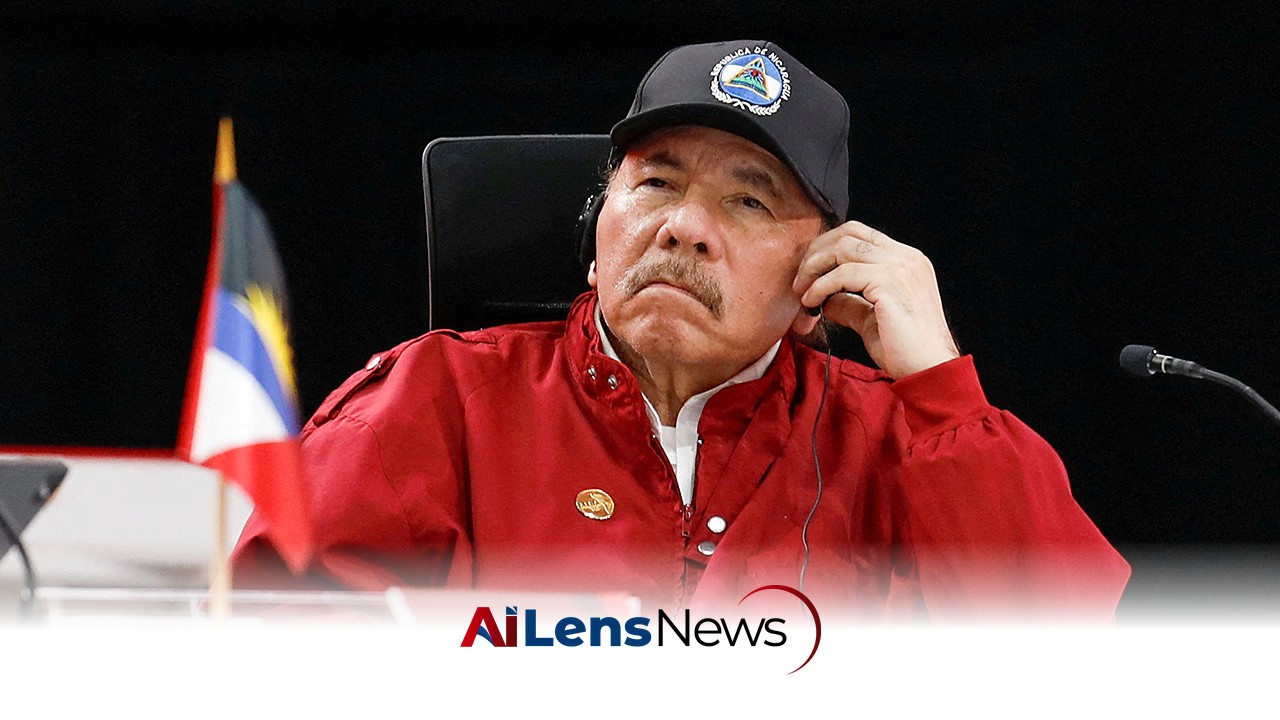


In a significant move, Nicaraguan President Daniel Ortega announced that the country will no longer hold elections, further consolidating his power and eliminating opposition challenges.
Washington DC, United States Jul 21, 2026 ALN: Nicaraguan leader Daniel Ortega has declared that the Central American country will no longer hold elections, effectively closing off any potential path for opposition to challenge his government, which he leads alongside his wife, Rosario Murillo. This move marks a significant shift in Nicaragua's political landscape, raising concerns about the future of democracy in the nation and the implications for its citizens.
Ortega, who has been in power since 2007 and previously governed during the 1980s, made this announcement during a speech commemorating the 1979 Sandinista revolution, a pivotal moment in Nicaragua's history. The Sandinista revolution, which overthrew the Somoza dictatorship, is a foundational event for Ortega's political identity and the party he leads, the Sandinista National Liberation Front (FSLN). His current presidential term is set to run through 2027, and this declaration seems to indicate a long-term strategy to maintain power without the need for electoral legitimacy.
"There won't be any more elections here for them to try to seize the government and seize power," Ortega stated emphatically. This bold proclamation signals a definitive end to the electoral process that has been a cornerstone of Nicaragua's political system, even if flawed. Ortega's assertion that elections would be stopped to prevent outside influence reflects a broader narrative that he has cultivated, portraying his administration as a bulwark against foreign intervention, particularly from the United States.
This declaration appears to eliminate any possibility of future electoral challenges as Ortega and Murillo continue to consolidate control over the country's political institutions. Ortega further asserted, "The days when parties backed by the Yankees (United States) and the Somocistas would return to power are over — never again." This rhetoric resonates with a segment of the Nicaraguan population that views the United States with skepticism due to its historical involvement in Latin America, particularly during the Cold War.
The announcement comes in the wake of increasing international criticism of Ortega's government, which has been labeled a dictatorship by the Trump administration. The U.S. has imposed sanctions on members of Ortega's government and their allies, and has enacted visa restrictions targeting over 2,350 Nicaraguan officials and their families. These sanctions aim to pressure Ortega's regime into respecting human rights and restoring democratic norms, but they have also contributed to a narrative of victimization that Ortega exploits to rally domestic support.
In June, Secretary of State Marco Rubio expressed support for the Nicaraguan people, stating, "The United States stands with the Nicaraguan people who, like Rivera, aspire to see a free Nicaragua." This sentiment reflects growing concerns over human rights violations under Ortega's regime. The U.S. government has been vocal about its disapproval of Ortega's methods, particularly regarding the suppression of dissent and the erosion of civil liberties.
The Biden administration previously condemned Ortega's actions, asserting that he illegitimately awarded himself another term following Nicaragua’s disputed 2021 presidential election. In the lead-up to that vote, authorities arrested numerous presidential candidates, opposition figures, business leaders, and journalists, intensifying the government's crackdown on dissent. This systematic targeting of opposition has created a climate of fear, where many potential challengers to Ortega’s rule have been silenced through intimidation or imprisonment.
Ortega and Murillo have expanded their authority through sweeping constitutional changes that took effect in 2025, extending the presidential term from five years to six and elevating Murillo from vice president to "co-president." These reforms have placed Nicaragua’s legislative, judicial, and electoral institutions under the authority of the presidency, according to United Nations experts. Such changes raise questions about the separation of powers in Nicaragua and whether any checks on Ortega's authority remain.
Currently, Ortega and Murillo exercise control over nearly every branch of the government, including the armed forces, police, and judiciary. This consolidation of power has effectively stifled any meaningful electoral competition, as seen in the elections of 2011, 2016, and 2021, where opposition leaders faced imprisonment, exile, or loss of citizenship. The lack of a viable opposition not only undermines the democratic process but also allows for the unchecked execution of policies that may not reflect the will of the people.
A United Nations group of experts has accused the Ortega-Murillo government of systematically violating human rights as part of a campaign to eliminate criticism and preserve its hold on power. Some alleged violations may amount to crimes against humanity, according to the experts. The international community, particularly human rights organizations, has been vocal about these violations, calling for accountability and urging the Nicaraguan government to adhere to international human rights standards.
The government’s violent crackdown on anti-government protests in 2018 resulted in over 300 deaths, as reported by international human rights groups. The situation in Nicaragua continues to raise alarms about the state of democracy and human rights in the country. The violent suppression of dissent has not only led to loss of life but has also created a pervasive atmosphere of fear that stifles public discourse and civic engagement.
As Ortega’s regime solidifies its grip on power, the implications for Nicaragua's future become increasingly dire. The absence of democratic processes raises concerns about governance, accountability, and the rule of law. Citizens may find themselves increasingly disenfranchised and disillusioned, leading to potential unrest or further emigration as individuals seek better opportunities and freedoms elsewhere.
The international response to Ortega's latest declaration will likely continue to evolve, with calls for sanctions and diplomatic pressure potentially increasing. However, the effectiveness of such measures remains uncertain, particularly given Ortega's historical resilience in the face of external pressure. His government has often framed international criticism as an attack on national sovereignty, which can bolster nationalist sentiments among his supporters.
In conclusion, Ortega's declaration of an end to elections in Nicaragua represents a critical juncture in the nation's political trajectory. The implications for democracy, human rights, and governance are profound, and the international community must grapple with how to respond to a regime that appears increasingly entrenched in its authoritarian practices. The future of Nicaragua hangs in the balance as the populace faces the harsh realities of life under an increasingly oppressive government.
To learn more about the latest developments in Political Controversies, stay updated with our exclusive reports and analyses on AiLensNews.

