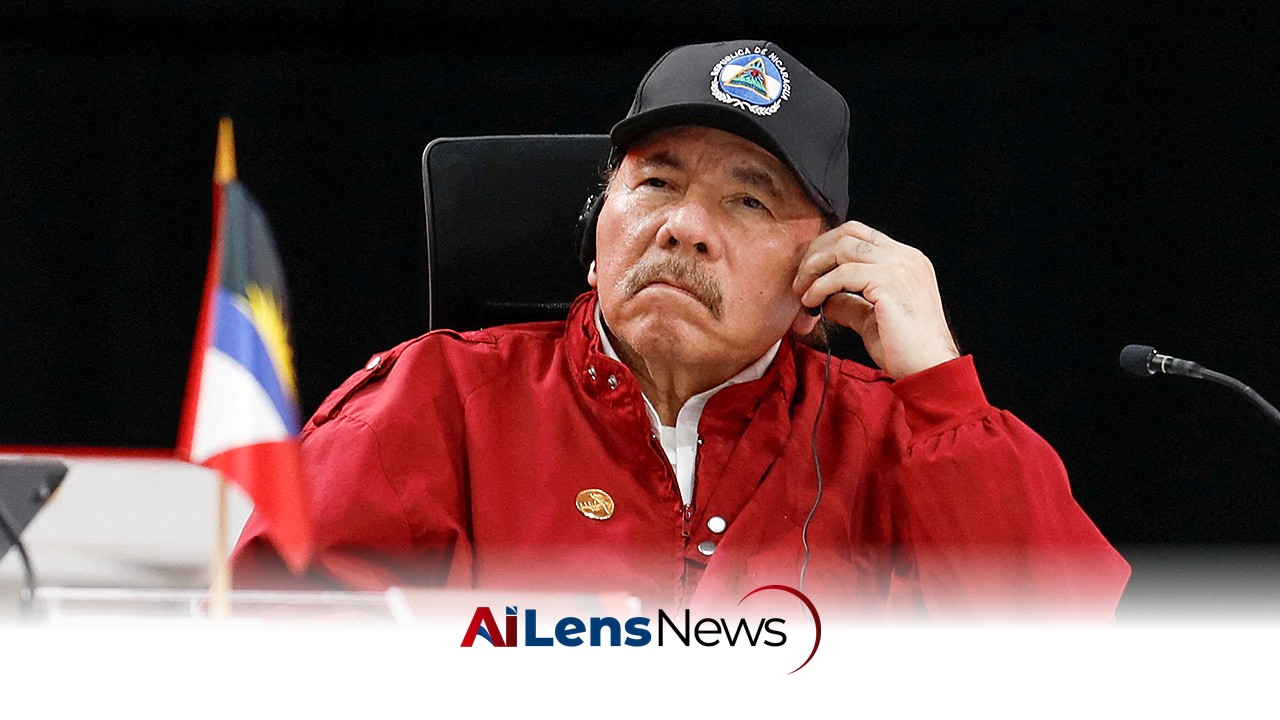


Nicaragua's lawmakers plan to eliminate elections, following President Ortega's declaration, raising concerns over democracy and human rights.
Washington DC, United States Jul 23, 2026 ALN: Nicaragua's political landscape has undergone a dramatic and troubling transformation as lawmakers in the country have announced plans to abolish elections entirely. This development follows a declaration from President Daniel Ortega, made over the weekend, stating that there would be no more elections in Nicaragua, a move that has sparked widespread condemnation from various segments of the international community.
The announcement was made on Tuesday by Nicaragua's congress, which is firmly under the control of Ortega and his wife, Rosario Murillo. The lawmakers justified the planned constitutional overhaul by claiming it aims to ensure Nicaragua's "peace, security, and stability." However, many observers view this as a thinly veiled attempt to consolidate power further and eliminate any potential opposition.
With this announcement, Nicaraguan lawmakers are solidifying Ortega's promise of no more elections, effectively closing off any potential path for the opposition to challenge the government he has led alongside Murillo. The latter was elevated from the role of vice president to that of "co-president" through a series of constitutional reforms that have significantly altered the political framework of the country.
Ortega's declaration that "there won't be any more elections here for them to try to seize the government and seize power" was made during a speech commemorating the 1979 Sandinista revolution. This revolution was pivotal in Nicaragua's history, as it saw Ortega and his allies overthrow the U.S.-backed dictatorship of Anastasio Somoza. However, the irony of Ortega's current actions is not lost on many, as he once championed democracy and popular sovereignty.
This declaration effectively cancels the next elections, which were scheduled for November 2027, and eliminates the possibility of future electoral challenges as Ortega and Murillo continue to consolidate control over the country’s political institutions. The implications of this decision are profound, as it signifies a stark departure from democratic norms and principles that have been increasingly eroded in recent years.
Ortega and Murillo have expanded their authority through sweeping constitutional changes that took effect in 2025. These changes included extending the presidential term from five years to six and placing legislative, judicial, and electoral institutions under the authority of the presidency. This centralization of power has raised alarm bells among human rights advocates and political analysts, who argue that it undermines the checks and balances that are essential for a functioning democracy.
As Nicaragua's longest-serving leader, Ortega has been in power continuously since 2007, and his recent statement effectively nullifies any electoral competition. Critics argue that Ortega had already eliminated meaningful electoral competition during previous elections held in 2011, 2016, and 2021. These elections were marred by allegations of fraud, intimidation, and suppression of dissent, leading many to question their legitimacy.
In recent years, many prominent opposition leaders have faced severe repercussions, including imprisonment, forced exile, or being stripped of their Nicaraguan citizenship. This crackdown on dissent has extended to opposition parties and independent civic organizations, which have lost their legal status, further stifling any avenues for political opposition.
A United Nations group of experts has accused the Ortega-Murillo government of systematically violating human rights as part of a broader campaign to eliminate dissent and maintain its grip on power. Some of the alleged violations may amount to crimes against humanity, particularly in light of the violent crackdown on anti-government protests that erupted in 2018. This crackdown resulted in over 300 deaths, according to reports from international human rights groups.
Ortega's decision to abolish elections has prompted widespread condemnation from foreign governments, including the United States. U.S. Secretary of State Marco Rubio has stated, "Daniel Ortega’s declaration that under his family’s dictatorship, Nicaragua will never again hold elections lays bare their true authoritarian nature. Daniel Ortega and Rosario Murillo have abandoned even the pretense of popular consent." This statement underscores the growing international concern regarding the erosion of democratic norms in Nicaragua.
Rubio emphasized the fundamental right of the Nicaraguan people to choose their leaders through democratic elections and called on the international community to unite against the Ortega-Murillo dictatorship. The U.S. government has previously labeled the Ortega-Murillo administration a dictatorship and has imposed sanctions on its members and their allies. The State Department has also enacted visa restrictions targeting over 2,350 Nicaraguan officials and their families, reflecting the U.S. government's commitment to holding the regime accountable for its actions.
In addition to U.S. condemnation, Volker Türk, the United Nations' high commissioner for human rights, has also condemned Nicaragua's legislative ambitions. He stated that "people of all political viewpoints must be allowed to vote and run for office," highlighting the importance of electoral participation in a democratic society. Türk noted that these developments deepen the severe restrictions on fundamental freedoms and contribute to the erosion of the rule of law in Nicaragua.
The implications of Nicaragua's decision to abolish elections extend beyond its borders, as they raise questions about the future of democracy in Central America. The region has a history of political instability and authoritarianism, and the actions of Ortega and Murillo could embolden other authoritarian regimes in the area. The international community's response will be critical in determining the trajectory of Nicaragua's political future and the potential for democratic revival.
As the situation unfolds, it remains to be seen how the Nicaraguan populace will respond to these developments. The government's efforts to suppress dissent and eliminate electoral competition may provoke further unrest among citizens who yearn for democratic governance and the restoration of their rights. The consequences of Ortega's decision could reverberate throughout the region, prompting a reevaluation of international strategies aimed at promoting democracy and human rights in Central America.
To learn more about the latest developments in Political Controversies, stay updated with our exclusive reports and analyses on AiLensNews.

