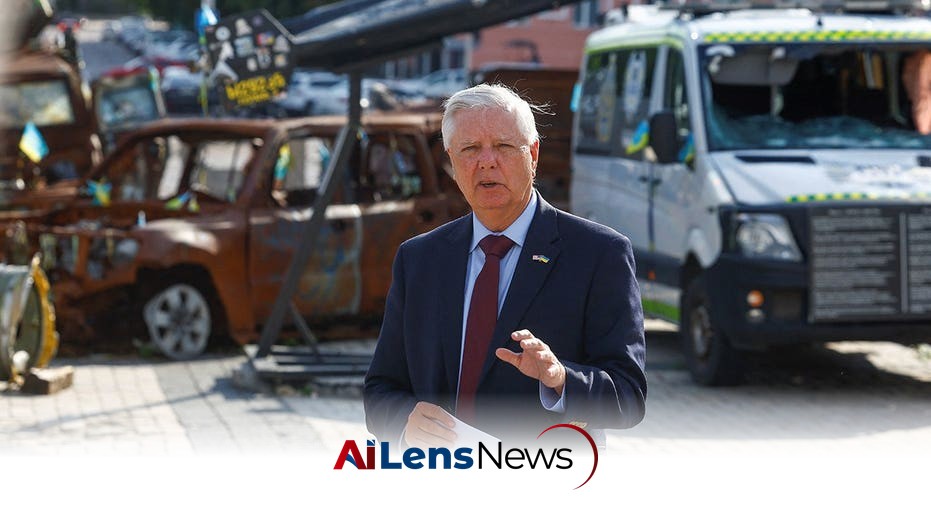


Following the death of Senator Lindsey Graham, a bipartisan group of senators has introduced the Sanctioning Russia Act of 2026, targeting Putin and imposing significant tariffs on Russian imports.
Washington DC, United States Jul 15, 2026 ALN: Of the many political crusades the late Sen. Lindsey Graham, R-S.C., undertook, few were as front of mind for him than crippling Russia’s war machine in its conflict with Ukraine. Graham's unwavering stance against Russian aggression has been a hallmark of his political career, particularly as tensions escalated between Russia and Ukraine in recent years. His commitment to supporting Ukraine against Russian incursions reflects a broader bipartisan consensus in Washington that has emerged in response to Moscow's actions.
Yet during the last year-and-a-half of President Donald Trump’s second term, momentum behind a bone-crushing sanctions package against Russian President Vladimir Putin and the Kremlin would start and stop, with hopes rising and falling for its proponents every few months. The inconsistency in political support for sanctions against Russia was emblematic of the larger political landscape, where foreign policy debates often became entangled with domestic political considerations.
Earlier this year, Graham had similarly gotten a green light from the White House for a different iteration of the package. This approval indicated a willingness from the Trump administration to take a tougher stance on Russia, reflecting a shift that many lawmakers believed was necessary to deter further aggression. Graham’s advocacy for sanctions was not just about punishing Russia; it was also about sending a clear message to other authoritarian regimes about the consequences of aggressive actions.
"It's never going back on the shelf because President Trump believes he needs it," Graham told Fox News Digital at the time. "I think he needs it." This statement underscores the importance Graham placed on the sanctions as a tool for U.S. foreign policy, particularly in the context of a rapidly changing geopolitical landscape. His view was that robust sanctions could serve as a deterrent against future Russian aggression.
Hours before his death, he again got confirmation that the White House supported his and Sen. Richard Blumenthal’s, D-Conn., latest offering. The collaboration between Graham and Blumenthal showcased a rare instance of bipartisan cooperation in a deeply polarized political environment. "Senator Graham and I were told, very authoritatively, literally just a couple of hours before his death, that the White House was OK with this," Blumenthal said. "We were exalted, he was as exuberant and as over the moon as I’ve ever seen him." This moment not only highlighted Graham's passion for the legislation but also the urgency with which lawmakers were approaching the issue of Russian sanctions.
On the same day that Graham’s sister, Sen. Darline Graham, R-S.C., was sworn in, Blumenthal and a bipartisan group of over a dozen senators unveiled the long-awaited Russia sanctions package. The timing of this unveiling was poignant, as it represented both a continuation of Graham's legacy and a new chapter in South Carolina's political landscape with the introduction of its first female senator. "I guess I'm going to begin by channeling my inner Lindsey Graham to say, ‘This is a big effing deal,’" Blumenthal said, emphasizing the significance of the sanctions package in the context of U.S. foreign policy.
The Sanctioning Russia Act of 2026 is the culmination of more than a year of work and closed-door negotiations across the aisle and with 1600 Pennsylvania Ave. It’s one that this time many senators believe it can pass. The bipartisan nature of the legislation reflects a growing recognition of the need for a unified response to Russia's actions, particularly in light of the ongoing conflict in Ukraine. Lawmakers from both parties have increasingly acknowledged the importance of a strong and cohesive stance against Russian aggression.
Many of the core aspects of the legislation are the same: direct sanctions on Putin, Russian officials, and Russian military leaders, up to 500% tariffs on Russian imports, tariffs of up to 100% on countries buying Russian energy, like China and India, and allowing Trump flexibility for when to turn off some aspects of the sanctions. These measures are designed to exert maximum pressure on Russia’s economy and diminish its military capabilities, while also signaling to allies and adversaries alike that the United States stands firm in its opposition to authoritarianism.
Key changes to the newly unveiled package include adding a "national interest certification" for Trump’s sanction waiver authority and incorporating sanctions on the myriad ships and tankers that comprise Russia’s "shadow fleet" hauling energy exports under the radar. This enhancement reflects a strategic approach to sanctions that seeks to close loopholes and ensure that enforcement mechanisms are robust and effective. The inclusion of provisions targeting the shadow fleet is particularly notable, as it addresses a critical aspect of Russia's ability to circumvent sanctions through clandestine operations.
A source familiar with the negotiations to craft the package noted that "this is the only product that currently has buy-in from everybody." This consensus indicates a rare moment of unity in a Congress often marked by division, suggesting that lawmakers are increasingly willing to set aside partisan differences in the face of a common threat. "And it's likely the only product that is going to move forward and put pressure on Russia the way we would all like to see it," they said, underscoring the urgency and importance of the sanctions package.
Still, the political winds in Washington, D.C., can shift at a moment’s notice. The legislative process is fraught with challenges, and even well-supported bills can face unexpected hurdles. Senate Majority Leader John Thune, R-S.D., told Fox News Digital that he believed "anything is a candidate" to fall victim to external political fights, like Democrats blocking the National Defense Authorization Act (NDAA) over the Iran war or Republicans fearing another shutdown. This acknowledgment of the unpredictable nature of politics highlights the challenges that lawmakers face in advancing critical legislation.
Then there’s the question of what could happen to the package in the House. The House of Representatives, with its different political dynamics, poses a unique set of challenges for any legislation originating in the Senate. "Anything you send to the House right now probably has the possibility of other things getting attached to it, but I'm hoping, at least over here, there's some critical mass behind this," Thune said. The concern about potential amendments or attachments reflects the complexities of the legislative process, where bills can be altered significantly as they move through different chambers.
Meanwhile, lawmakers who support the tranche of sanctions view it as a lasting mark of Graham’s legacy in the Senate, and one of the key pieces of work that he left unfinished after his sudden passing on Sunday. Graham's commitment to addressing the threat posed by Russia has been a defining feature of his career, and this sanctions package serves as a testament to his enduring influence on U.S. foreign policy. "I've known this man for 32 years, and I'm willing to say this is Lindsey Graham's greatest achievement when it comes to saving lives," Sen. Roger Wicker, R-Miss., said. This statement encapsulates the sentiment among many of Graham's colleagues, who view the sanctions as a critical step in safeguarding democratic values and protecting lives, both in Ukraine and beyond.
In conclusion, the unveiling of the Sanctioning Russia Act of 2026 represents a significant moment in U.S. foreign policy, particularly in the context of ongoing tensions with Russia. The bipartisan support for the sanctions package reflects a growing recognition of the need for a unified response to authoritarian aggression. As lawmakers work to advance this legislation, they not only honor Lindsey Graham's legacy but also take a crucial step toward addressing the challenges posed by Russia in the current geopolitical landscape. The implications of this legislation extend beyond immediate sanctions; they represent a commitment to upholding democratic principles and supporting allies in the face of aggression.
To learn more about the latest developments in Political Controversies, stay updated with our exclusive reports and analyses on AiLensNews.

