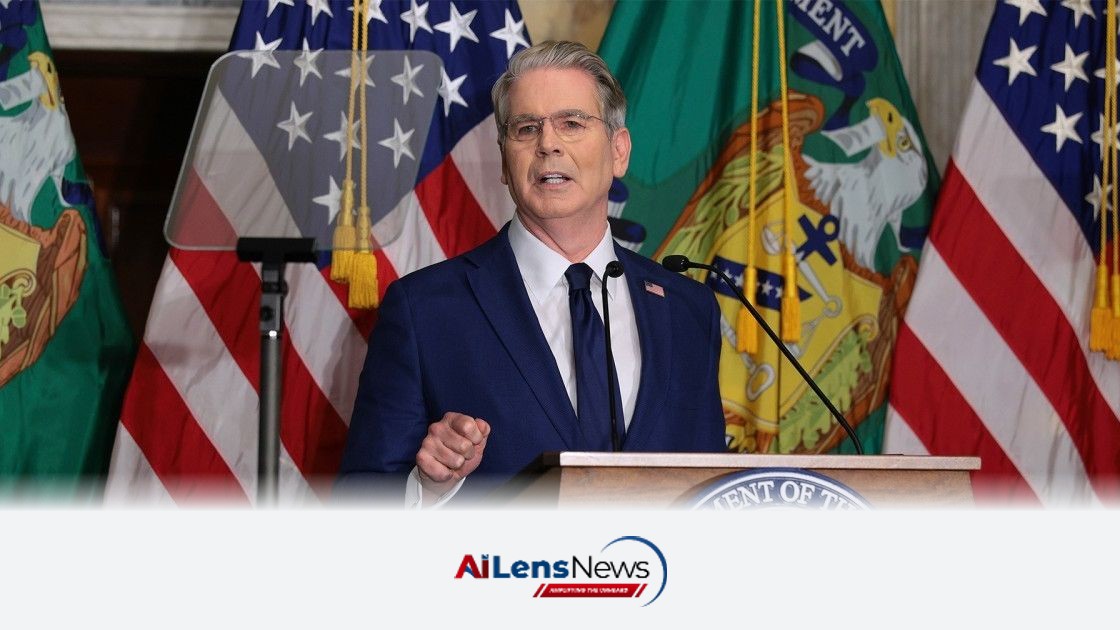



The recent U.S. sanctions on Iran, announced by Treasury Secretary Scott Bessent, may have indirect effects on China, as President Trump seeks global cooperation.
Washington DC, United States Aug 24, 2026 ALN: Treasury Secretary Scott Bessent has officially announced a new set of sanctions against Iran, emphasizing that there will be no exemptions. This move is part of a broader strategy by the Trump administration to exert what he termed "economic asphyxiation" on Tehran. The implications of these sanctions extend beyond Iran, potentially affecting international relations, particularly with China.
Bessent's announcement highlighted the administration's commitment to isolating Iran economically. The sanctions are designed to target various sectors of the Iranian economy, aiming to pressure the government into compliance with U.S. demands. Bessent stressed that these measures are crucial for national security and regional stability, reflecting a longstanding U.S. concern over Iran's nuclear ambitions and its influence in the Middle East.
The sanctions are expected to affect key industries, including oil and gas, banking, and shipping. By targeting these sectors, the U.S. aims to cut off critical revenue streams for the Iranian government, which relies heavily on oil exports to fund its operations. This approach is consistent with previous sanctions regimes that have sought to leverage economic pressure to achieve political objectives.
President Trump is actively seeking support from world leaders to join in this initiative. The administration believes that a united front will enhance the effectiveness of the sanctions. This call for cooperation raises questions about how countries, especially China, will respond to the U.S. stance. Historically, the U.S. has relied on multilateral agreements to enforce sanctions, as seen in the Joint Comprehensive Plan of Action (JCPOA) that was established in 2015. However, the U.S. withdrawal from the JCPOA in 2018 marked a shift in strategy, favoring unilateral sanctions.
The potential for a coordinated international response is complicated by the differing interests of various nations. Some European countries have expressed reluctance to participate in U.S.-led sanctions, as they seek to maintain trade relations with Iran. This divergence highlights the challenges the Trump administration may face in rallying a cohesive international coalition against Tehran.
China, as a significant trading partner of Iran, may find itself in a challenging position. The sanctions could disrupt its economic interests in the region, leading to a reevaluation of its trade policies. Analysts suggest that China might have to navigate a delicate balance between its relationship with Iran and its ties with the U.S. Iran has been a crucial supplier of oil to China, and any disruptions in this flow could have significant economic repercussions for both countries.
Moreover, China's Belt and Road Initiative, which aims to enhance connectivity and trade across Asia, Europe, and beyond, includes investments in Iran. The U.S. sanctions could jeopardize these investments, prompting China to reconsider its strategies in the region. On the other hand, China may also see this as an opportunity to strengthen its ties with Iran, potentially increasing its influence in the Middle East as U.S. engagement diminishes.
In addition to the sanctions on Iran, Bessent mentioned that President Trump is eager for Canada to return to trade talks in good faith. This aspect of the announcement indicates a broader strategy to reshape U.S. trade relationships while applying pressure on adversaries. The U.S.-Canada relationship has been strained over issues such as tariffs and trade agreements, particularly following the renegotiation of NAFTA into the United States-Mexico-Canada Agreement (USMCA).
The administration's focus on Canada suggests an attempt to solidify alliances with neighboring countries while simultaneously confronting perceived threats from nations like Iran. By pursuing trade discussions with Canada, the U.S. aims to reinforce its economic partnerships, which could serve as a counterbalance to the geopolitical challenges posed by Iran and others.
The new sanctions against Iran mark a significant escalation in U.S. foreign policy. As the Trump administration seeks to rally international support, the implications for China and other nations will be closely monitored. The evolving geopolitical landscape will undoubtedly influence future trade dynamics and diplomatic relations.
In summary, the sanctions against Iran not only represent a direct challenge to Tehran's policies but also serve as a litmus test for U.S. influence on the global stage. The response from China and other nations will be pivotal in determining the sanctions' effectiveness and the broader implications for international trade and diplomacy. As countries navigate this complex web of relationships, the outcomes could reshape alliances and economic strategies for years to come.
To learn more about the latest developments in Political Controversies, stay updated with our exclusive reports and analyses on AILensNews.

